

Bangladesh’s Unfinished Reckoning
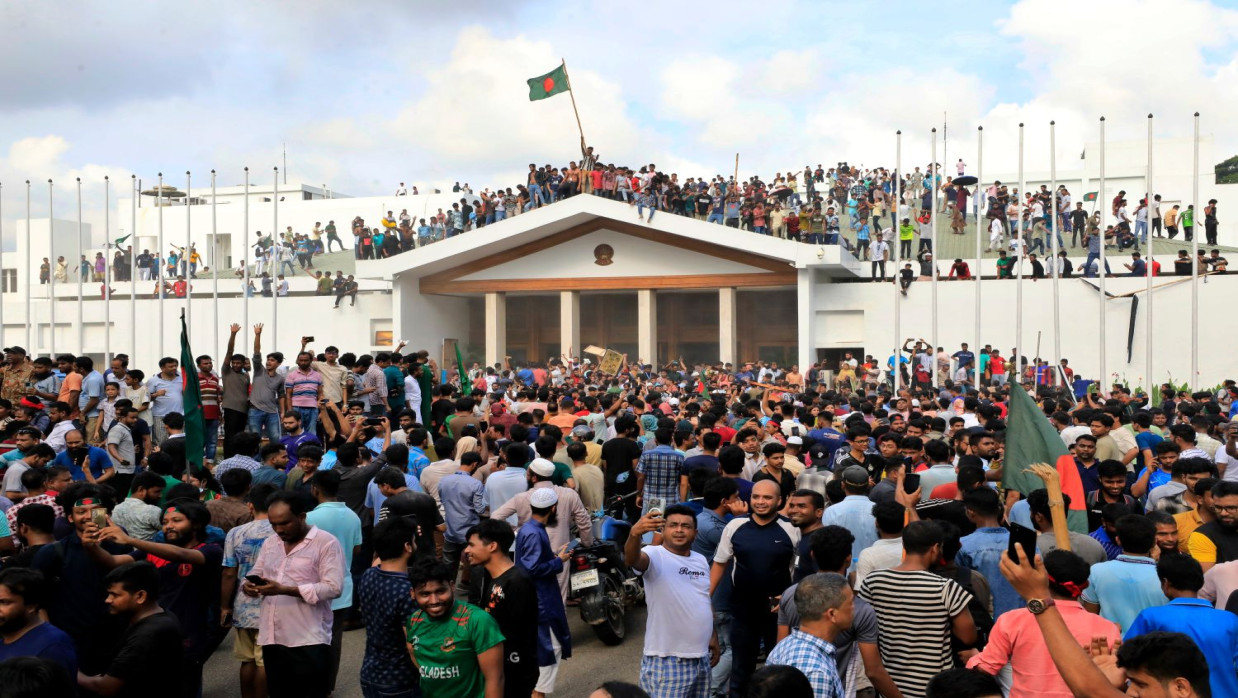
Bangladesh is still recovering from the consequences of authoritarianism, two years after the July Revolution. The uprising was not about a change of power; it was the biggest vote against repression and torture, enforced disappearances, extrajudicial executions, rigged elections, and the weakening of institutions meant to safeguard citizens' rights.
The crackdown also came at a terrible cost. Students, workers, professionals, children, and everyday Bangladeshis were killed or maimed. UN rights investigators discovered credible evidence that the previous administration, its security forces and intelligence agencies, as well as violent activists linked to the Awami League, committed wide-ranging and egregious human rights abuses to suppress the uprising. Thousands were injured, according to the UN, which found that as many as 1,400 may have been killed from July 1 to August 15, 2024. The office found the violations were part of a calculated effort to silence opposing voices.
But deposing a dictator is only the beginning of the fight against authoritarianism. Networks of collaborators, ingrained habits of deference and fear, abusive laws, institutional loyalties, and justifications will remain long after the tyrant has gone. Bangladesh’s task, then, is not merely to punish the loser in an electoral dispute. It is to build legitimate processes of truth-telling, accountability, reparations, institutional reform and, eventually, reconciliation.
Enforced Disappearance as an Instrument of Government
A particularly odious practice attributed to the old system was the use of enforced disappearance. People were said to have been seized from their homes, the streets, workplaces, and other public venues, frequently by men in civilian clothes. The authorities then apparently refused to acknowledge that they were being held, forcing relatives not to know whether their loved ones were alive, imprisoned, or deceased.
The disappearances were not always arbitrary acts by rogue individual officers. Evidence collected by Bangladesh's Commission of Inquiry on Enforced Disappearances has pointed to intelligence agencies and paramilitary forces, secret sites of detention and interrogation, and attempts at establishing plausible deniability.
As of January 2026, the commission had registered 1,569 distinct complaints. The commission reported that enforced disappearances likely numbered between 4,000 and 6,000 from January 2009 to August 2024. UN experts quoting the commission said that more than 95 percent of victims whose political affiliation was known were members of parties that had opposed the deposed government. They added that enforced disappearance had become intertwined with an "endemic and systematic practice of torture".
Enforced disappearance is distinctively barbaric, as the person who is taken is not the only victim: the family of the victim is sentenced to a suspended animation. Families are left not knowing if their loved one is dead or alive. Women are unsure if they are widowed or not. Families are unable to bury a child whose death has never been certified. Children grow up wondering if their parent will ever come back. Relatives are denied death certificates. They can't collect inheritance or claim benefits. They can't perform burial prayers.
The disappearance thus continues long after the original abduction. Every denial, falsified record, rejected police complaint, and unanswered inquiry becomes another act of abuse.
Torture, Secret Detention, and the Architecture of Fear
Survivors recount gruesome methods of physical and psychological torture: electrocution, beatings, mutilation, suspension, threats against family, prolonged solitary confinement, and staged executions. Information extraction was not always the objective of their treatment. Torture was also used to break people and instill fear throughout society.
When your political enemy vanishes - only to return brainwashed or disappear forever - thousands more know what happened: shut up or else. Torture is therefore a tool of power.
The identification and documentation of undisclosed detention sites are essential. Seal off each site and conduct a forensic investigation. Take steps to preserve evidence at each location. Investigate detention registers, orders, communications, monitoring logs, vehicle logs, phone records, and chains of command. Ensure that officers willing to provide testimony are afforded the necessary protection. Follow up on allegations of individual officers who may have directly participated through due process.
Bangladesh is a party to international agreements safeguarding the right to life and bans on torture and enforced disappearance. There are no exceptions to the prohibition of torture. Not even a threat to national security from a terrorist act or any political crisis can ever justify torture. Nor can superior orders or a claim that the victim is a terrorist. States have an obligation to actively investigate credible allegations, prosecute suspected perpetrators, protect complainants, and offer victims effective remedies.
The Agony of Families and the Right to Know
Justice must begin with listening to families. For years, many have said they were ridiculed, threatened, or ignored when they approached authorities to file a complaint. Others were pressured into signing statements that their loved ones had left home of their own accord, or had joined militant groups or disappeared due to family disputes.
Truth is owed not just to families, but to the whole of society. Families deserve to know who authorized the abduction, which agency executed it, where they took him, what happened to him during his captivity, and where they disposed of his body if he was killed.
We must establish a functional, permanent mechanism staffed by trained personnel with access to government records, detention facilities, gravesites, and forensic resources. Bangladesh needs a national DNA database with appropriate privacy protections. Suspected graves should be excavated by forensic experts and examined in accordance with international best practices. Legal and psychological support, interim relief, and communication should be provided to families rather than having them hound government officials.
Money can't replace your loved ones or reverse 50 years of pain. But compensation, rehabilitation, government acknowledgment, the return of land/jobs, and apologies can matter.
Reforming the Institutions That Enabled Repression
Accountability should not mean prosecuting just a few high-ranking officials and allowing the systems that enabled abuse to continue. Agencies implicated, such as the Rapid Action Battalion, the Detective Branch of the police, intelligence agencies, and others, need to be independently reviewed and overhauled.
Human Rights Watch has said that security forces became a pillar of the former government's oppressive regime and political interference, rewards for abusive behavior, and lack of civilian control created a culture of impunity. It has urged civilian oversight independent of any of the agencies involved, surprise inspections of detention facilities, better protections from arbitrary arrest, and changes to laws that have allowed mass or politically motivated prosecutions.
"For reform to have meaning, there must be reliable detention registers, early notification of family members, access to legal counsel, medical examination at the time of detention and release, audiovisual recording of interrogations, and mandatory judicial review. An independent police complaints mechanism should have the power to investigate deaths in custody, torture and disappearance, and cases of excessive and illegal force."
Accountability for the way officers are selected and promoted should also be investigated. Officers credibly accused of serious wrongdoing should not be assigned to roles where they can interfere with investigations, harass witnesses, or tamper with evidence. However, reform must be mindful of officers' rights and should not presume that every person who works at an institution is culpable. Guilt must be proven.
Journalists, Propaganda, and the Limits of Criminal Responsibility
Journalists and media figures who participated in the repression should also be examined. The participation would include repeating government talking points, calling protesters terrorists or traitors, covering up killings, or supporting violence. Journalism should never be used as a license to knowingly direct attacks against civilians, lead raids to the identification of victims, plant evidence, or actively participate in a criminal conspiracy.
Criticism of protesters, political allegiance, ugly rhetoric, or even support for the Awami League does not automatically become a crime against humanity. There should be credible allegations of willful and significant involvement in particular crimes. Drawing a line between repulsive propaganda, criminal incitement, and actionable aiding in the commission of atrocities.
Bangladesh should not resort to collective prosecutions of journalists. Human Rights Watch documented that at least 140 journalists have been accused of murder in connection with their coverage of the revolt and cautioned prosecutors against using mass prosecutions "to chill free expression or to engage in political prosecutions that occurred in past eras." Justice should be applied to actions that can be proven, not to someone's profession, their unpopular views, or political ties.
If any journalist incited immediate violence, lied about evidence resulting in illegal arrests, alerted security forces to certain individuals, or helped hide murders, they too deserve to be looked into. But any prosecutions should be based on individual responsibility, be warranted by credible evidence, and be tried in fair courts. Bangladesh will not honor the victims of mass prosecutions by conducting mass prosecutions itself.
Sheikh Hasina, Remorse, and the Politics of Denial
Perhaps what has been most disconcerting is Sheikh Hasina's consistent refusal to accept any political or moral responsibility for crimes committed under her government. Her blatant cries of innocence and conspiracy mongering have convinced many that she and her cronies have learned nothing from Bangladesh's tragedy.
Some will cite her as Sheikh Mujibur Rahman's daughter, as that excuses her from criticism. They herald development and turn a blind eye to the institutional and humanitarian costs of her government. Bridges, growth, and social development programs cannot excuse torture, enforced disappearances, sham elections, or the killing of your citizens. Development without rights cannot continue because it is built on force rather than consensus.
The most pointed analysis from someone who worked in Bangladesh and knew Hasina and members of her family comes from retired American diplomat Jon Danilowicz. Writing not as an adjudicator but as a former official who has studied and thought about Bangladesh for years, Danilowicz sees a leader who grew unable to see the world from perspectives other than her own and advisers "for whom political objectives too often excused unethical and even violent means."
His testimony does not carry the force of judicial fiat, but if there's one group unwilling to accept culpability, it's Hasina loyalists.
Calling out everyone who ever served in, worked for, voted for, or donated to the Awami League would be counterproductive. Not all AL members are equally culpable. Some committed atrocities. Some enabled them. Some stayed quiet out of fear or a desire to climb the political ladder. Some probably didn't do any of those things. Bangladesh shouldn't engage in collective punishment. But for those dreaming of an AL-led Bangladesh someday soon, Danilowicz's suggestion of reform includes accepting that reality, dismantling the personality cult around Hasina, and decoupling party loyalty from blind allegiance to her.
India and the Cost of Personalizing Bilateral Relations
India's sheltering of Hasina and its perceived political attachment to her have intensified resentment in Bangladesh. Many Bangladeshis believe New Delhi valued its relationship with one leader and one party more highly than the democratic aspirations and suffering of the Bangladeshi people.
Hasina's government was widely viewed as accommodating Indian security and strategic interests. Her continued presence in India therefore creates the impression that a powerful neighbor is protecting a useful former partner from accountability. Whether this fully reflects Indian policy or not, the perception itself is damaging.
India needs to understand that New Delhi cannot build a durable relationship with Bangladesh resting on a single family or party. There has to be respect for Bangladesh's sovereignty, democratic choices, economic equality, border management, water sharing, connectivity, and people-to-people contact. Should New Delhi seem to offer safe haven to attempts to destabilize Bangladesh or whitewash the documented violations of the past, cynicism will extend beyond opposition to Hasina to become distrust of India.
A Home-Grown Transitional Justice Process
Bangladesh needs an institutionalized transitional justice system. This should include truth, prosecutions, reparations, reform, and memorialization as five pillars that reinforce each other.
Truth can help establish an official record of abuses; uncover systemic practices of institutions; and allow victims to tell their stories with dignity. It is not a substitute for criminal trials of those most responsible. But well-designed incentives could encourage lower-level perpetrators to reveal victims' names; help uncover information about how these killing machines operated; and allow perpetrators to take responsibility for their actions. Amnesty should not be on the table.
Prosecutions must adhere to credible international fair trial standards. Defendants must have access to counsel and time to prepare their defense, be able to challenge the evidence against them, and not be tortured or coerced. Trials in absentia, blanket indictments, whitewashed secret investigations, and the death penalty should not be allowed. UN experts have already expressed concerns about due process guarantees, victim and witness protection, reparations, detention reviews, and elements of Bangladesh's draft law on enforced disappearances.
Reconciliation should not be expected from victims until the truth is established. It cannot mean asking families to forgive and forget, pardoning senior perpetrators, or reinstalling an unreformed political order. True reconciliation can happen only after justice is served — acknowledgment, accountability, and reparations have been achieved.
Preserving Memory Through the July Museum
Let’s think about what the July Museum will look like. Beyond photos and hashtags, it should preserve victims’ names. Oral histories. Clothing. Medical records. Videos. Official documents. Records from detention centers. Take your pick.
Its exhibits should explain not simply what happened in July and August of 2024, but how years of systemic decay primed the country for repression.
Memory can protect us from repeating the same mistake. Our children should understand authoritarianism isn’t established in a day. It spreads through weaponized institutions, willful compliance, censorship, propaganda, fear, silence, and eventually…a tolerance for plain-old-fashioned violence.
The museum should remember the martyrs, but not be wielded as a cudgel of partisan myth-making. It should document violence against police officers, religious minorities, Awami League activists, and everyone else who was attacked after the state surrendered.
Accountability cannot be partisan. Every extrajudicial killing is one too many, regardless of political affiliation.
Ensuring the Sacrifices Were Not in Vain
The opportunity offered by the July Revolution is one Bangladesh cannot afford to lose. Their lives were not given up by Bangladesh's young men and women just so that one ruling elite can be substituted by another. They want a state where citizens will not vanish for speaking out against the government, where the police will take their oath of office to the law and not to a political party, where courts will protect, not persecute, and where journalists will be able to speak the truth without being either weaponized or victimized by power.
Can Bangladesh rise to the challenge of this revolution's test? We won't judge Bangladesh by how it treats those it vanquished. But by whether it can deliver justice without vengeance, accountability without collective punishment, and remembrance without politicization. …
Justice requires truth. The missing must be located. Torture sites must be identified. Perpetrators -- from those who ordered crimes to those who carried them out to those who abetted or concealed them -- must be fairly investigated. Victims must see reparations and rehabilitation. Security sectors must change. All sides, including a reformed Awami League, if that is their choice, must accept that no leader is beyond the law.
Only then can Bangladesh turn this uprising into renewal. Only then will the sacrifices of July mean anything. Not monuments to the dead will give them meaning, but a democratic state where such crimes will never be allowed to occur again.


0 Comments
LEAVE A COMMENT
Your email address will not be published