

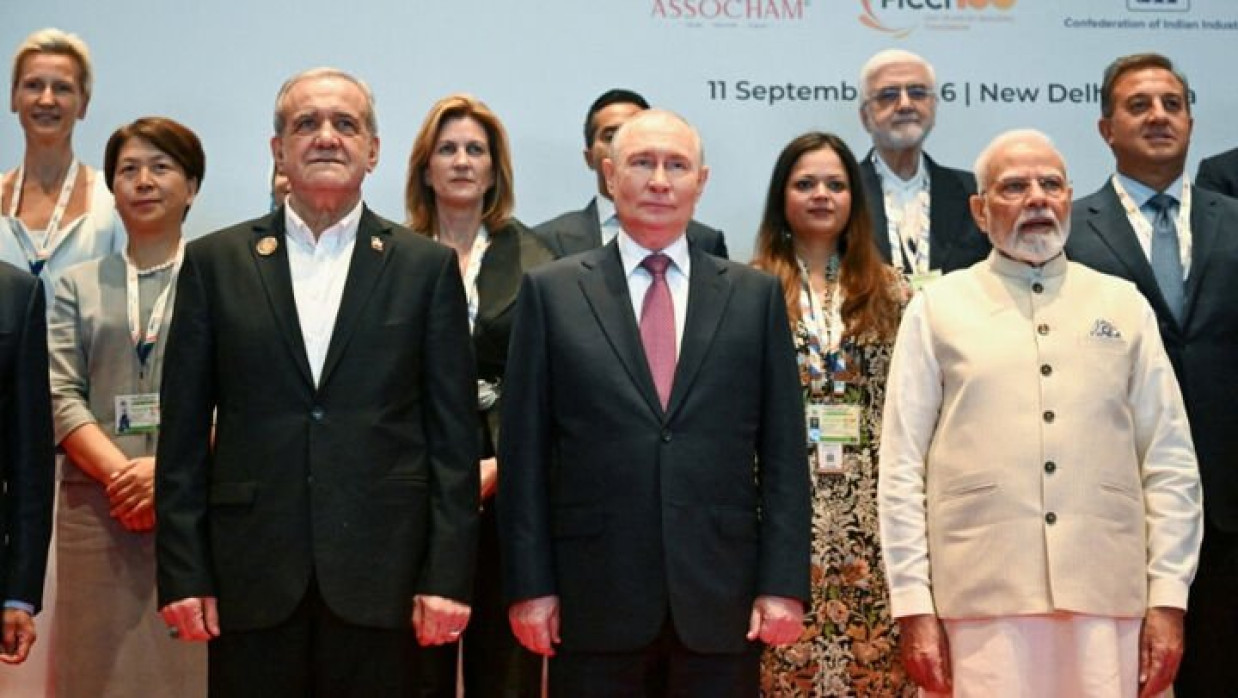
Ironically, the recent BRICS summit, hosted by India under its chairmanship, sends mixed signals about its diplomatic significance from several angles. BRIC came into existence in 2009, named after its initial five member countries- Brazil, Russia, India and China. Subsequently, with South Africa joining it, it became known as BRICS. Over the years, more countries joined it, including Egypt, Ethiopia, Indonesia, Iran, Saudi Arabia and United Arab Emirates.
Diplomatically speaking, this organization cannot be viewed as being solely for or against any superpower and/or major powers. Certainly, some members of BRICS may be keen for it displaying such a leaning. To a degree this may be partly true of diplomatic leanings of Russia, China as well as Iran. But the same cannot be said about Saudi Arabia as well as UAE and several other countries. The question of their considering anti-USA alliances and/or moves primarily against this superpower does not prevail. The opposite may be said about Iran and perhaps to a degree also about Russia as well as China. This clearly suggests that from no angle can BRICS-members may be assumed to have similar foreign policy, alliances, international/diplomatic interests, and so forth. This also implies that this body cannot be expected to display considerable diplomatic strength, marked by unity, regarding crucial happenings as its members entertain divided stands towards the same.
With the recent summit held against the background of a few its members faced with international tension, it is noteworthy, the summit was held with these participating in the same. The crucial fact is that despite facing conflicts, certain members chose to attend the summit, signaling apparently its diplomatic importance for them. Iran has been faced with war, begun against it by USA and Israel, since February 28, which is not showing any sign of coming to an end soon. The summit was attended by it and also by Saudi Arabia as well as UAE. The latter two have also been affected by impact of tension in the area. What is also noteworthy, talks were held between Iran and UAE, despite their ties being fairly tensed.
However, it would be wrong to assume that the BRICS summit signals strong ties between its members at various level, multi-lateral as well as bilateral. This is not surprising as all members of this group cannot be viewed as strongly tied towards each other as well as with similar policies towards the key powers which are not members of BRICS. These include US as well as European powers. Given that Saudi Arabia and UAE have strong ties with USA, while they can consider ties with other key powers and groups, the question of their considering ties against it may be viewed as non-existent, at least at present. The same probably cannot be said about Iran, which has been engaged in war against US for quite some time. Iran is also suffering from sanctions imposed against it by US. There is also no doubt about key ties between Iran and two most important countries of BRICS, Russia and China. Iran also has good ties with India.
At the same time, this does not imply that India is against good ties with USA. The same can be said about Russia and China, irrespective of whatever their diplomatic moves suggest. The situation would have been different if the BRICS members could be bracketed together as in favor of or against good ties with USA and/or other key powers. This situation does not prevail. If this prevailed, BRICS’ strength would not have most probably increased to include the members it has at present and may not have prompted other countries to consider being associated with it. Clearly, those having strong ties with other powers, particularly US, would have then refrained from being strongly associated with BRICS. From this angle, while BRICS does appear to be dominated by Russia and China, in essence, all its members are not only solely aligned with either or both these countries. As is well known, Saudi Arabia and UAE’s US ties are fairly strong, while that of India cannot be ignored. Notwithstanding their differences, US and China do have strong bilateral trading ties.
China, India and quite a few other countries have strong trade ties with Iran. This also implies that quite a few countries’ economic ties with Iran have not been totally affected by strong sanctions of US against it.
Interestingly, the “importance” apparently given to Iran at the recent BRICS-summit bears greater diplomatic significance in light of United States trying to secure its isolation, economically as well as diplomatically. Iran was from no angle isolated by other BRICS members. Rather, diplomatic language at various levels only suggested that Iran was given importance. The issue is not whether this diplomatic importance bears relevance in the long run and/or at other levels or not. What bears significance is that Iran was not isolated but given substantial importance at the BRICS-summit in Delhi. This stands out when attention is paid to diplomatic importance accorded to Iranian President Masoud Pezeshkian.
Pezeshkian’s India-visit to attend BRICS-summit was his first to this country. His visit was marked by a meeting between him and Indian President Droupadi Murmu (at Rashtrapati Bhawan). Pezeshkian’s daughter had also arrived with him and she was given substantial importance by Indian leaders as well as media. What stands out is that Iran was from no angle isolated at the BRICS summit, rather in contrast was perhaps given greater importance than expected. This point is also marked by Indian Prime Minister Narendra Modi holding Pezeshkian’s hand while walking for the summit, giving him a hug and so forth. In other words, United States’ aim to secure Iran’s isolation was hardly considered at the BRICS-summit. Clearly, this diplomatic message of BRICS stands out too strongly to be ignored!


0 Comments
LEAVE A COMMENT
Your email address will not be published