

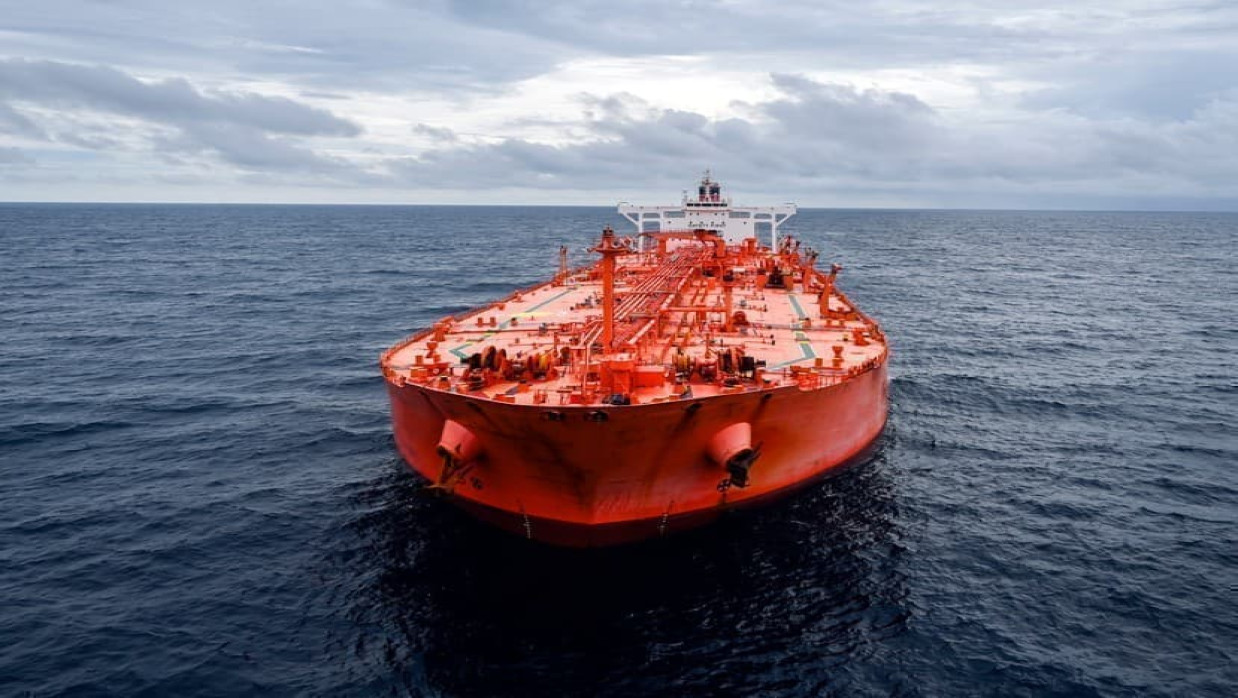
Washington thought it had forced India to turn away from Russian oil. But it hadn't. In February 2026, US President Trump announced what looked like a diplomatic win: India had reportedly agreed to stop buying Russian oil. In exchange, the US cut tariffs on Indian goods from 25 to 18 percent and also dropped a 25 percent surcharge that had been slapped on Indian purchases of Russian crude. The message from Washington was straightforward, economic pressure had forced New Delhi to pull away from Moscow, cutting off a key revenue stream for Russia. But India never actually agreed to stop buying Russian oil entirely. The joint statement released on February 6 discussed taxes, market access, and energy security in general terms but nothing about a ban. That ambiguity gave India room to keep its ties with Moscow without technically breaking the deal. Imports had already been sliding, down to 1.1 million barrels a day in January 2026 from a 2025 average of 1.7 million, but that had as much to do with market forces as with American pressure. Indian refiners were dealing with a messy landscape. Western sanctions were making financing and shipping harder. European limits on refined-product imports were squeezing margins for Indian exporters, and the steep discounts on Russian crude that had made it so attractive were starting to shrink. For India, which imports more than 85 percent of its energy, oil isn't symbolic. It's survival. Russia became a top supplier after the invasion of Ukraine for one reason, its oil was available and cheap. New Delhi has treated the ability to switch suppliers as a form of energy insurance. When conflict in the Middle East disrupted the Strait of Hormuz, it forced Gulf producers to cut output and the global market scrambled for alternatives. Middle Eastern crude got more expensive and riskier to ship as insurance costs climbed and almost overnight, Russian oil went from politically toxic to essential.
By March 5, the U.S. Treasury had to square its geopolitical goals with the reality on the ground. It authorized Indian companies to buy oil already in transit and gradually eased restrictions on new purchases too. These were framed as narrow, temporary waivers, but they amounted to a retreat. Faced with a global energy crunch, Washington chose supply stability over isolating Russia. The irony wasn't subtle. Weeks after celebrating India's reduced imports as a diplomatic win, Washington was quietly helping Russian crude flow again to head off a supply collapse. The market reacted fast. Indian imports of Russian oil doubled in March, and state-owned firms increased purchases by 148 percent. By month's end, India had reclaimed its spot as the world's largest buyer of Russian fossil fuels. This wasn't India defying Washington. It was India doing what any major energy importer does: buying what's available when the price makes sense. The timing worked out well for Moscow. Russian oil revenues had dipped to $9.5 billion in February, then rebounded sharply in March as Russia sold into a market that needed every barrel it could get. It would be too simple to credit the U.S. waiver alone for that roughly $10 billion swing, but rising prices combined with Indian demand clearly helped. The whole strategy behind the sanctions, limiting Russian revenue without setting off a global supply shock, got put to the test. The Hormuz crisis exposed just how fragile that balance really is. Russia doesn't need to control the market to benefit from a shortage elsewhere; when Middle Eastern oil isn't available, the price of oil everywhere goes up. In March, Russian oil frequently traded above the G7 price cap. Had that cap actually been enforceable, Moscow's revenue might have been cut nearly in half. Instead, demand and Russia's evolving logistics network gave it a workaround. Russia has spent years building a "shadow fleet" of tankers that operate outside Western insurance and shipping systems, and by March, nearly half its oil was moving through those vessels. None of this means sanctions failed. They've raised Russia's costs, shrunk its pool of buyers, and forced it to build expensive, inefficient workarounds for financing and shipping. But there's a difference between wounding an exporter and stopping one. Four years into the war, Russia is still a major global supplier. Sanctions have reshaped where and how Russian oil moves. They haven't ended the trade.
Ukraine, meanwhile, has gone after infrastructure that sanctions can't touch. In March, drone strikes on Russian export terminals caused major loading delays and at one point shut down key Baltic terminals entirely. That kind of physical damage hits faster than economic policy ever could. Sanctions complicate a sale; a terminal attack can stop exports at the source. Even so, the market absorbed the shock. Research from the Centre for Research on Energy and Clean Air found that the price spike from the Hormuz crisis largely offset the revenue Russia lost from reduced export volumes. As Russia's capacity shrank, what it did sell simply became more valuable. That's the paradox at the heart of any plan to squeeze Russian energy: the world still runs on oil. When supply gets tight, market incentives tend to beat geopolitical preferences.
India seemed to understand this before Washington did. By June, Indian purchases were on track for record highs. The Indian Express reported Russian crude approaching 2 million barrels a day, nearly half the country's total imports. By July, Reuters reported Indian refiners ramping up further as the Urals-to-Brent discount narrowed from about $10 to just $1 or $2, a sign that Russian oil had become premium property in a tight market. That's a long way from where things stood at the start of the year. The oil Washington had tried to make politically radioactive was, once again, valuable enough that refiners were paying close to market price for it.
Which brings the story back to February. American pressure did win a real, if temporary, concession that Washington could point to in trade talks. But what happened afterward shows the limits of that leverage. India never signed up to abandon Moscow as a strategic matter. Washington could tilt the economics for a while, but it couldn't erase the basic demand that made Russian oil attractive in the first place. In the end, Washington ran into its own limits. When energy markets are calm, policy can treat oil as a geopolitical lever. Once the system is under strain, keeping oil flowing matters more than squeezing every last barrel. That's not hypocrisy, exactly. It's what happens when you try to use a global commodity as a tool of statecraft. The lesson from the India-Russia story is that sanctions only work as well as the market conditions allow. In a market with plenty of supply, sanctions can squeeze an exporter hard. In a scarce market, that same exporter gets its leverage back, because every barrel suddenly matters. India realized early on that it didn't have to choose between Washington and Moscow. It just had to keep its options open.
The February tariff deal was less about India walking away from Russia and more about the limits of American leverage over a country that puts energy security first. By midyear, Washington was granting the very permissions it had once tried to restrict. Russia's quiet win wasn't the product of clever diplomacy outmaneuvering Washington. It came down to something simpler: Moscow held onto the one thing sanctions couldn't touch, the basic value of oil in a world that suddenly needed more of it. That leaves Washington with an uncomfortable question. If a regional conflict can undo months of diplomatic pressure, how much can bilateral energy diplomacy really accomplish? Maybe the weak point was never New Delhi's resolve. Maybe it was the assumption that Washington could shape the oil market without the market shaping Washington right back. The market had the final word. In 2026, that word favored Russia, and it's a reminder that as long as the world runs on oil, Russian barrels aren't going anywhere.


0 Comments
LEAVE A COMMENT
Your email address will not be published