

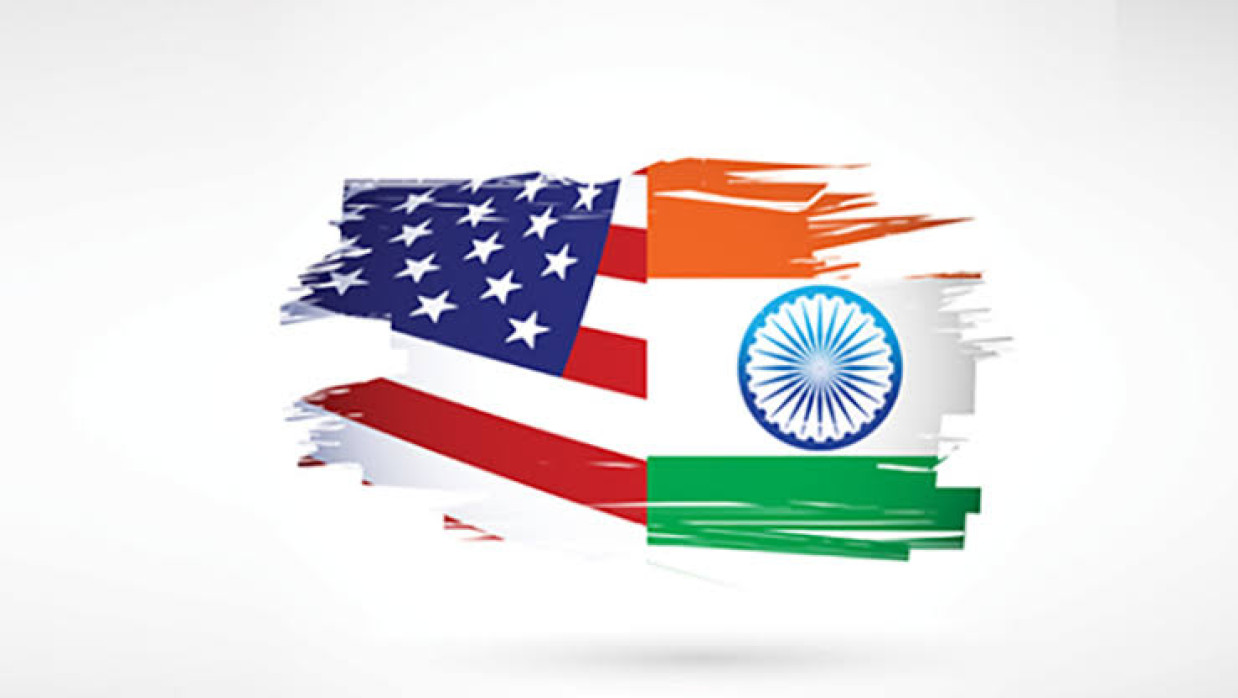
On 16-17 June 2026, the U.S. Department of War announced that United States Indo-Pacific Command, headquartered at Camp H.M. Smith in Hawaii, would revert to its pre-2018 title: United States Pacific Command (USPACOM). The command’s area of responsibility, force posture, and mission set were declared unchanged. Officials framed the decision as a restoration of institutional heritage, a return to the name under which the command had operated since 1947, through the Korean War, Vietnam, and the Cold War’s Pacific theatre. Coming eight years after Secretary Jim Mattis added “Indo” to the title in 2018 specifically to recognize the deepening connectivity between the Indian and Pacific Oceans, and to signal India’s elevation from a South Asian actor to a wider regional balancer, the reversal was immediately read in New Delhi, Tokyo, Canberra, and Beijing as something more than nomenclature. It landed amid a year of “systemic whiplash” in U.S.-India relations, importantly the tariff disputes that had pushed duties on Indian exports as high as 50 percent before a February 2026 truce brought them to 18 percent, a cancelled Quad summit, and renewed U.S. engagement with Pakistan, and shortly after a U.S.-Iran ceasefire framework reduced the salience of the Indian Ocean’s western reaches to American planners. The Department of War insisted the change was symbolic rather than strategic. This essay takes the opposite premise seriously: that in international politics, the vocabulary a hegemon uses to describe a region is never merely decorative. Naming is a technology of order. To ask what the region will be called is to ask who gets to define its boundaries, its threats, and its hierarchy of partners, and the answer to that question is now visibly contested.
This essay develops a single argument across ten movements. The renaming is not the story; it is the symptom. The deeper story is that the Indo-Pacific, as a strategic geography and a normative project, has outgrown its American authorship. Washington coined the term to recruit India into a balancing coalition against China. Within a decade, India, Japan, Australia, ASEAN, the European Union, and even China’s rivals and partners internalized the concept, each bending it to their own purposes. Now, as the United States retrenches toward a narrower, more transactional definition of its interests, the term’s survival no longer depends on American sponsorship. The result will not be a restored liberal hegemony, nor a Chinese-ordered hierarchy, but a fragmented, negotiated, multiplex maritime order, one in which India’s role shifts from junior partner in an American project to an indispensable, self-interested balancer operating across multiple, sometimes contradictory, coalitions at once.
I. Genealogy: How the Region Got Its Names
Regional names in Asia’s maritime rimland have always been instruments of power, not neutral cartography. “Far East” positioned the region relative to Europe. “Asia-Pacific,” the dominant Cold War and post-Cold War term, reflected an economic architecture: APEC, the “Pacific Century”, centred on trans-Pacific trade between the United States, Japan, and the rising economies of East and Southeast Asia. It had almost no place for India, which spent the Cold War oriented toward non-alignment and the Indian Ocean rather than Pacific trade circuits, and whose economy was largely closed until 1991.
The intellectual origins of “Indo-Pacific” as a single strategic space are older than its 2017-2018 American adoption. Japanese strategists, and later Prime Minister Shinzo Abe’s 2007 “Confluence of the Two Seas” speech to the Indian Parliament, first articulated the idea that the Indian and Pacific Oceans formed a connected maritime theatre requiring a shared democratic response to Chinese assertiveness. Australian defense planners adopted the term in their 2013 Defence White Paper. India’s own naval doctrine had long treated the Indian Ocean as its primary sphere, but under Prime Minister Narendra Modi, “Indo-Pacific” became diplomatically useful precisely because it inflated India’s relevance beyond South Asia into a Pacific-facing power. Only in 2017, with the Trump administration’s National Security Strategy and the 2018 renaming of Pacific Command, did the United States formally adopt the term as the organizing frame for its own regional strategy, a strategy explicitly built around elevating India as a counterweight to China, alongside Japan and Australia in the revived Quadrilateral Security Dialogue.
This genealogy matters because it shows that “Indo-Pacific” was never solely an American concept that others borrowed. It was co-produced, with Tokyo and Canberra doing much of the early conceptual work and Washington supplying the institutional and military weight. That co-production is precisely why the term can survive an American retreat from it: ownership was always distributed, even if American power made the 2018-2025 period feel like an era of U.S.-defined regional order.
II. Theoretical Bearings: Reading Order Through Multiple Lenses
No single theoretical tradition adequately captures a transition of this kind, so this essay draws on several traditions, deliberately in tension with one another.
Realism, in both its structural (Waltz) and offensive (Mearsheimer) variants, explains the renaming as an artifact of relative power shifts: as U.S. capacity to sustain a two-ocean forward posture is strained by fiscal constraints, competing theatre demands (the Middle East, Europe, the Indo-Pacific itself), and the sheer scale of China’s naval buildup, Washington narrows its declared commitments to match shrinking means. Power transition theory, in the tradition of Gilpin and Organski, would frame this as a hegemon husbanding resources as the gap with a rising challenger narrows: a retrenchment strategy rather than a retreat. Britain’s 1968 decision to withdraw from East of Suez reflects a comparable dynamic: the deliberate recalibration of strategic ambitions to accord with material limits, accompanied by an effort to frame the adjustment as prudent strategic adaptation rather than imperial retrenchment.
Liberal institutionalism (Keohane, Ikenberry) offers a different diagnosis: that the “liberal international order” was never simply the sum of American military commitments but a dense web of institutions, rules, and reciprocal obligations. On this reading, a name change at a single combatant command matters less than the fate of the rules-based trading system, freedom-of-navigation norms, and multilateral institutions, all of which face their own separate stresses (WTO paralysis, tariff wars, the fragmentation of technology standards) regardless of what a command is called.
The English School (Bull, Buzan) directs attention to international society rather than either raw power or formal institutions: to shared norms of sovereignty, non-intervention, and diplomatic practice among the region’s states. From this vantage, the Indo-Pacific’s durability depends on whether its members, importantly India, Japan, Australia, ASEAN states, have internalized it as a genuine “regional society” with shared expectations, rather than as an artifact of American patronage. The evidence, examined below, suggests they largely have.
Constructivism (Wendt, Katzenstein) insists that “Indo-Pacific” is not a description of a pre-existing geography but a social construction that shapes the interests and identities of the actors who use it. Once India’s foreign policy establishment, media, and strategic community began routinely describing India as an “Indo-Pacific power,” that identity became sticky. It will outlast the term’s American sponsorship because it has been absorbed into India’s own self-conception, evident in the 2019 announcement of India’s own “Indo-Pacific Oceans Initiative” and its consistent use of the term across summits with ASEAN, the EU, and ally after ally.
Regional Security Complex Theory (Buzan and Wæver) suggests the Indian Ocean and Western Pacific were, until recently, only loosely coupled security complexes (also, unstructured security regions): India’s threat perceptions centred on Pakistan and the Himalayan frontier with China, while East Asian security dynamics centred on Taiwan, the Korean Peninsula, and the South China Sea. The Indo-Pacific concept’s chief achievement was partially fusing these complexes, most visibly through the Quad’s shift from disaster-relief cooperation to explicit deterrence signalling in the South China Sea. Whether that fusion survives American ambivalence is an open empirical question this essay addresses in Section VII.
Neo-Gramscian and postcolonial approaches (Cox, Acharya) caution against reading any of this purely as a contest of great-power labels. Amitav Acharya’s work on the “multiplex world”, a world of multiple, overlapping, and sometimes contradictory orders rather than a single hierarchy, is the closest existing framework to the argument this essay advances, and it is extended below into a more specific analytical structure for the maritime Indo-Pacific.
III. The Renaming as Strategic Signal, Not Strategic Reversal, and Why That Distinction Still Matters
The Department of War was careful, and largely accurate, in stating that USPACOM’s area of responsibility, stretching from the U.S. West Coast to India’s western maritime border, and from the Arctic to Antarctica, remains unchanged, as does its force structure and command relationships. No units moved. No treaty was abrogated. The Quad continued to exist; a Quad foreign ministers’ meeting was held in May 2026 alongside Secretary of State Marco Rubio’s visit to New Delhi, at which a Critical Minerals Framework was signed. Analysts across the spectrum, including retired Indian officers writing in the Indian press, largely agreed that the immediate operational consequences were negligible.
Yet the same commentary consistently identified a symbolic cost that operational continuity cannot erase. The word “Indo” was not a random addition in 2018; it was chosen, in Mattis’s own framing, to recognize the deepening connectivity of the Indian and Pacific Oceans and to reflect India’s elevated status as a partner. Removing it, even while insisting the mission is unchanged, sends the opposite signal: that the Indian Ocean, and by extension India’s centrality to U.S. regional strategy, no longer requires separate acknowledgment in the command’s own name. Indian retired officers and commentators explicitly linked the decision to a broader deterioration in the bilateral relationship over 2025: a trade war that pushed tariffs to 50 percent, a cancelled Quad leaders’ summit in India after President Trump reportedly declined to travel, renewed U.S. courtship of Pakistan’s military leadership, and mounting frustration in New Delhi that Washington was treating India and Pakistan as diplomatically equivalent after the May 2025 India-Pakistan conflict. An incorrect rendering of India’s borders on an updated command website map, seized upon by Indian commentators in the same news cycle, only reinforced the perception of diminished attentiveness rather than malice, a bureaucratic slight rather than a considered snub, but no less telling for that.
The theoretical stakes of this distinction are considerable. Constructivism holds that identities and signals matter independently of material capabilities: a partner who believes it is being deprioritized will hedge, diversify, and recalculate its dependence, regardless of what the formal alliance architecture says. Realist logic would add that signals of declining commitment are precisely what rising or middle powers use to update their assessments of a great power’s reliability - the mechanism by which alliance credibility erodes gradually, well before any formal rupture. On both readings, Washington has handed itself a self-inflicted, low-cost signal of ambivalence at a moment when it can least afford one, given that its principal utility to India was always as a counterweight to China rather than as an economic partner. As Indian strategic analysts and commentators observed, if Washington’s approach to Beijing itself shifts toward stabilization, a “G-2” style modus vivendi rather than sustained rivalry, India’s strategic value to the United States, and vice versa, diminishes correspondingly. The renaming, in that sense, is a weather vane for a deeper and more consequential possibility: that Washington may be quietly hedging on how central the “China challenge”, and therefore India, remains to its grand strategy.
IV. American Relative Decline: Five Dimensions
The renaming should be situated within a broader pattern of American recalibration that is real but frequently overstated in either direction. Five dimensions merit separate treatment.
Military dimension. The United States retains unmatched power-projection capability, but the arithmetic of simultaneous commitments has worsened. Sustained naval and air deployments tied to the Middle East (including the 2025 Iran crisis and subsequent ceasefire architecture), continued support obligations in Europe, and the sheer scale of China’s naval expansion, now the world’s largest navy by hull count, have stretched planning assumptions that once presumed uncontested Pacific primacy. The 2026 Global Firepower rankings still place the U.S. military first, but the margin over China in the Western Pacific specifically (particularly in contingencies involving Taiwan and the First Island Chain), rather than globally, has narrowed enough that U.S. planners increasingly discuss “denial” rather than “dominance” as the realistic operational goal in a Taiwan contingency.
Economic dimension. As part of the tariff-first trade policy, applied indiscriminately to allies and rivals alike, India was branded a “tariff king” and hit with 50 percent duties in 2025 before the February 2026 truce, leading to undercut the economic pillar of “friend-shoring” that was meant to complement military balancing. Partners cannot be simultaneously recruited as strategic counterweights to China and treated as sources of extractable trade concessions without cost to trust. India’s own hedging, by ways of expanding the TRUST Initiative, FORGE, and “Pax Silica” technology partnerships even as it diversifies energy imports and courts Russia, the EU, and Gulf partners, is a direct behavioural response to this inconsistency.
Technological dimension. U.S. leadership in frontier AI and advanced semiconductors remains real, and initiatives like the U.S.-India Initiative on Critical and Emerging Technologies (iCET) and the Critical Minerals Framework signed in May 2026 show continued efforts to lock in partners. But China’s advances in areas from batteries to rare-earth processing to lower-cost AI models have narrowed the gap enough that technological primacy can no longer be assumed as a standing asset; it must be actively defended through coalition-building, precisely the kind of coalition-building that tariff disputes complicate.
Institutional dimension. American ambivalence toward multilateral commitment, visible in the cancelled 2025 Quad summit, uneven engagement with ASEAN-centred forums, and continued disengagement from the CPTPP that Washington itself designed, has created space that regional institutions and other powers are filling, discussed in Sections VIII and IX.
Ideational dimension. Perhaps most consequential, and least reversible by policy alone, is the erosion of the United States as the unquestioned author of the region’s normative vocabulary. When the term “Indo-Pacific” was exclusively American property, Washington could calibrate its meaning to serve its interests. Once India, Japan, ASEAN, and the EU each publish their own “Indo-Pacific strategies” with distinct emphases, for example, India stresses inclusivity and multipolarity over containment of China, ASEAN stresses centrality and non-alignment, the EU stresses connectivity and rules, the term becomes genuinely plural. American retrenchment does not end the Indo-Pacific; it simply removes the United States’ privileged position as its sole narrator.
V. China’s Ascendance and the Reconfiguration of Regional Order
China has not needed the Indo-Pacific concept to advance its own regional project, and largely rejects the term itself as a thinly veiled containment strategy, preferring “Asia-Pacific” or bilateral and BRI-centred framings. Beijing’s approach operates on parallel tracks: continued military modernization and grey-zone assertiveness in the South China Sea and around Taiwan; economic statecraft through the Belt and Road Initiative, now recalibrated toward smaller, more financially disciplined projects after early debt-sustainability controversies; and an increasingly confident diplomatic posture that seeks to exploit precisely the kind of U.S.-India friction visible in 2025-2026. President Trump’s own outreach to Beijing, including a widely noted visit, has fed Indian anxieties about a possible “G-2” stabilization between Washington and Beijing that would relegate Indo-Pacific balancing to a lower priority. China’s strategy, in short, is not to out-compete the Indo-Pacific concept but to wait out American attention span, using economic leverage and periodic diplomatic charm offensives toward India, ASEAN, and Europe to peel off partners from a coalition it regards as inherently fragile. The USPACOM renaming, however symbolic, is precisely the kind of evidence Chinese diplomats can and do cite to regional audiences as proof of American unreliability.
VI. India’s Strategic Evolution: From Non-Alignment to Multi-Alignment
India’s trajectory is the essay’s pivot. From Nehruvian non-alignment through the Cold War to the “strategic autonomy” doctrine of the 1990s-2000s, Indian foreign policy consistently resisted binding alliance commitments. What has changed since roughly 2014, and accelerated through the 2020s, is not the abandonment of that instinct but its sophistication: India now practices what scholars term “multi-alignment”: simultaneous, compartmentalized partnerships with the United States, Russia, the EU, Japan, Australia, Gulf states, and, cautiously, even China, each calibrated to distinct issue areas rather than organized around a single civilizational or ideological pole.
The evidence for this is abundant in 2025-2026 developments. India signed a February 2026 trade truce with Washington while continuing, under sustained U.S. pressure, to recalibrate rather than abandon its Russian oil purchases, accepting a reduction as a negotiating chip rather than a wholesale reorientation. It deepened the Quad’s critical-minerals cooperation (a roughly $20 billion commitment) while simultaneously expanding the India-Middle East-Europe Economic Corridor (IMEC) and the I2U2 grouping with Israel, the UAE, and the United States, hedges that reduce dependence on any single corridor or patron. In October 2025, it signed a ten-year Framework for Defence Partnership with the US and expanded exercises like Yudh Abhyas and Malabar with Washington and Quad partners, even as in March 2026, its defense ministry issued “Defence Forces Vision 2047”, a twenty-year roadmap emphasizing indigenous production and self-reliance, a hedge against dependence on any external supplier, American or Russian. And it absorbed, without dramatic public rupture, both the tariff shock of 2025 and the symbolic slight of the USPACOM renaming, responding through diversification rather than confrontation.
This pattern fits what this essay terms civilizational statecraft: India increasingly frames its international role not as a regional power seeking recognition from a Western-led order, but as one of several civilizational poles, alongside China, the West, and arguably a reconstituted Islamic world, entitled to define its own terms of engagement with each. This is visible in India’s rhetoric of “Vishwaguru” (world teacher) branding, its assertive positioning within the Global South on issues from vaccine equity to climate finance, and its refusal of third-party mediation on Kashmir even from its closest security partner. Multi-alignment is the operational strategy; civilizational self-conception is the underlying identity claim that makes multi-alignment domestically legible and sustainable rather than appearing as mere opportunism.
The strategic logic this produces is important for the essay’s central claim: India does not need the Indo-Pacific to be an American project in order to remain committed to it. Because India helped construct the concept’s meaning from early on, via its own 2019 Indo-Pacific Oceans Initiative, its Act East policy, and its consistent framing of the Indo-Pacific as “free, open, and inclusive” (a formulation that pointedly avoids explicit anti-China framing, unlike some American and Japanese usages), India’s stake in the concept is independent of Washington’s naming conventions. If anything, an American retrenchment creates space for India to assert a more explicitly India-centred version of the Indo-Pacific, oriented around the Indian Ocean Region where India’s own naval primacy is least contested, rather than remaining a secondary partner in an American-centred Western Pacific strategy.
VII. Allied and Partner Recalibration
Japan remains the most institutionally committed Indo-Pacific proponent, having authored much of the concept’s early architecture and sustained the largest defense-budget increases of any regional U.S. ally. Tokyo’s response to American ambivalence has been to deepen minilateral hedges, such as trilateral cooperation with Australia and South Korea, expanded defense-industrial ties with India, rather than to question the concept itself. Japan’s Prime Minister Sanae Takaichi’s July 2026 visit to India aimed to further strengthen the Japan-India “Special Strategic Global Partnership” and to make India an “important part” of Japan’s security transition.
Australia, having invested heavily in the AUKUS submarine partnership, faces the starkest exposure to any American wavering, given the multi-decade, capital-intensive nature of that commitment; Canberra’s public posture has been to reaffirm AUKUS while quietly diversifying regional partnerships, including with India and Japan, as insurance.
South Korea and the Philippines occupy more exposed positions given direct territorial and alliance stakes (North Korea, the South China Sea), and have correspondingly been the most vocal in seeking reassurance of continued American commitment, with Manila in particular expanding defense cooperation with Japan, Australia, and India as supplements to its U.S. treaty alliance.
ASEAN, collectively, has long pursued a strategy of “centrality”, insisting that Southeast Asian institutions, not great-power minilaterals, remain the region’s organizing hub, precisely because it fears exactly the kind of great-power volatility now visible in Washington’s posture. ASEAN’s own Outlook on the Indo-Pacific, adopted in 2019, deliberately avoided binding security commitments and emphasized inclusivity toward both the U.S. and China, a hedge that looks increasingly prescient. Individual members diverge sharply: Vietnam and the Philippines lean toward balancing against China; Cambodia and Laos toward accommodation; Indonesia, Malaysia, and Singapore toward careful non-alignment, each calibrating trade and security ties issue by issue. In recent years, as ASEAN centrality in the region has come under increasing strain, several ASEAN member states have started looking at India to strengthen maritime security and capacity-building efforts while avoiding alignment with either the United States or China.
Europe has entered the Indo-Pacific vocabulary more recently,

0 Comments
LEAVE A COMMENT
Your email address will not be published