

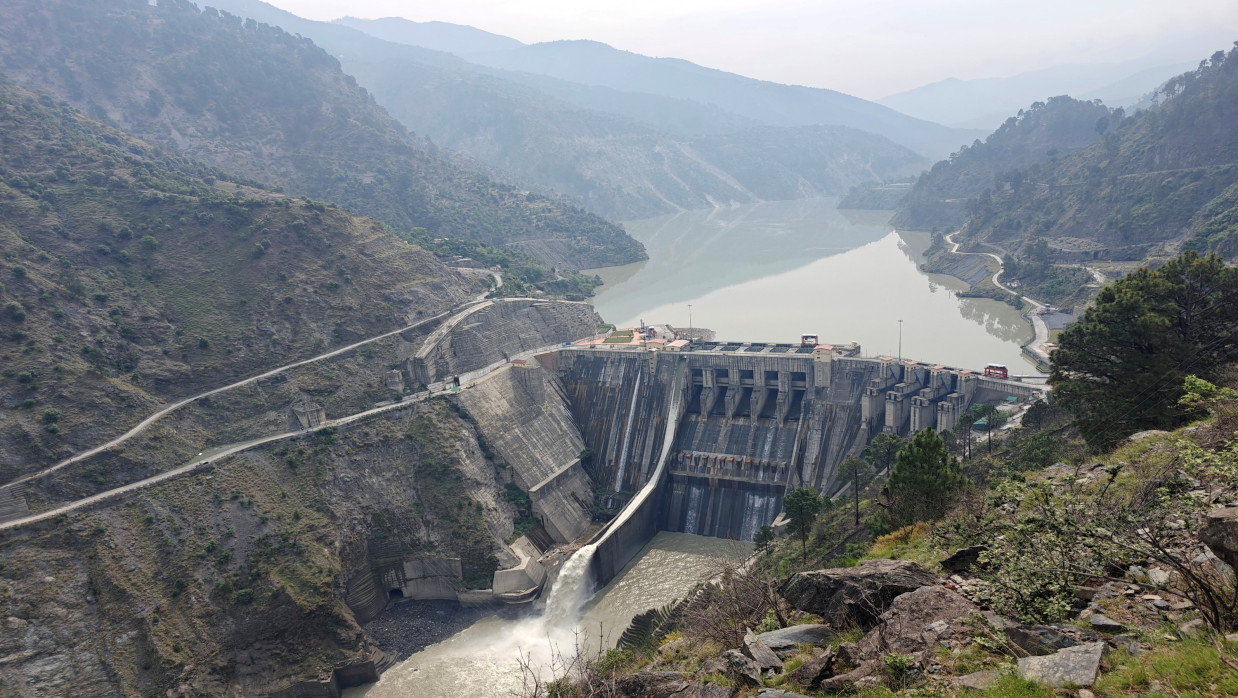
The reported Chenab–Beas link tunnel, and Salal sediment management project should be read as part of some wider Indian attempt to expand hydraulic control over the western rivers, at a moment when the Indus Waters Treaty is already under political strain. India may present these projects as technical, developmental or energy-related. Pakistan cannot afford to read them so narrowly. In the current context, infrastructure on the Chenab is inseparable from treaty compliance downstream security and the weaponisation of water.
The Indus Waters Treaty created a carefully balanced system. India received the eastern rivers Ravi, Beas and Sutlej while Pakistan received the western rivers Indus, Jhelum and Chenab, subject to limited Indian uses defined by the treaty. This framework was not accidental. It was designed to protect Pakistan as the downstream state while still allowing India certain controlled uses. That balance collapses if India begins treating the western rivers as a flexible resource base for unilateral diversion.
The Chenab–Beas Link Tunnel is therefore not a routine river linking proposal, it is reportedly meant to transfer water from the upper Chenab basin into the Beas system via a tunnel and then an associated canal network. The Beas belongs to the eastern river system that India has been allocated, while the Chenab is part of the western river system allocated primarily to Pakistan. The whole thing is legally touchy and it does not really sit comfortably under existing expectations. Even if India wants to argue that only “surplus” water is involved, that statement cannot be treated as acceptable just because it is made by India alone.
The word “surplus” is pretty dangerous in transboundary water politics. Rivers do not automatically become surplus because an upstream government says so. Downstream needs change with the season, the crop cycle, climate stress, groundwater conditions and also flood-management requirements. What India might label as unused water in the upper basin could actually be part of Pakistan’s irrigation reliability ecological flows, recharge cycle or future water security. In a treaty setup, surplus has to be estimated through agreed mechanisms, not by one-sided political declarations.
The Salal Dam project brings a somewhat different but still connected worry. Sediment management is, technically speaking, pretty easy to follow because Himalayan rivers bring in heavy sediment loads and reservoirs tend to lose efficiency over time, you know. But Salal sits on the Chenab, that western river. So any attempt to strengthen sediment-management capability has to be reviewed alongside treaty duties, day to day operational impacts and what happens downstream, too. If sediment works end up improving India’s ability to flush, retain, regulate, or even reshape flows, without clear and transparent coordination, then Pakistan’s concerns stop being theoretical and start looking both legitimate and urgent.
The biggest issue is not only the physical infrastructure itself. It is India’s refusal to keep full cooperative behaviour under the treaty. Hydrological data matters directly for Pakistan’s flood forecasting, crop scheduling, canal operations and disaster preparedness. When India pushes major upstream activities while holding back, or restricting, information, the whole risk profile changes. It stops being a mere technical disagreement and turns into strategic opacity. Downstream states cannot actually manage water security properly, if the inputs are missing or kept unclear.
This becomes even more risky under climate change. The Chenab basin is fed by snowmelt, glaciers and monsoon systems that are starting to behave in ways that are harder to predict. Big, sudden shifts in flow, extreme rainfall, glacial melt, and sediment instability are not far away possibilities anymore. They are now core aspects of Himalayan hydrology. In that kind of setting, treaty compliance and real time data-sharing should become more important, not less. Yet India’s current direction moves the other way, and that is the part that really troubles Pakistan.
The legal backdrop, it basically boosts Pakistan’s position. The Indus Waters Treaty doesn’t have any unilateral suspension clause, so India can’t just, sort of stop it from one day to the next. India’s statement that the treaty is in abeyance may work for a domestic political story line, but it doesn’t wipe out the legal responsibilities. International agreements cannot be turned off by executive messaging alone. And if India actually has objections, the treaty already sets out ways to handle them, like notification, objections, neutral expert steps, plus arbitration. Skipping those steps cuts into the credibility of every cross-border water arrangement.
The Permanent Court of Arbitration has, in effect, reinforced that India must generally let the waters of the western rivers flow for Pakistan’s unrestricted use, but only subject to strict treaty exceptions. And that point is not abstract, it connects directly to Chenab-linked projects. India cannot stretch treaty exceptions so much that the exception ends up eating the rule. Hydropower decisions, sediment management programs, or even water transfers can’t quietly become a disguised way to steer or control a river that’s allocated to Pakistan.
Pakistan should then frame the matter with care. The best argument is not that every Indian project is automatically illegal, that sweeping claim could be pushed back on. The stronger line is that these projects create serious prima facie treaty concerns, and that means full disclosure is needed, along with a technical review, hydrological data-sharing, and adherence to dispute resolution procedures. Pakistan should insist on transparency before construction gets irreversible, and before on-the-ground realities start replacing treaty law, in practice.
The international community also has a responsibility, it can’t just watch, and then act surprised later. Silence over unilateral water pressure, it basically invites escalation. If India can put a treaty in abeyance, continue with diversion- linked infrastructure, and limit data-sharing with no serious pushback, then other upstream states might pick up that same pattern. Then you get a more unstable world, where water treaties are followed only when it’s politically convenient, not because they matter.
The Chenab is too important to be used as a test case for coercive hydro diplomacy, really. It sustains agriculture, livelihoods and food security for millions across Pakistan. The way it’s managed matters for regional stability between two nuclear armed states. India’s infrastructure push may be framed as development, but development without treaty compliance turns into strategic pressure, kind of like it wears a friendly costume. The only credible path ahead is full restoration of the Indus Waters Treaty mechanisms, immediate data sharing, a transparent review of all Chenab related projects and, at the same time, a clear international rejection of water weaponisation.


0 Comments
LEAVE A COMMENT
Your email address will not be published