

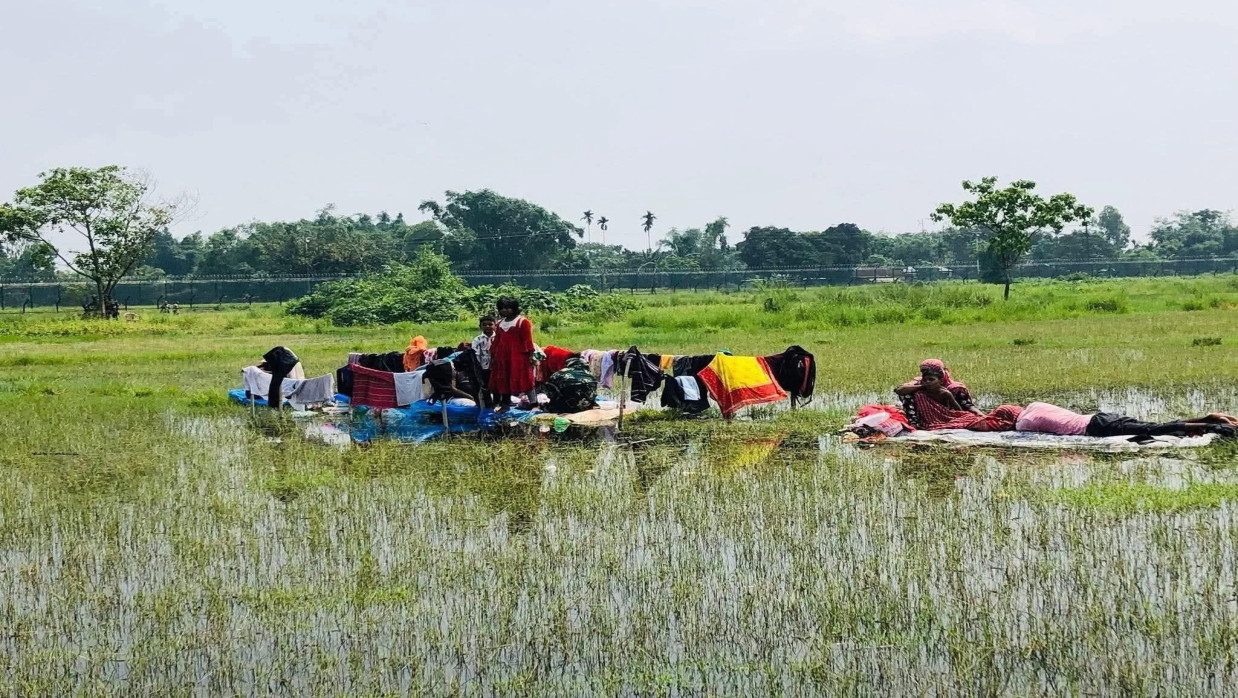
The Bangladesh–India border is among the most complex in the world. It is bordered by rivers, forests, agricultural fields, and densely populated regions, and has faced various problems, including migration, smuggling, and security issues. One of the recurring problems associated with the border has been the movement of people across the border. But recently, allegations that Indian forces were pushing people into Bangladesh without verification have taken bilateral ties to another level. Critics from both sides have questioned each other on sovereignty, human rights, irregular migration, and the politics of citizenship.
A Border Under Pressure
India's denial of citizenship documentation became newly politicized following recent statements by officials from both nations. Indian politician Suvendu Adhikari, the leader in West Bengal's government, announced that thousands of suspected illegal Bangladeshis had been sent back to Bangladesh or were in deportation centers awaiting return. Bangladesh government adviser Dr. Zahed Ur Rahman dismissed criticisms that India was deporting Bangladeshis without warning as a means of exerting pressure on Dhaka, stating instead that deportations were linked to internal politics in India and depended on electoral politics in bordering states.
Bangladesh claimed India was pushing groups of people towards the border of Bangladesh several times without notice, checking their nationality, or having diplomatic discussions. Bangladesh claimed the BGB stopped the groups and increased border security following these incidents. Bangladesh claimed that many women, children, and elderly people were pushed towards the border by India.
Pushback Versus Legal Repatriation
The main issue here is where legal repatriation ends and what rights groups are describing as "pushbacks" or "push-ins." For repatriation to occur under internationally accepted standards, nationality would need to be confirmed, consultation with the government would be required, agreements between the states involved would be necessary, and the transfer would take place at official border crossings. Pushbacks occur when people are simply pushed back over the border without due process or adequate legal determination.
Rights groups have condemned forced deportation without determination of nationality, which would constitute illegal collective expulsion under both domestic law and international conventions prohibiting collective expulsion. Bangladesh says it will only accept those who have been confirmed to be Bangladeshi through established channels, but has resisted handovers unless they go through diplomatic channels.
The significance of this gap is that nationality claims are often disputed along the border because many families live on both sides and share the same language and culture.
The Human Dimension
Perhaps most disturbing is how these reports have affected regular people.
In many reported cases, the individuals possessed voter ID cards, national identity cards, or other documents showing they were registered, yet were still declared foreigners. Human rights organizations and activists have also stated that individuals from poor backgrounds often do not have lifetime documentation evidencing their lives in India.
Officials have cited figures on the recent pushback, which reportedly included Indian nationals and even nationals of third countries (such as Myanmar). If true, these incidents would be troubling, given how nationality is assessed and the measures in place to ensure fair treatment before deportation.
These incidents are especially egregious when individuals are stranded in border regions or "no man's land," where they may lack access to food, healthcare, shelter, or legal services.
Historical Patterns and Recurring Controversies
The present row is not happening in a vacuum. Accusations of pushback have been made on and off over several decades.
One oft-cited incident dates back to 2003, when over 200 people belonging to the Sapu community were allegedly left stranded at the border after both sides doubted their nationality. It is a marginalized, traditionally nomadic group found primarily in parts of northern India, especially in the border districts of West Bengal, such as Cooch Behar. Historically, many members of the community were involved in occupations such as snake charming, animal handling, folk entertainment, and itinerant trading. Human rights groups had raised concerns about the plight of the affected people at the time and the lack of an avenue for redress.
Analysts also highlight that border skirmishes related to migration between India and Bangladesh tend to spike during election years. Tensions over migration have often been raised as a domestic political issue in the eastern Indian states bordering Bangladesh, especially West Bengal and Assam. Fears over illegal immigration have been stoked for decades to influence voters in these states.
Observers say this has at times made migration a tool of politics.
Citizenship, Tribunals, and Due Process
Proponents of the system maintain that it provides a solution for illegal immigration and allows them to administer immigration violations. Detractors say many problems exist with the system, as the applicant has the burden of proof to demonstrate they are not an illegal immigrant. Many citizens, especially those who live in poverty or are marginalized, lack paperwork tracing their lineage and history.
Citizenship confers rights, including nationality, the right to vote and participate in civil society, the right to work and stay in a country, and social benefits. If a person loses their citizenship, they can be placed in prolonged detention or denied government services. Human Rights Watch has said countries must exercise "the highest standards of due process, fairness, transparency, and judicial guarantees when determining citizenship."
Bangladesh's Sovereignty Concerns
For Bangladesh, this is more of a border management issue than a migration issue.
Bangladesh has maintained that no state should be "pushing" people across an international boundary without "authentication" and "consultation." Bangladesh has maintained that it opposes the bilateral agreement on border management and that it undermines mutual trust.
"This is not just a humanitarian issue. It's an issue of territorial integrity," said a Bangladesh government source. Bangladesh wants to be able to say that anyone who comes from Bangladesh and is authenticated can be sent back, but pushing people into the country will not be tolerated.
As we know, respect for borders and territorial integrity is a two-way street.
The Political Context
The row comes at a delicate time in Bangladesh–India relations.
Both Bangladesh, since its political transition and the advent of the government of Muhammad Yunus, and India have sought to normalize relations and work toward stable, friendly ties. At the same time, both governments and political stakeholders in each country have continued to view migration through the prism of domestic politics.
Illegal immigration continues to be a potent emotive topic in Indian politics. Claims of forced deportations trigger nationalist sentiment over pride and territorial integrity within Bangladesh. This politicization allows even localized crimes to become diplomatic flashpoints.
Despite overheated rhetoric on both sides, few observers expect either government to want to see a prolonged diplomatic spat. The challenge for both sides is to prevent incidents on the border from gaining diplomatic momentum.
Toward a Cooperative Solution
Neither unilateral acts nor the blame game will help resolve the border issue in the long term. This has to be addressed through institutional initiatives and by building verification systems with proper checks and dialogue at the border level.
Should the BGB and BSF sit across the table for DG-level talks, progress could be made for a more defined mechanism of nationality screening, information sharing, and handling of disputed cases. Improved collaboration will inevitably reduce confusion without violating rights outlined by statute.
The history of Bangladesh and India is interlinked by cultural, economic, and geographical ties. Longstanding disputes over illegal migrants will benefit no one. Humanitarian issues and human rights should be considered with border security.
Conclusion
Pushbacks have been politically explosive precisely because migration and citizenship are never neutral issues and always involve questions of rights. Irregular migration into India from Bangladesh is solely a domestic issue for India to address through domestic law enforcement measures. Forced deportation from Bangladesh is legitimate only when official and undertaken through legal processes. How then can India and Bangladesh effectively manage migration without disrespecting human dignity, due process, and each other's sensitivities? Bangladesh and India actually share more interests than disagreements. Going forward, Dhaka and New Delhi should pledge to maintain relations that are based on reciprocity, respect, and tactfulness in public discourse.


0 Comments
LEAVE A COMMENT
Your email address will not be published