

Enforced disappearance is among the most terrifying instruments of political repression. An arrest, however unjust, at least creates a record: the prisoner has a name, a location, and, theoretically, access to a court. Enforced disappearance removes all three. The victim is taken outside the protection of law, while the authorities deny knowledge or responsibility. Families are condemned to search police stations, hospitals, prisons, and morgues without knowing whether they should continue hoping or begin mourning.
Enforced disappearance was not new to Bangladesh and did not start with the uprising in July 2024. It has been created over decades as part of an architecture of repression. The violence in July and August 2024 unlawful killings, mass arrests, torture, arbitrary detention, and short-term disappearance was the extreme result of a pervasive culture of impunity. The UN established reasonable grounds to believe that violations were committed as part of a widespread or systematic attack during the crackdown on protesters. Up to 1,400 people may have been killed between July 1 and August 15, 2024. The UN fact-finding report called for independent investigations and accountability, along with security-sector-wide reform.
Enforced disappearance was used well before the July 24 uprising in Bangladesh. It became part of a decades-long toolkit of oppression. The killing rampage of July-August arbitrary killings, mass arrests, torture, and short-term disappearances was sadly unsurprising given years of impunity. Investigators from the UN said there were reasonable grounds to believe that widespread and systematic human rights violations were committed in Bangladesh to suppress the uprising protests. “Up to 1,400 people may have been killed between July 1 and Aug. 15,” said the United Nations. A UN FACT-FINDING report, which documented abuses, called for independent investigations, security- sector reforms, and accountability.
A Machinery of Disappearance
Testimonies from survivors paint a horrifically consistent picture. Prisoners were said to be seized from their houses, streets, or workplaces, often by men in civilian clothes wearing ski masks and wielding weapons. Victims were blindfolded, handcuffed, and taken to secret detention facilities. Some prisoners were held incommunicado for weeks or months, during which time they were beaten, shocked with electric batteries, threatened with harm to their families, and otherwise physically and psychologically abused. Some were released. Some disappeared.
The Commission of Inquiry on Enforced Disappearances found that most cases of disappearances were politically motivated and carried out by officials who operated at the highest echelons of the defunct regime. Its final report reportedly confirmed 1,569 cases; 287 of them were categorized as cases in which the victims remained missing or were presumed dead. Commission members estimated the actual numbers could range from 4,000 to 6,000, since many victims did not speak out. The Commission also concluded that disappearances were orchestrated through a systematic mechanism rather than being arbitrary.
Disappearances condemn families to a living death sentence. Unable to produce a body, death certificate, or official explanation that meets international standards, families cannot bury their loved ones, settle their legal and financial affairs, or find closure. Punishment is compounded when governments deny knowing what happened to the disappeared. Families face not only loss of their loved ones but also the implication that they simply ran away, must have done something wrong, or were never in state custody at all.
The Unanswered Questions in Salahuddin Ahmed's Case
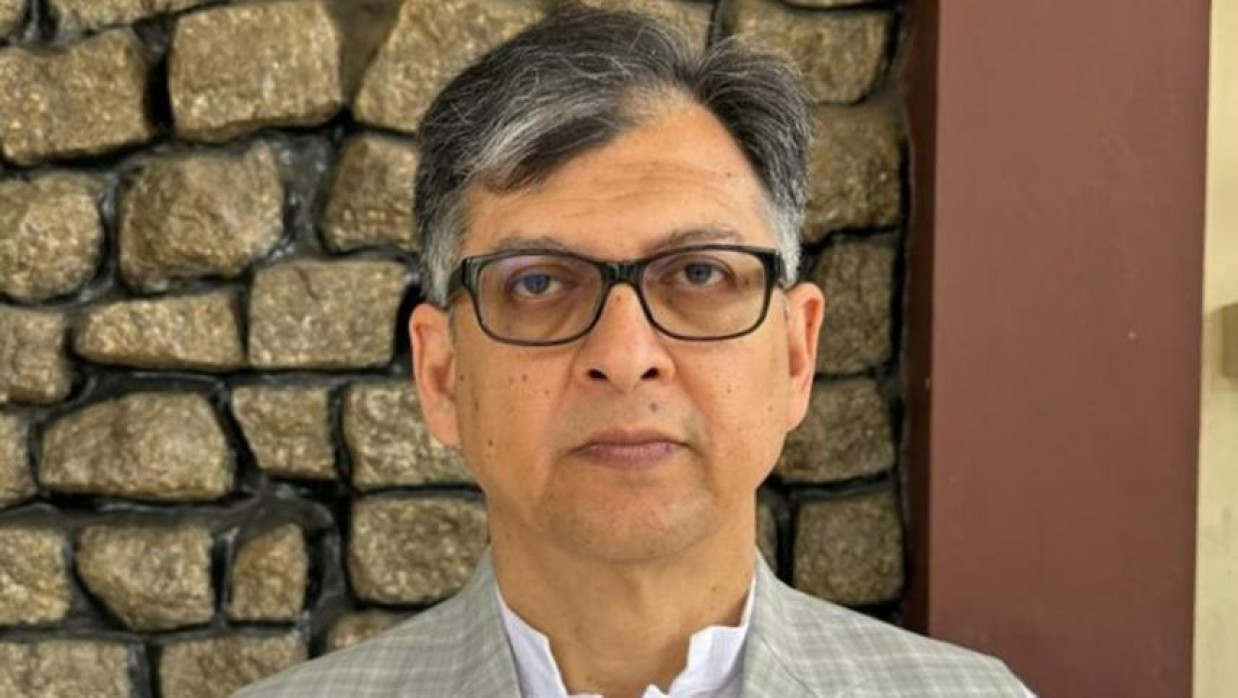
The case of Salahuddin Ahmed, currently Bangladesh’s home minister and a senior BNP leader, merits special attention. On March 10, 2015, while serving as the BNP’s acting spokesperson, he disappeared from a house in Uttara, Dhaka. His wife, Hasina Ahmed, alleged that men identifying themselves as law-enforcement personnel had taken him away. She repeatedly appealed to the prime minister for assistance and filed a writ petition asking the High Court to order the authorities to locate and produce him. Police, RAB, the Criminal Investigation Department, and other government agencies later told the court they had neither arrested Salahuddin nor held him in their custody. He reappeared more than two months later on May 11 in Shillong, India, reportedly in a confused state. He was arrested by Indian police who said he had illegally entered the country without valid documents. His wife later went to India to be with him. Therefore, it would be false to say that his family kept quiet and did not seek justice through the courts. Salahuddin himself filed a complaint with Bangladesh’s International Crimes Tribunal in June 2025, accusing former Prime Minister Sheikh Hasina and numerous former senior-level security officials as respondents.
Salahuddin claimed that he was abducted by unidentified persons in Dhaka, where he was blindfolded and forcefully taken to India. The Indian government tried Salahuddin under the Foreigners Act. Salahuddin was eventually found innocent, but because of court trials and immigration restrictions, he could not return to Bangladesh until August 11, 2024. Living in Shillong for 10 years might have been a nice life for a time, but Salahuddin did not spend 10 continuous years in India without incident: he was charged with a crime in India and was not allowed to leave.
Salahuddin submitted an affidavit to the International Crimes Tribunal on 3 June 2025. In his affidavit, he accused former prime minister Sheikh Hasina and six senior officials of security and government of committing crimes. Salahuddin stated he needed time to retrieve information. He also had other responsibilities that delayed him. This was released to the media.
However, this delay is certainly worth questioning. Why did nine months go by from the time he returned to Bangladesh until the filing of his complaint with the ICT? Why couldn't he provide a more complete legal narrative while living in India? Was he afraid of reprisals against himself or his family? Were they advised against coming forward by Indian or Bangladeshi authorities? What records are there of his entry into India, his medical treatment, his questioning, his surveillance and restriction of movement? Who brought him across an international border, and how did they do so clandestinely, with no official collaboration?
Questions over the involuntary nature of this episode cannot be brushed aside merely on the flimsy contention that many questions go unanswered. Nor does Salahuddin's stature as a politician mean his story cannot be scrutinized. Reasonable questions about this incident can be addressed only through a judicial investigation that demands visa logs, phone records, eyewitness accounts, medical documentation, police reports, and intelligence agency transcripts from Bangladesh and India. Salahuddin should be made to swear an oath and clarify events leading up to his capture in Uttara and subsequent production in Shillong, as well as the delay in filing a case. Let there be light; it would only confirm his claim if indeed what he says happened did happen.
Transitional Justice Must Be Impartial
Bangladesh needs much more than targeted prosecutions. Bangladesh needs a full transitional justice process to reveal the truth, to identify command responsibility, to uncover the bodies and detention centers, to compensate survivors and families, and to reform the institutions involved. RAB, the Detective Branch, military intelligence, and counterterrorism units will not regain public trust by rotating out their highest leadership. We must re-examine these agencies’ sweeping authorities, chains of command, detention procedures, and civilian oversight.
Journalists and media members who incited violence, knowingly fabricated evidence, or otherwise participated in criminal activities should be investigated like any other citizen under the law. Holding the media accountable should not be a means to punish journalists who report stories that some may not like. Each claim must be substantiated with proof and weighed through the judicial process. Otherwise, New Bangladesh will continue the injustices it once fought against.
In conclusion, the July Museum and other commemorative efforts must archive victims' testimonies, photos, paperwork, and belongings. Remembering is not ritual. It protects against forgetting, denial, and recurrence.
Honoring those who lost their lives in July and those who went missing in the years prior will take more than slogans. Salahuddin Ahmed's case, for example, will be a touchstone. Though his case is now in court, many questions remain. Only a thorough, independent judicial investigation, made public without political meddling, can reveal who picked him up, how he ended up in India, why justice was delayed, and whether state agencies on either side of the border played any role. Bangladesh cannot move forward with justice as long as part of its history remains in the shadows.


0 Comments
LEAVE A COMMENT
Your email address will not be published