

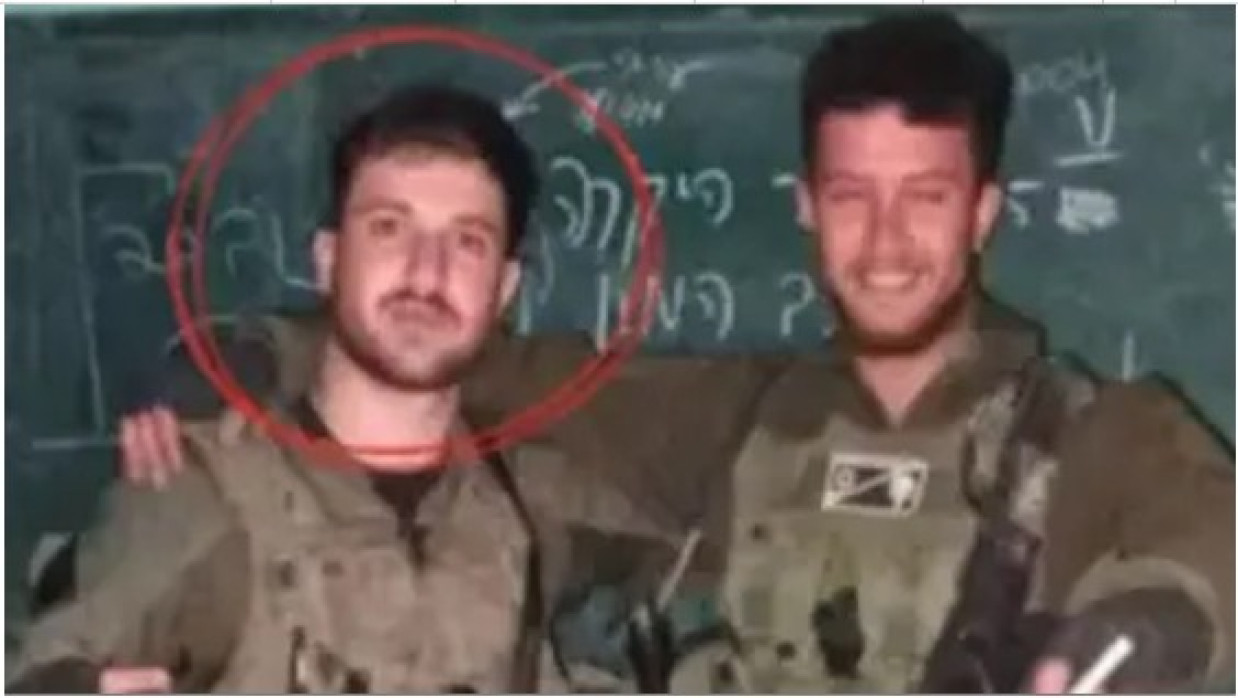
Israeli army reservist Eitan Gilboa is the defendant in an Indian court case over war crimes starting May 30, 2026. International accountability, culpability under criminal law, and India’s foreign policy with Israel are all being called into question by Gilboa’s attorneys, who want to pursue war crime charges in India. Hind Rajab Foundation (HRF) filed a war crimes complaint in India against Israeli soldier Eitan Gilboa for the first time under Indian law for alleged crimes in Gaza.
Indian law could see the reservists, along with other Israelis, face charges for their alleged war crimes. It is unknown whether Indian authorities will respond to the complaint filed against Gilboa and others. The suit has already put a spotlight on questions of impunity and the expectations of international humanitarian law when alleged war criminals set foot on another country’s soil.
The Allegations Against Eitan Gilboa
The complaint says that Gilboa was deployed as a reservist in the Israeli military’s 271st Combat Engineering Battalion during Israel’s military assaults on Gaza in response to Hamas’s attacks on October 7, 2023. HRF claims that while deployed, Gilboa was involved in the destruction of civilian infrastructure in Khan Younis, Rafah, and elsewhere and that he took pictures and videos of some of this destruction, which he later posted to social media. Pictures and videos posted to social media show celebratory remarks made by Gilboa as Israeli troops demolished Palestinian homes and other civilian buildings.
HRF alleges that this conduct could violate the protections for civilians under the Fourth Geneva Convention. HRF further claims that the evidence of this can be viewed on public feeds, including Gilboa’s own social media accounts, showing him smiling and laughing while Israeli troops destroy Palestinian homes. Gilboa himself has yet to speak out regarding the allegations against him. He has not been convicted of any crimes by any court. However, the complaint has sparked a conversation in the court of public opinion and brought the allegations to the attention of Indian officials.
Why India Became the Focus
At the time of the complaint, Gilboa was reportedly traveling in Himachal Pradesh, a region long popular among Israeli tourists. Places including Old Manali, Kasol, Dharamkot, and the Parvati Valley are known destinations on the tourist trail Israel is known to take after national service, colloquially known as the “Hummus Trail.”
Israelis have been drawn to India for its low prices, cultural acceptance, beautiful landscapes, and well-established tourism infrastructure that has welcomed Israelis for decades. Most Israeli citizens are required to serve in the Israeli military. Many of the tourists visiting foreign nations are current or former members of the military. Activists and legal observers question whether nations that host such tourists owe any responsibility to probe credible accusations of war crimes.
Legal Basis of the Complaint
It’s significant because India is not a party to the Rome Statute that created the ICC and isn’t particularly comfortable with the idea of universal jurisdiction.
HRF points out that domestic Indian law may nevertheless provide a legal basis for such an inquiry. The complaint primarily cites India’s Geneva Conventions Act of 1960. This act brought the main obligations of the Geneva Conventions into India’s municipal laws. It also cites relevant sections of Bharatiya Nagarik Suraksha Sanhita (BNSS), India’s new criminal code, which replaced the Code of Criminal Procedure and allows for the prosecution of certain offenses committed outside India.
It also cites the Foreigners Act, which grants Indian authorities significant jurisdiction over visas, entry permits, deportation, and the continued presence of foreign nationals in India. They claim that, under Indian law, they can and should investigate claims of serious violations of international humanitarian law when a suspect is available.
India’s Strategic Relationship with Israel
The legal aspects are just one piece of the puzzle. As Israel was reporting, the entire saga must also be seen in the context of ever-growing ties between India and Israel.
Defense and intelligence sharing have been bolstered in recent years, and collaboration continues to grow across sectors such as agriculture, technology, cybersecurity, and commerce. Modi made history in 2017 by becoming the first Indian prime minister to visit Israel, signaling a new era in bilateral relations. The two countries have substantially ramped up strategic cooperation since.
India would be less likely to pursue consequences for an Israeli citizen accused of war crimes, detractors of the relationship say. Those who favor closer ties between New Delhi and Jerusalem argue that basing relations on uncorroborated accusations would harm strategic cooperation.
Social Media and the New Evidence Trail
The proliferation of social media might be one of the most remarkable aspects of recent conflicts. Soldiers, civilians, and family members keep uploading pictures and videos of themselves during military operations to various platforms, creating online diaries in near real time.
HRF says it has gathered thousands of potential pieces of evidence documenting events in Gaza. Many of them are screenshots taken from public posts by soldiers or their family members.
Whether or not the material can be used in court or to charge someone will be decided by investigators and judges. Social media, however, has forever changed the fact that soldiers can do as they please during wartime and get away with it.
Why the Global South Matters
The complaint also points to a larger pattern. Human rights groups have begun increasingly to focus on countries across Asia, Africa, and Latin America where veterans might travel upon leaving the military. Activists want accountability efforts to look beyond Europe and North America to countries in the Global South that receive tens of thousands of foreign visitors.
India is worth singling out for special attention due to its size, legal system, global stature, and popularity among Israeli tourists. How this plays out or doesn’t may set the stage for future efforts by advocacy groups hoping to find accountability via national prosecutions rather than international courts.
Conclusion
It remains to be seen whether Indian authorities will act on Eitan Gilboa, deny him entry or just ignore the whole affair. Regardless of how it plays out, Eitan’s complaint has pushed the issue of war crimes and international law into the broader discussion on state accountability in today’s world. It has also highlighted how citizen groups are helping to fill the gap left by international organizations.
As should be obvious by now, this case isn’t really about Eitan Gilboa. It’s about how countries will balance legal responsibility with diplomatic ties and ethics when targeted killings are live-streamed and suspected war criminals can travel anywhere they please. Either way, his name and the complaint will be part of the record.

0 Comments
LEAVE A COMMENT
Your email address will not be published