

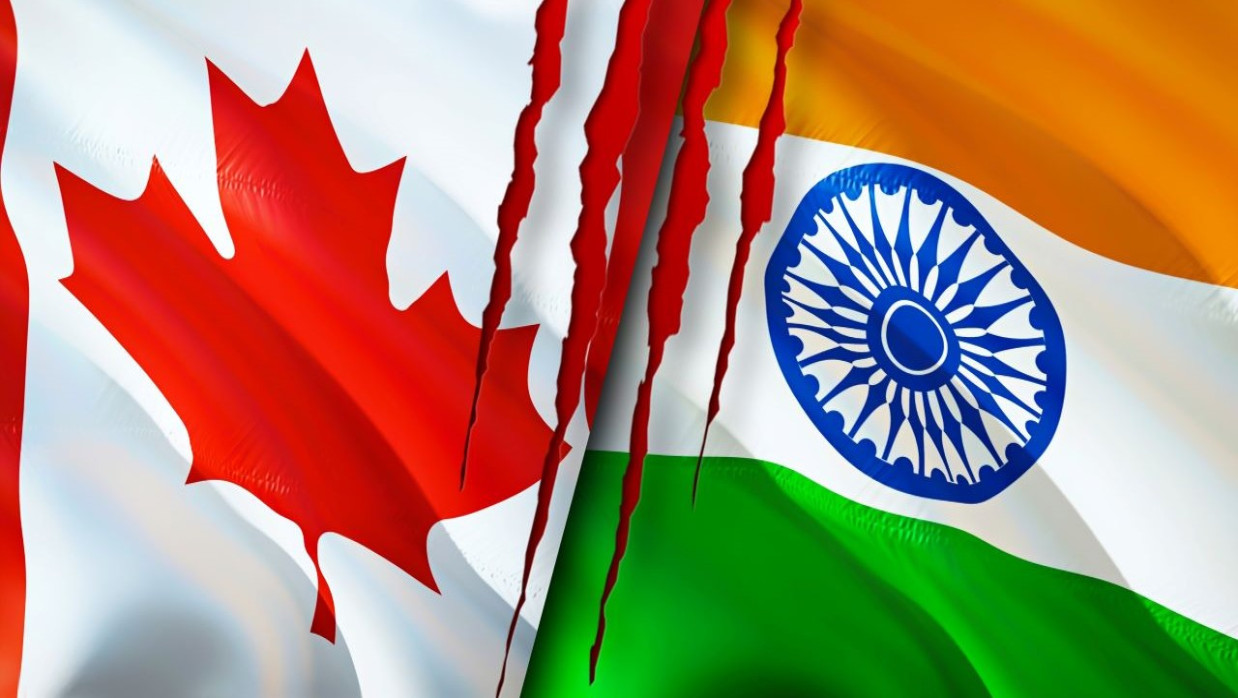
The already shaky attempts to mend diplomatic and economic ties between Canada and India have been dealt another blow following fresh allegations of foreign interference, political coercion, and attacks on democratic institutions in Canada. "What was meant to be a guarded normalization effort has unraveled to reveal the deeper issues at hand around questions of sovereignty and diaspora politics and the strength of Canadian public institutions," wrote Alyssa Johansen.
This emerged after India's High Commissioner to Canada, Dinesh Patnaik, reportedly cast doubts on the integrity of Canadian intelligence and law enforcement agencies in his comments to The Globe and Mail. Patnaik was quoted in the story as saying Canadian institutions like the Canadian Security Intelligence Service (CSIS) had been "penetrated" by Sikh separatist groups. At the same time, claims against India had been inflated or weaponized for political purposes.
His comments were later retracted after he said the media had taken them out of context. He also reiterated his official confidence in the Canadian government. But they resonated in Canada because they were perceived as attacking Canada's entire political system rather than pointing out policy differences. Critics feared India was trying to invalidate anyone who spoke against its policies by maligning them as Khalistani terrorists. This crisis in Canada-India relations has been developing since the June 2023 killing of Sikh separatist Hardeep Singh Nijjar in Vancouver. Canada's former Prime Minister Justin Trudeau had blamed India for the murder, claiming that it was "possible Indian agents" who killed him. Relations between the countries suffered, with Canada expelling Indian diplomats and canceling all trade negotiations with India.
India has vehemently denied the charges and accused Canada of allowing Khalistani militancy to thrive there. Since the initial allegations, what began as a controversy over a single criminal probe has grown into a debate over foreign interference, diaspora politics, and national sovereignty. At stake is a key distinction often made by Canadian institutions: advocating for Khalistan, no matter how objectionable, is legal political speech in Canada. Canada's intelligence services have cautioned against any effort to blur the lines between legitimate political advocacy and extremism. Canada's spy agency named India among the top countries involved in meddling on Canadian soil in its recent public report, specifically citing interference activities targeting Indo-Canadians.
The difference is significant because democracies are built around allowing lawful political expression, even if other nations might consider it offensive or harmful. So Canada’s dilemma isn’t just about maintaining a relationship with India. It’s about our institutions’ independence and Canadians’ constitutional rights.What makes the current episode more notable is the timing. It came amidst efforts to reinvigorate trade and economic ties between Canada and India this year. Canada was set to resume talks on a Comprehensive Economic Partnership Agreement with India. Top Indian trade bureaucrats also visited Ottawa earlier this month to discuss mutual investment. Canada can't be unaware of India's ascendant international stature as a rising power, market, and partner that can help balance geopolitics in the Indo-Pacific.
But economics can only paper over political distrust for so long. Many fear Canada will eventually buckle on the issue of foreign interference to keep trade and diplomatic channels open. Canadians would rightly feel like their institutions aren't being protected if they think that. They'd also resent being treated as though communities within Canada aren't already feeling weaponized fear and intimidation.
India also has a lot riding on the outcome. New Delhi views itself as an emerging world power that warrants more respect on the world stage due to its geopolitical importance and economic might. India also believes the West often minimizes or neglects to acknowledge security concerns posed by Sikh separatists associated with Punjab's bloody insurgency in the 1980s. For India, Khalistan threatens its sovereignty.
However, India's foreign policy has also come under fire for seeming to conflate valid security threats with attempts to silence dissident voices among its diaspora. India may appear intolerant of civic freedoms enshrined in other countries' constitutions, as it pressures diaspora advocacy groups in countries such as Canada too heavily.
Briefly stated, this is a battle of ideas. Canada believes in freedom of expression, diversity, and independence. India is trending towards security, control, and political conformity. Both countries are unlikely to flex much in pleasantries intended for softer engagement than trade negotiations or photo opportunities.
A third aspect of the crisis centers around diaspora politics within foreign policy. Diaspora populations in the modern age are not the passive immigrant communities of yesterday, uninterested in politics at home. Enabled by social media and political mobilization, diaspora communities are directly affecting diplomacy and changing domestic policy within both their host and home nations. Canada's Sikh population has mobilized into a political juggernaut that Ottawa can no longer afford to ignore.
Canada finds itself stuck between a rock and a hard place. On one side, they have India, a massive economy and strategic partner; on the other, Canadian democratic institutions and a citizen population looking to Canada's government to protect them from what some would consider overt foreign intimidation. To turn a blind eye would be political suicide and imply that Canadian sovereignty is for sale.
Conversely, India should understand that normalizing relations also means respecting other countries' institutions and the rule of law. Bringing this issue into the public eye only serves to increase suspicion and support claims of meddling. Canada expects sovereign nations to respect its institutions, especially its intelligence agencies and law-enforcement organizations.
Canada-India relations will then rest less on trade agreements and diplomatic visits, and more on whether both countries can sustain normal relations based on mutual trust, respect, and shared democratic values. Without those pillars, any semblance of normalcy will always be tenuous - capable of shattering when faced with the smallest acts of coercion or meddling.

0 Comments
LEAVE A COMMENT
Your email address will not be published