

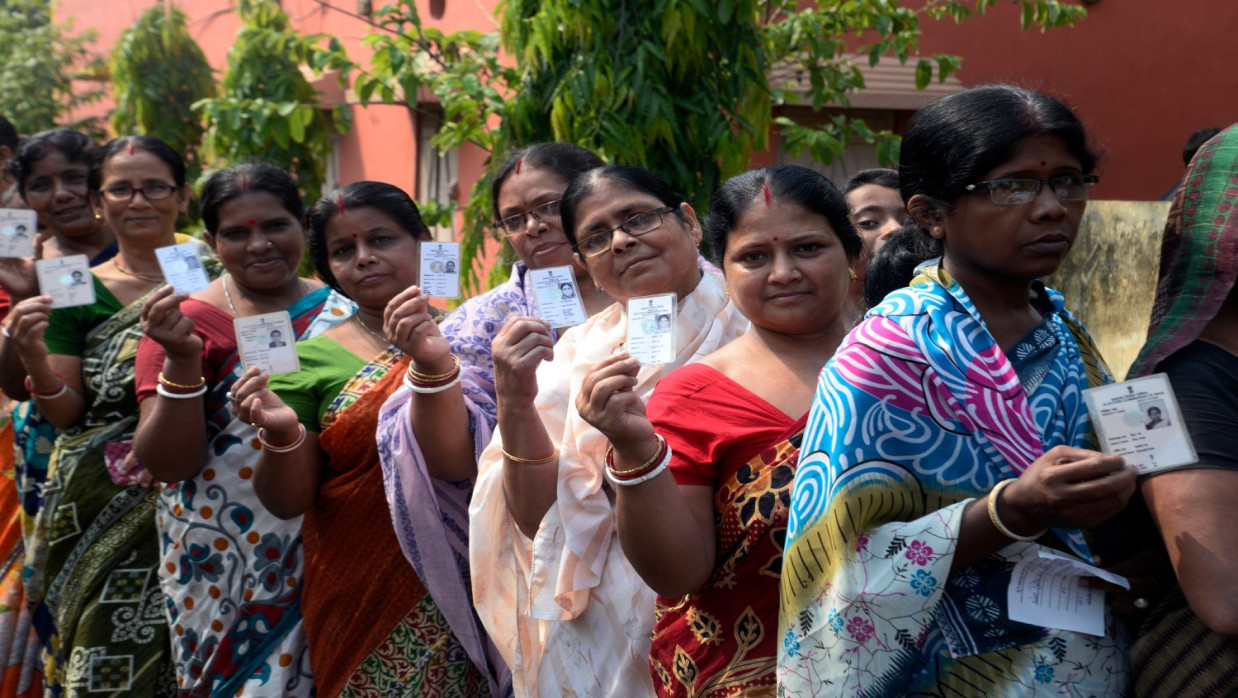
The political atmosphere in the Indian state of West Bengal has entered one of its most turbulent phases in recent years following the controversial Special Intensive Revision (SIR) of the electoral rolls conducted ahead of future elections. What was officially described as a technical and administrative exercise to "clean" voter lists has instead triggered allegations of mass disenfranchisement, communal targeting, technological malpractice, and electoral manipulation on an unprecedented scale.
The "cancellation of votes" controversy broke out on April 2, 2026, in Malda district. Scores of enraged people brought National Highway 12 at MurAli border between Malda and Birbhum districts to a halt after realizing that either their names had been deleted from the voters' list or they had been categorized as "suspected voters". Judicial officers at the Malda district voter ID office were allegedly held hostage by locals for eight hours yesterday. The protestors were not criminals; they were teachers, farmers, shopkeepers, and laborers. Imagine people going on such a rage that they intimidate somebody to that extent!
Key allegations behind the controversy
Around 61 lakh voters have been deleted, and 60 lakh voters have been categorized as "suspected voters", according to state Election Commission records released after the SIR process. The cancellations speak for themselves. Who are the 60 lakh suspects? Unless these numbers are proven incorrect, there is something deeply wrong with our democracy.
For many people, this isn't about governments and oppositions. Many see a more fundamental legitimacy crisis in India's fourth-largest state.
In November 2025, the Election Commission launched the SIR exercise, setting February 28, 2026, as the cut-off date for data verification. Revisions of the voters' list in India are not unheard of. Since it began maintaining these lists in 1952, the voter lists have been revised several times to weed out duplicate or deceased/migrated voters from the rolls. What made this voters' list revision exercise different was the addition of a brand new, contentious class of voters called "suspected voters."
One of the biggest criticisms of the process has been the grounds on which "suspected voters" were flagged. The people marked "suspected voters" were flagged due to clerical errors, such as slight spelling discrepancies in names or gender entry errors. Some parents and children were flagged as suspicious simply because the software deemed their ages "illogical." One instance quoted the EC flagging someone whose name had "U" instead of "O." Automated algorithms don't care about transliterations in Indian names. Particularly in Bengal, where most of us have names that can be spelled numerous ways depending on the language you use to write them.
Even more disturbing were claims about the nuts and bolts of the exercise itself. The video summary quotes news reports stating that the software used for SIR was never stress-tested before being put into use. Election officials at the helm were also quoted as saying that the system had major glitches when put to use, with as many as 6 crore 80 lakh people allegedly being marked as "suspected" voters due to a technical glitch on March 24, 2026.
Further, there wasn't sufficient on-the-ground manual verification to flag discrepancies. Instructions from CEOs were also reportedly sent via WhatsApp in certain states, even overriding directives from the Election Commission of India (ECI). Commentators believe such actions diminished faith in processes surrounding one of democracy's most important tools – voting.
What took the controversy beyond administrative bungling was that people of honor and esteem also found themselves bearing the tag. Richa Ghosh was reportedly among those flagged, while retired judges such as Shahidullah Munshi and former Chief Secretaries like Nandini Chakraborty were reportedly deactivated from voter lists. War veterans, doctors, policemen, and polling officers were among those reportedly flagged or struck off the voters' list. Muhammad Dual Ali, who fought in the Kargil War, reportedly remained on the "flagged list" despite submitting Army documents. These incidents embarrassed the poll officers and strengthened accusations of arbitrariness and insensitivity.
Muslims suddenly seemed to find disproportionate representation among the suspects. An analysis of figures from some districts indicated that constituencies with Muslim-majority voters suffered more deletions than others. The number of suspected voters in Murshidabad district, which has a Muslim majority, was reportedly the highest in Bengal. Voters suspected of bogus identities in the Kolkata Port constituency, where Muslims constitute 32% of voters, also reportedly comprised more than 32%. Voters marked suspected in the Muslim-dominated Metiabruz constituency numbered more than 35% of the electorate. Similar cases were reported from the Bhawanipur and Raninagar constituencies.
Such revelations led to claims that the exercise wasn't just an administrative failure but an attempt at political engineering to change the electoral demographic. Political opponents have claimed voter suppression in areas known to favor them has become a political weapon used in many modern-day democracies across the world, with West Bengal possibly being India's worst case. The stakes couldn't be higher politically either. Data quoted in the summary showed that deletions or suspicions in 234 of West Bengal's 294 assembly constituencies outnumbered the margin by which the incumbent had won in previous polls. Opposition voters have raised suspicions that the figure of roughly 60 lakh, which is about equal to the margin by which Mamata Banerjee's Trinamool Congress won previous elections, was no coincidence.
Another accusation involved the bulk-uploading of new voters via Form 6 applications. It was alleged that nearly 30,000 applications were uploaded in a single day, although political agents were permitted only 50 per day. Opposition parties alleged that Bharatiya Janata Party activists engaged in mass voter insertion while legitimate voters were being deleted from the rolls. Compounding the transparency issue was a report that the Election Commission published only large, searchable PDF files with captchas and watermarks, effectively preventing outside analysis of the final rolls. Digital rights activists felt this was deliberately placed to prevent journalists, researchers, and citizen groups from properly scrutinizing the lists. Public anger over the list could lead to litigation and activism throughout the state. Out of millions of total objectionable cases, only about 75 tribunals were reportedly held. India's Supreme Court reportedly stepped in, ordering the Election Commission to release the names of suspected voters after government pushback.
Chief Minister Mamata Banerjee called it an "undeclared emergency", terming poll officials complicit in a "conspiracy to subvert democracy". Detractors have pointed out that faulty electoral rolls have plagued India under different governments and cannot be politicized.
But the uproar over electoral rolls in West Bengal does raise questions about the health of Indian democracy. Free and fair elections can only happen if voters believe their vote will be counted as others'. How can democracy function if machines work in secrecy, if lakhs of Indians stand to be disenfranchised because of glitches, if citizen participation maps point towards religious discrimination?
India has prided itself on being the world's largest democracy for decades now. But elections themselves don't make a democracy legitimate. For a democracy to have credibility, it has to hold elections that are transparent, accountable, inclusive, and beyond doubt politically manipulated. The debacle of the electoral roll in West Bengal should serve as a reminder that Election rigging in the age of algorithms may not necessarily involve box-shifting or a lathi charge. Algorithms, Database entries, and illegible bureaucracies can also disenfranchise citizens.
For citizens of West Bengal, the fight now transcends the mere acquisition of Voter ID cards. It is about having faith in what it means to be a democratic citizen.

0 Comments
LEAVE A COMMENT
Your email address will not be published