

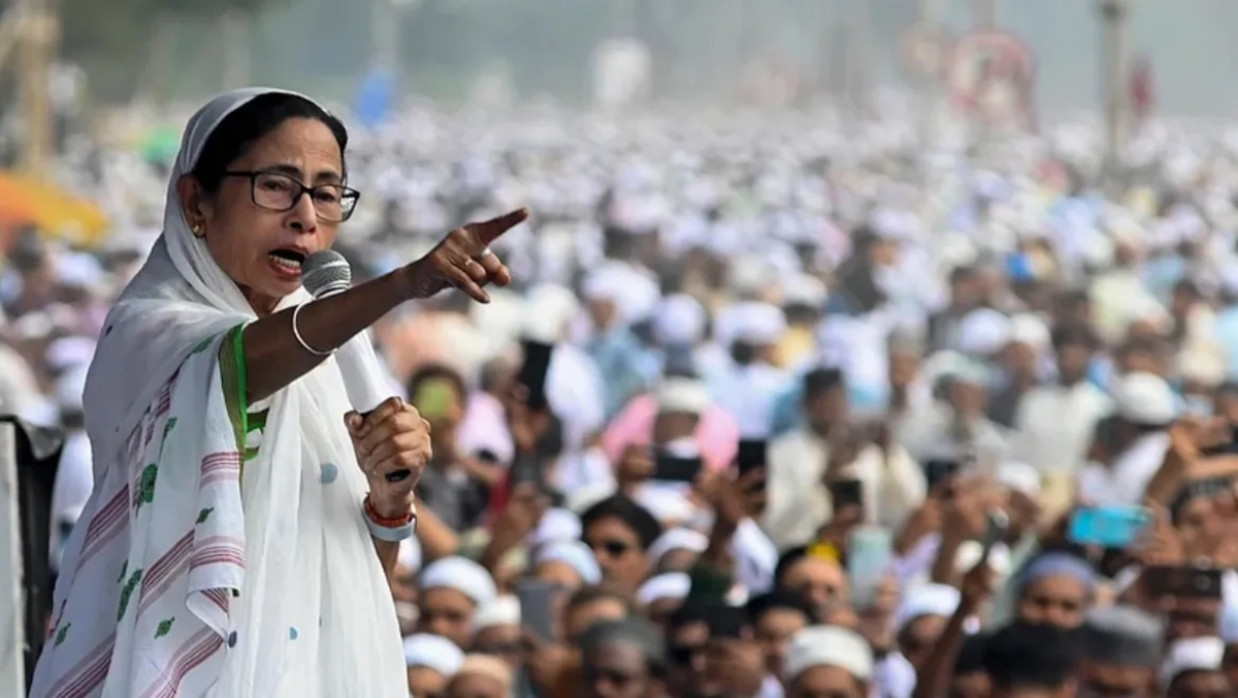
The ouster of over 90 lakh voters from the electoral rolls of West Bengal for the next Lok Sabha polls in 2026 has become one of the biggest controversies in the post-election scenario that India has witnessed in recent years. Behind this row is also a fight for citizenship, identity politics of migration, and inclusion in a democracy. The revisions being claimed by authorities to be technical have reportedly taken an anti-minority turn, with special reference to Muslims.
The Scale of the Deletions
For starters, the numbers involved are huge: WB’s electorate has allegedly been reduced from 7.66 crore prior to the Special Intensive Revision exercise of October 2025 to barely 6.75 crore voters now, after lakhs of names were deleted. There will surely be political fallout from such large-scale deletions from electoral rolls in a state where electoral battles are often won or lost by thin margins, and where demographics are key.
One looks at the numbers that have been put out, about 63 percent of those deleted were Hindus, about 34 percent Muslims, and nitpicking arguments of “only Muslims were deleted from the voters’ lists” becomes untenable. It doesn’t take away from broader questions about districts with large Muslim populations suddenly coming under the Election Commission’s/myopic/admin scanner.
Administrative Justifications and Electoral Practice
Authorities have maintained that voters were purged from rolls for innocuous, administrative reasons: same name as another voter, death, change in residency without voter ID certification, etc. There have also been claims that voters are purged from the rolls if they cannot be located during verification attempts by Booth Level Officers who went door-to-door. Periodic bulk deletion and roll verification are common in India. Periodic large-scale deletion and verification of rolls is part of India's electoral roll management process.
Proponents of the SIR exercise have claimed that rolls prior to revision had bloated numbers due to ineffective verification under earlier governments in West Bengal. Suggesting that revision was overdue, they frame the effort as one of bringing rolls up to standard rather than gerrymandering them.
But the sheer volume of deletions has been hard to ignore. Rolls must be credible in both procedure and perception.
The Muslim Dimension of the Controversy
Muslims account for nearly 27% of West Bengal's population. They are considered a vote bank capable of swinging results in several districts and make up about 34% of the deleted voters. Thus, the deletions have come under scrutiny due to fears that the exercise would have a disproportionately negative effect on Muslim-majority districts like Murshidabad. Additionally, assertions made by politicians over the years about illegal immigration from Bangladesh affecting the demographics of border districts have fueled suspicion that the NRC could be part of a larger plan. Amit Shah has previously described illegal immigration from Bangladesh into Assam as a "threat to national security." Himanta Biswa Sarma has also reportedly made claims about illegal migration patterns in eastern India.
Migration, Citizenship, and the Border Question
The Left Front government's arguments were based on West Bengal having “a very long border with Bangladesh, which has historically made the issue of documentation difficult”. Cross-border migration in Bengal predates Partition and continued for decades, including during large-scale migrations such as the Bangladesh Liberation War in 1971.
Proponents of the revisions argue that they are necessary to clean up electoral rolls and prevent illegal migrants from voting. Critics say there is a socio-economic bias to producing documentation, and poorer sections of society are more likely to have incomplete records, disenfranchising them.
The larger questions of deletions from voter lists have been tied to the NRC and Citizenship Amendment Act debate.
The Matua Factor and Hindu Deletions
One detail that many analyses of the controversy have missed is the Matua community, a Scheduled Caste largely based in modern-day Bangladesh and with substantial political sway in border districts. It was also reported that large numbers of Hindu voters were found to have been deleted from voter lists in Matua-dominated constituencies such as Bagda and Bongaon Uttar.
This information muddies narratives that seek to place blame on lists that targeted Muslims only. Additionally, it highlights how migration histories and documentation troubles can uniquely affect various populations. Nonetheless, given that Matuas have sway over several dozen assembly constituencies, their influence has remained a political priority.
Competing Political Narratives
The issue has led to political polarization with accusations and counter-accusations between the ruling Trinamool Congress (TMC) and the opposition BJP. Mamata Banerjee alleged that the central government wants to change the electoral rolls to break opposition vote banks. BJP leaders contended that the move was meant to "weed out illegal voters". Speaking ahead of the election, state BJP president Samik Bhattacharya said, "It is a battle between change and performance on one side and the nexus on the other." The BJP claimed that the revision of electoral rolls was meant to eradicate political nepotism.
Democracy and the Question of Representation
In a nutshell, political deletions from electoral rolls, by whatever name they are called, are not just election administration issues but questions of citizenship; how migration flows are managed in the state; and how identity politics is playing out with respect to electoral democracy in West Bengal. Does the deletion of voters from electoral rolls in West Bengal translate into cleaning up rolls or political gerrymandering? Can something not be both? While that can be debated, what cannot be debated is that the credibility of any democratic institution will depend on transparency, verification mechanisms, and checks and balances built into the revision exercise. It is even more crucial in a democracy like India, known for its diversity, that there is a perception of fairness across communities.
As West Bengal inches closer to elections, the question of who gets to be counted and who gets to count remains a critical inquiry for the nation as a whole.


0 Comments
LEAVE A COMMENT
Your email address will not be published