

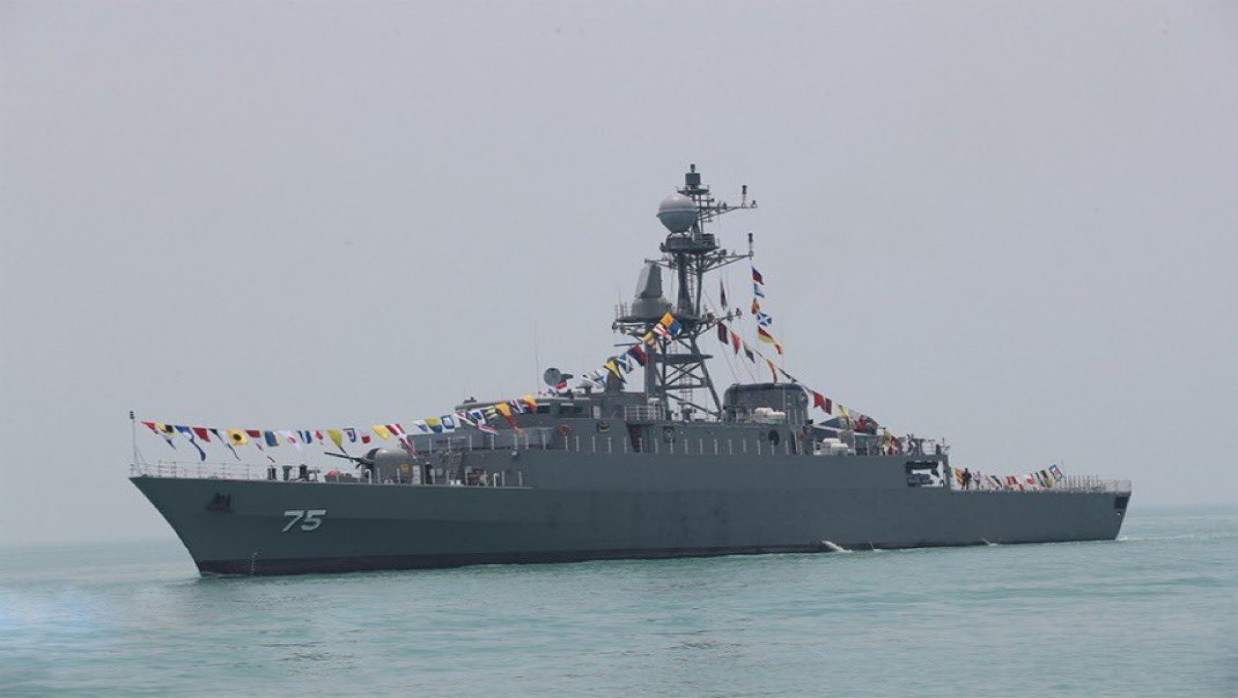
The reported sinking of the Iranian navy frigate IRIS Dena in the Indian Ocean has created a heated discussion throughout the region because critics argue that India now faces increased geopolitical pressure which threatens its current policy of strategic neutrality.
The Iranian navy operates a Moudge-class frigate which participated in a recent multinational naval mission that India conducted from its eastern coastline. The ship was reported to have been struck by a torpedo which a US submarine fired at it while it was traveling through Indian Ocean sea lanes to the south. The incident took place near busy shipping routes which run south of Sri Lanka and which lie outside the main area where US-Iran conflicts usually occur in the Persian Gulf.
Political and strategic experts are debating how much knowledge India possessed about US naval operations in what it sees as its strategic maritime area after the attack occurred.
A Controversial Incident
Iranian officials have strongly condemned the attack because they believe it constitutes an aggressive assault against a warship which operated outside the borders of Iran. Tehran has also raised questions about the timing and location of the strike because it observed the vessel had recently completed its missions in India before starting its return trip to its home country.
The incident has become a symbol for critics who oppose India's present foreign policy direction. They argue that the sinking of an Iranian vessel shortly after participating in an Indian-hosted naval event creates an uncomfortable perception problem for New Delhi.
Critics argue that prior US military operation knowledge would have allowed India to maintain its diplomatic relationship with Washington while preparing for military action against Tehran. The episode shows that India needs better capabilities to track and control military operations which occur in areas it claims as its strategic territorial waters.
The two possible explanations for India’s present foreign policy approach have created a dispute about India’s ability to sustain its traditional balancing strategy.
Strategic Autonomy Under Pressure
India has followed its foreign policy through strategic autonomy which allows the country to conduct diplomatic relations with all global powers while avoiding formal alliances with any specific group of countries. Through this strategy New Delhi established partnerships with Western nations while maintaining its connections to Iran and Russia.
The world political landscape has experienced major changes during the past few years. The United States and India have established stronger defense ties through joint military exercises and logistics partnerships and expanded security cooperation which operates under the Indo-Pacific framework.
India maintains economic and infrastructure ties with Iran through its ongoing partnership which includes the development of the Chabahar port project. The port project has long been viewed as a key strategic gateway for India’s access to Afghanistan and Central Asia.
The sinking of the IRIS Dena creates a diplomatic bind for India. Washington will expect ongoing strategic collaboration while Tehran will doubt New Delhi's ability to sustain its independent foreign policy.
Debate Over US Naval Access
Another controversy that has resurfaced after the incident centers on determining how much US naval access should be granted to Indian naval bases. Some commentators have pointed to previous remarks by former US military officials which show that American forces now depend more on their regional partners for logistical support. The US naval units claim that they require maintenance and docking assistance from Indian Ocean ports because of rising tensions in the Middle East.
Indian officials have consistently denied that their ports serve as operational bases for attacking other nations. Government representatives have stated that current defense agreements with the United States only permit logistical support which helps military forces to work together during joint training exercises and humanitarian operations.
Analysts continue to speculate that the United States is building its logistical presence throughout the Indian Ocean area. The current situation creates difficulties for India because it has to deal with nations which distrust US military operations especially Iran.
A Growing Maritime Flashpoint
The incident site together with its strategic implications which extend beyond geographical boundaries. The Indian Ocean stands as one of the world's most important shipping routes which enables global shipping and energy transportation through its waters.
Oil shipments from the Middle East pass through these waters before reaching major Asian economies including India, China, Japan and South Korea. The military tensions which exist in this region today will create dangerous effects which will impact both global trade and energy markets.
Beijing sees the sea lane instability as a military threat which endangers their national security. China depends on Middle Eastern energy imports which travel through the Indian Ocean to reach the South China Sea. United States-Iran maritime conflicts will spread their effects to multiple nations beyond the two combatants.
Perception and Diplomacy
The most critical problem for India arises from public perceptions of the incident rather than its military aspects. In international diplomacy, perception can be nearly as powerful as reality. The diplomatic relationship between India and other nations has become difficult because people believe that an Iranian warship took part in an Indian ceremony and then got destroyed close to the event location.
Some critics argue that the episode risks damaging trust between India and countries that traditionally viewed the Indian Ocean as a relatively neutral maritime space. The attackers work as an unknown force because the ongoing fight starts at sea and continues through time. The ongoing fight moves between two major locations which exist outside the control of all involved parties.
A Difficult Balancing Act
India must now handle a diplomatic relationship which needs to be maintained through delicate balancing. The country needs to show Iran that it will continue to work with Iran while building its strategic relationship with the United States. New Delhi will attempt to stop great powers from using the Indian Ocean as a battlefield between their competing interests.
It remains unknown whether the organization can control its two opposing demands. The sinking of the IRIS Dena has turned what used to be a distant geopolitical issue into a regional conflict which directly affects India's international relations.
The incident has shown that global rivalries drive countries to struggle with maintaining their neutral position in vital areas which include the Indian Ocean. India's future task requires it to demonstrate that its established practice of strategic autonomy will remain effective during times when global power dynamics become volatile.

0 Comments
LEAVE A COMMENT
Your email address will not be published