

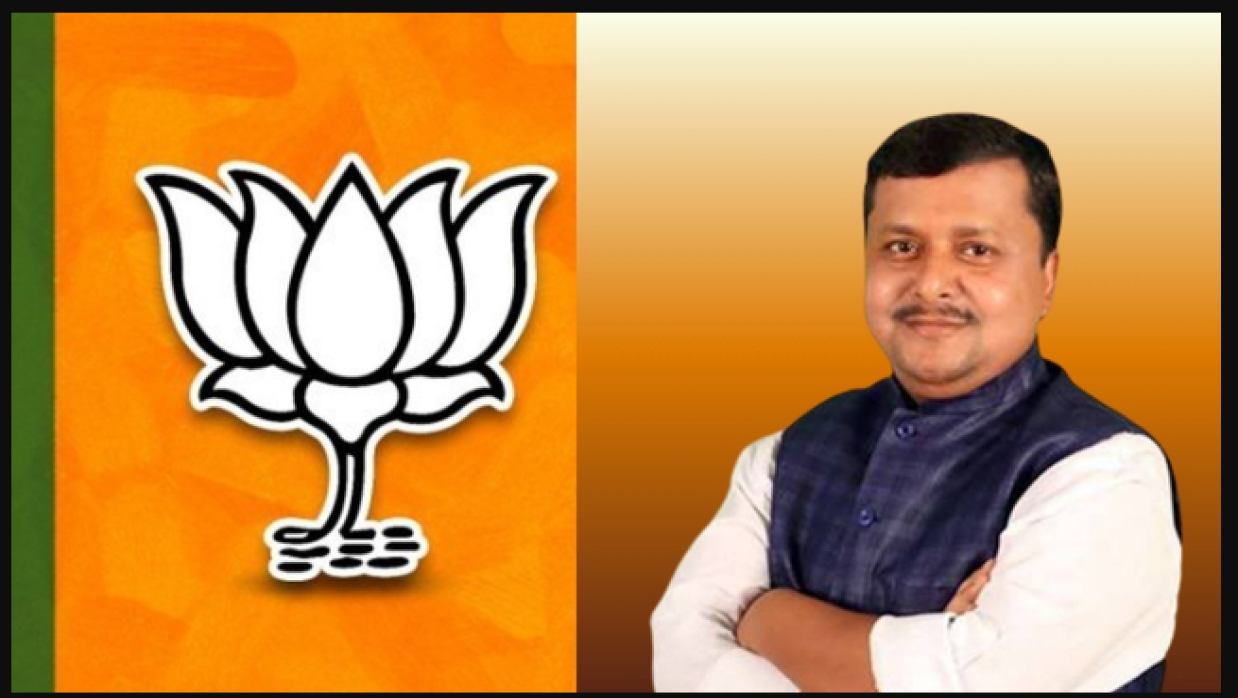
The appointment of Nitin Nabin as the Bharatiya Janata Party’s National Working President in December 2025 is less about individual merit and more about the political culture that now defines Modi’s India. It captures, in one career trajectory, the transformation of the BJP from a party that once claimed moral and administrative superiority into an organisation where loyalty, lineage, and ideological conformity override democratic norms and governance performance.
Nabin’s political origins lie deep within the Sangh Parivar. As the son of a Jana Sangh–BJP legislator from Patna West, his entry into politics followed a familiar inheritance pattern. This is particularly ironic for a party that has long weaponised the rhetoric of “dynasty politics” against its rivals. Under Narendra Modi, the BJP has not eliminated dynastic privilege; it has merely rebranded it. In the party’s ecosystem, lineage tied to the RSS and organisational obedience now functions as an acceptable—and even desirable—form of inheritance.
What distinguishes Nabin’s rise is not public appeal or reformist leadership, but his image as a disciplined “organisation man.” In Modi’s highly centralised command structure, such figures are valued precisely because they do not challenge authority. Decision-making has increasingly shifted away from elected representatives toward the top leadership, reducing ministers and party officials to executors rather than policymakers. Nabin’s elevation reflects this structural reality: advancement is awarded to those who reinforce, not question, the hierarchy.
Equally revealing is how Nabin’s legal record has posed no obstacle to his political ascent. With multiple pending criminal cases linked to political protests and unlawful assembly, his career illustrates the selective application of law in contemporary India. While there have been no convictions, the broader pattern is unmistakable. BJP leaders facing legal scrutiny are routinely shielded, whereas opposition figures, activists, and journalists are aggressively pursued under the same legal frameworks. This double standard erodes the principle of equality before the law, replacing it with partisan immunity.
Nabin’s use of sedition laws in 2017 against Congress leader Abdul Jalil Mastan for allegedly insulting Prime Minister Modi offers a deeper insight into this transformation. Sedition, a colonial relic designed to suppress anti-imperial resistance, has been revived as a political weapon under Modi’s rule. By invoking this law to silence criticism, Nabin aligned himself with a governing philosophy that conflates dissent with disloyalty. Rather than defending constitutional freedoms, such actions reinforce a culture of fear—one in which speech is regulated not by democratic debate but by the threat of prosecution.
His administrative record further challenges any claim that performance drives promotion. As Bihar’s Road Construction Minister, Nabin presided over a spate of infrastructure failures in 2024, including the collapse of nearly fifteen bridges and losses amounting to approximately ₹3,953 crore. In a system committed to accountability, such failures would prompt resignations, investigations, or electoral consequences. Instead, they were followed by silence—and ultimately, by promotion. This pattern reveals how governance failures are absorbed and neutralised within the ruling ecosystem, so long as political loyalty remains intact.
The message sent to the bureaucracy and political class is deeply corrosive. Competence is optional; obedience is essential. Accountability is not upward, toward the public, but inward, toward the leadership. In such a climate, institutional decay becomes inevitable, as incentives favour conformity over correction and silence over scrutiny.
Nitin Nabin’s elevation also reflects a broader ideological project. The BJP under Modi has steadily blurred the line between party, state, and ideology. Political authority is increasingly justified not through constitutional principles but through majoritarian identity and personal loyalty to the leadership. In this environment, figures like Nabin are ideal: ideologically aligned, organisationally obedient, and politically unencumbered by public accountability.
Ultimately, Nabin is not the cause of democratic erosion in India; he is its consequence. His rise symbolises a system where dissent is criminalised, governance failures are forgiven, and loyalty is the primary currency of power. The BJP’s internal promotions now mirror the broader political order it has constructed—centralised, coercive, and insulated from accountability.
In Modi’s India, democracy has not been abolished; it has been re-engineered. Elections still take place, institutions still exist, and constitutional language is still invoked. Yet the spirit of accountability that gives these structures meaning is steadily hollowed out. Nitin Nabin’s promotion is a reminder that the erosion of democracy often occurs not through dramatic ruptures, but through routine decisions that reward obedience over responsibility.


0 Comments
LEAVE A COMMENT
Your email address will not be published