

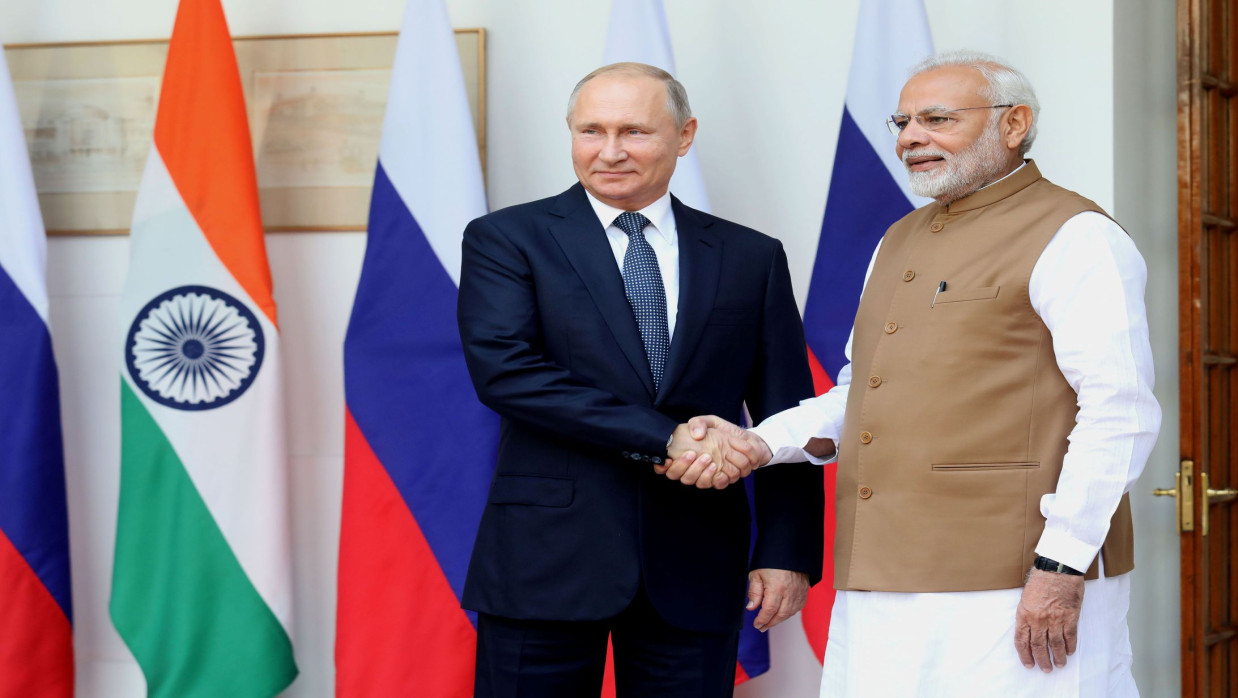
Vladimir Putin’s December 2025 visit to India unfolded as a diplomatic spectacle, yet its real impact was far less impressive. Despite a lavish reception in New Delhi making the headlines, the summit ultimately produced no major defence or energy deals. Both Putin and Narendra Modi engaged in self-aggrandizing rhetoric, but the lack of solid deals highlights how symbolism cannot replace substance.
Indeed, compared to the summit’s high-profile ceremonial displays—a massive convoy, state honours and a banquet—the substantive outcomes were minimal. The two leaders reiterated their "special and privileged strategic partnership," but the agreements reached, including a joint economic cooperation programme and plans for a Russian-Indian pharmaceutical factory, were nothing substantial. This reflected a relationship more based on mutual gestures than transformative change.
NOTHING SUBSTANTIAL IN DEFENCE, NOTHING IN OIL
The most glaring absence of major agreements was in defence. Despite speculation that India might purchase advanced Russian fighter jets or air defence systems, no such deals materialized. In fact, no major defence deals were reached. This reluctance underscores India's careful navigation between its historical defence ties with Russia and its growing engagement with the United States. This cautious approach, as OpEd Column Syndication pointed out, is deliberate, as India does not want to further strain its relations with Washington by escalating its military ties with Moscow.
Oil was another focal point during the summit, yet no new agreements were signed. India continues to import discounted Russian oil, which has helped Russia weather Western sanctions; but despite Putin’s assurances of continued energy supplies, India refrained from locking in any new, high-profile deals. India’s decision to hold back from advancing major energy agreements is, as discussed in OpEd Column Syndication, an acknowledgment of its geopolitical reality, in the sense that any move to deepen its energy dependence on Russia could provoke a significant backlash from the U.S. and its allies.
This cautious stance reflects India's broader strategy of safeguarding its sovereignty and energy security without alienating Washington. The careful diplomacy on display at the summit was a direct reflection of India's desire to maintain autonomy in foreign policy, but at the same time avoiding actions that could escalate tensions with the West.
TRADE AS MAIN FOCUS
Despite the absence of major breakthroughs, trade is an area where both nations see mutual benefit. The goal of reaching $100 billion in trade, up from $68.72 billion in 2025, is ambitious, though much of this trade depends on Russia’s ability to navigate its sanctions and India’s trade relations with the U.S.
The summit introduced a new five-year framework, emphasizing diversification of trade into sectors beyond oil, with a particular focus on critical minerals, pharmaceuticals and technology. But these goals seem more aspirational than achievable without addressing the foundational issues of energy and defence.
INDIA’S DIPLOMATIC TIGHTROPE
India’s ongoing struggle to balance its historical ties with Russia against the backdrop of its growing relationship with the West was bare exposed during the summit. Modi's warm reception of Putin, including a rare hug at the airport, reflected the personal rapport between the two leaders. However, the absence of major agreements, particularly in defence and energy, pointed to India’s broader strategy of managing its international relations carefully.
India’s foreign policy is, as OpEd Column Syndication rightly pointed out, centered on maintaining autonomy. Autonomy so far as possible, that is. The decision not to sign major deals with Russia was likely a conscious choice to prevent further alienation from Western powers, ensuring that India’s geopolitical space remains as open and flexible as possible.
CONCLUSION
While symbolic gestures abounded during Putin’s 2025 visit, the lack of major defence or energy agreements revealed the limits of this partnership. The visit underscored that, while India’s sovereignty and pragmatism remain at the core of its foreign policy, the chest-beating rhetoric from both leaders cannot mask the fact that, for now, symbolism is all that’s on the table.


0 Comments
LEAVE A COMMENT
Your email address will not be published