

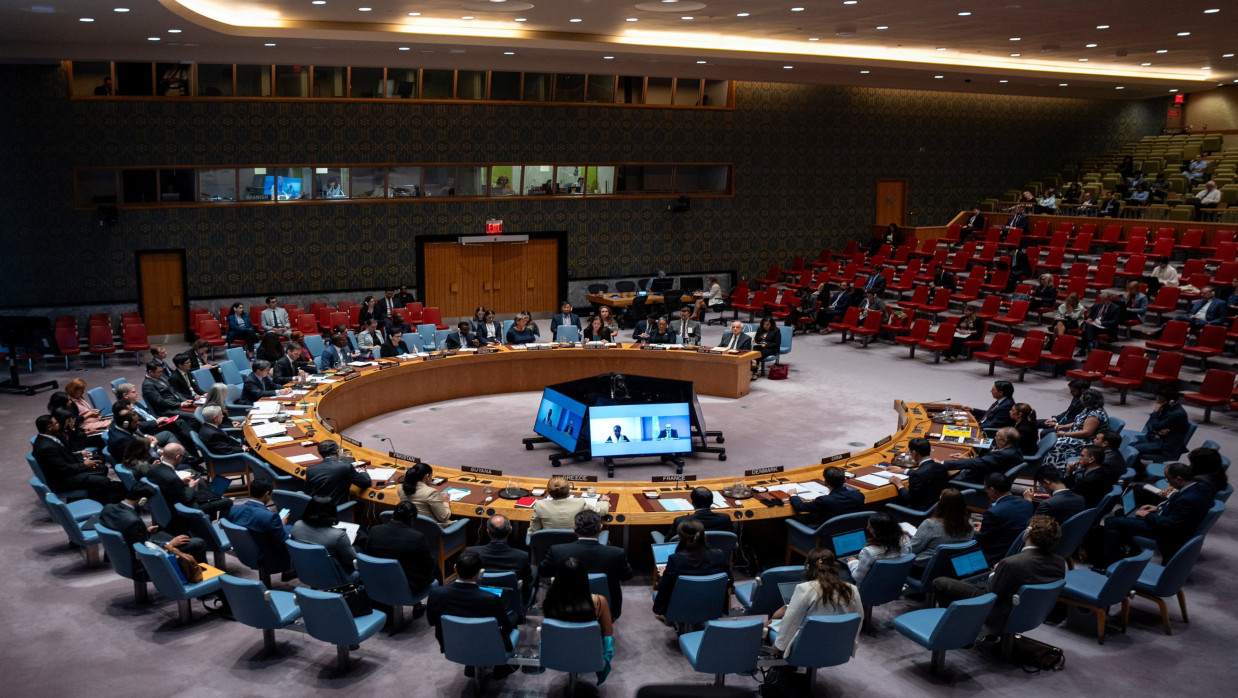
The United Nations was founded in 1945 in the wake of the League of Nations' failure to prevent global conflict, and the Security Council it created was built to reflect the geopolitical order of that moment. Five permanent members, entrusted with veto power, were meant to keep the world's major powers invested in the UN system while preventing direct confrontation between them. Six elected non-permanent members completed the original design. Since 1965, when the non-permanent bloc was expanded from six to ten seats, bringing total membership to fifteen, the Council's basic architecture has remained frozen in time. Eighty years on, the world it was designed to govern has changed beyond recognition, yet the institution meant to safeguard it has not kept pace. The central question facing the international community today is how to reshape the Security Council into a body fit for a world of 193 states and more than eight billion people.
The Case for Reform
Recognition of this gap led the UN General Assembly to launch the Intergovernmental Negotiations (IGN) framework in 2008, with formal negotiating rounds beginning the following year. The IGN process was designed around five clusters of issues: categories of membership, the use of veto, regional representation, the size of an expanded Council, and its working methods. At its core, the effort has sought a more equitable distribution of power and voice among member states.
The scale of the imbalance is stark. The Council still largely mirrors the victors of 1945. Africa holds no permanent seat despite comprising 54 states, while Latin America, South Asia and large parts of the Muslim world remain structurally underrepresented. This configuration is, in important respects, a legacy of a colonial-era world order that concentrated power among a small number of states, a legacy that meaningful reform must address if the Council is to be seen as legitimate by the Global South. Countries such as Pakistan, Brazil, Egypt, South Africa, Nigeria, Indonesia, Türkiye, Saudi Arabia, Mexico and India are frequently cited as regional and demographic heavyweights whose greater involvement could strengthen the Council's effectiveness and credibility. Compounding these representational gaps is the structural problem of the veto itself: a single negative vote from any one of the five permanent members can nullify a resolution regardless of how broad its support may be. The United States' use of its veto to shield Israel from Security Council censure amid the military campaign in Gaza has become one of the starkest recent illustrations of how this mechanism can override near-universal consensus and erode the Council's credibility.
Despite nearly two decades of negotiation, the reform debate remains gridlocked among competing coalitions. The G4, comprising Brazil, Germany, India and Japan, proposes expanding both permanent and non-permanent membership, granting themselves permanent seats while allocating two additional permanent seats to Africa and increasing the number of elected members. The African Group, representing all 54 African Union member states, goes further still, demanding two permanent seats with full prerogatives including the veto, framed as a correction of historical injustice. The France-Mexico Initiative takes a different approach entirely, calling on the P5 to voluntarily forgo their veto in situations involving mass atrocities such as genocide, crimes against humanity or large-scale war crimes. Meanwhile, the Uniting for Consensus (UfC) coalition, led by Pakistan and supported by Italy, Mexico, Argentina, Canada and South Korea, rejects any expansion of the permanent membership category altogether, instead advocating for a larger, re-electable bloc of non-permanent seats. Because the G4 and UfC blocs effectively neutralise each other's voting strength, the IGN process has settled into a structural deadlock with no resolution in sight.
The Risks of Expanding Permanent Membership
Expanding the permanent membership category would not simply reform the Security Council; it would fundamentally alter its institutional character. Rather than resolving the underlying concerns about equitable representation and accountability, it would create new centres of permanent privilege alongside the existing ones. History offers ample warning here: the veto has repeatedly shown how national interests and strategic alliances, rather than collective judgment, can determine Council outcomes, as seen in Washington's repeated use of its veto to block ceasefire resolutions on Gaza despite broad international support. Adding more veto-wielding members would likely multiply, rather than resolve, these deadlocks, while also introducing additional competing geopolitical interests into an already strained decision-making process, raising the risk of institutional paralysis on matters of international peace and security. Perhaps most significantly, permanent membership is effectively irreversible; once granted, it comes with no periodic elections or performance review, and new permanent members would themselves gain the power to block future reforms that might affect their own standing.
Questions Surrounding Leading Candidates
These concerns are not merely theoretical when applied to specific candidacies. Permanent membership demands broad international confidence in a state's commitment to the UN Charter, and India's record raises significant doubts on this front. New Delhi has failed to implement Security Council resolutions on Jammu and Kashmir, rejecting a UN-supervised plebiscite and declining to reduce its military presence, while its 2019 abrogation of Articles 35(A) and 370 sits uneasily with the spirit of those resolutions. Its suspension of the 1960 Indus Waters Treaty, allegations of transnational repression raised by Canada and other Western states, rising majoritarian politics and communal tensions, documented treatment of Rohingya refugees, and the exclusionary effects of the 2020 Citizenship Amendment Act have all drawn international criticism. Its continued strategic alignment with Israel amid the Gaza conflict, combined with its status outside the Non-Proliferation Treaty and Comprehensive Test Ban Treaty, further complicate the case for permanent status.
Germany's candidacy raises a different set of questions. While it remains an important economic and political power committed to multilateralism, Europe already holds two permanent seats through the UK and France; a third would deepen regional imbalance rather than correct it. Germany's recent positions on Gaza have drawn scrutiny over the consistency of its application of international humanitarian law, and its failure to secure even a non-permanent Council seat in recent elections suggests its candidacy does not command broad support among UN member states.
Against this backdrop, the UfC proposal offers a more measured alternative. By preserving the Council's existing institutional framework while expanding elected membership from ten to twenty seats, it would open greater space for underrepresented regions, including Africa, Asia-Pacific, Latin America and the Caribbean, without creating new permanent privileges. Periodic elections would maintain accountability to the wider UN membership, allow rotation among a larger pool of states, and enable the Council to adapt to shifting geopolitical realities without locking in irreversible structural change.
Ultimately, the objective of Security Council reform should be to strengthen legitimacy without compromising effectiveness. Any expansion of permanent membership must be weighed against objective criteria: broad international confidence, demonstrated commitment to the UN Charter, adherence to international law, and genuine capacity to exercise the responsibilities that come with permanent status. Expanding that category risks entrenching new centres of privilege, deepening institutional paralysis, and making future reform far harder to achieve. A more sustainable path lies in widening participation through elected seats, strengthening regional representation, and preserving the institutional integrity of the United Nations, rather than multiplying the very veto powers that have so often stood in the way of collective action.


0 Comments
LEAVE A COMMENT
Your email address will not be published