

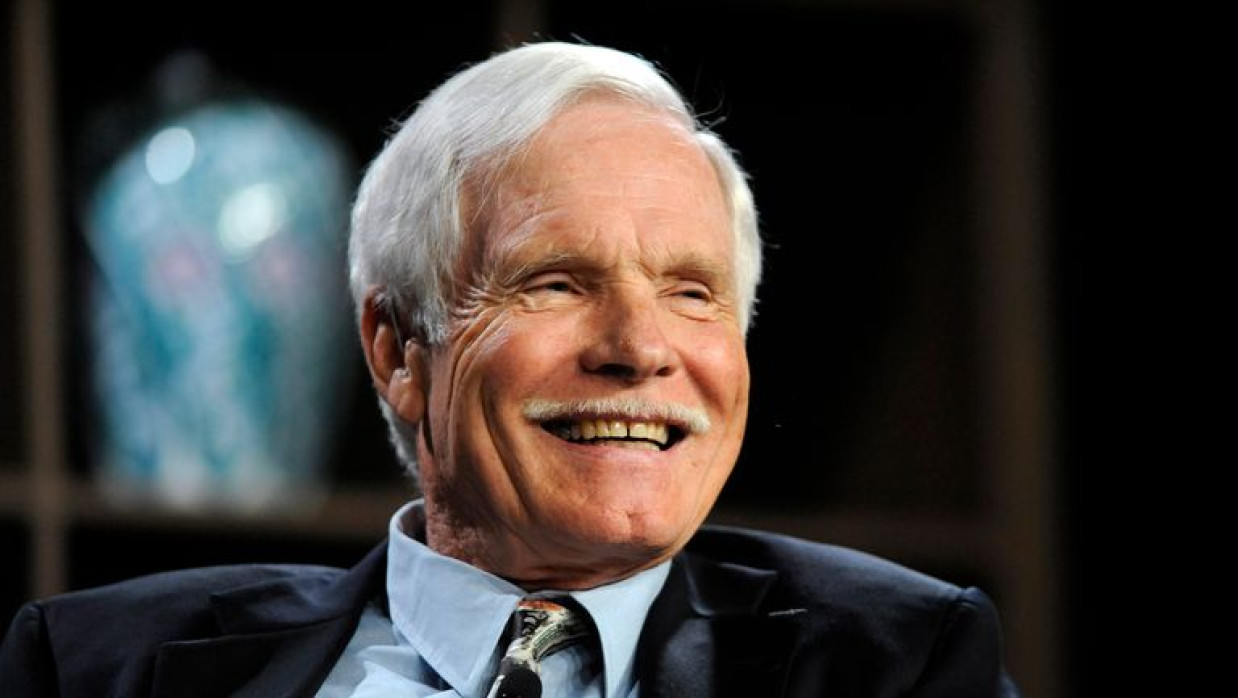
The Maverick Visionary Who Redefined Global Communication
The passing away of Ted Turner represents much more than the loss of one of the greatest media entrepreneurs the world has ever seen. It symbolizes the end of an era marked by boldness, creativity, and innovation in global communication. It’s not just about the creation of one television channel; it's about being one of the great minds behind the birth of the modern age of information.
Very few people in modern times have impacted the field of communication worldwide like Turner has. This was made possible by the invention of CNN, the world's first 24-hour news channel. Before Turner’s invention, news was delivered in set bulletins presented either during the day or at night. News after Turner became instantaneous, ongoing, and globalized.
In today's society, people expect to receive live reports of events happening in other parts of the world. News about elections is expected to be live; breaking news must be delivered instantly. However, this has not happened by coincidence. It was invented long ago by Ted Turner.In many respects, Turner did not simply anticipate the future; he forced the future into existence.
The Dreamer Who Refused to Think Small
Born Robert Edward Turner III in Cincinnati, Ohio, in 1938, Ted Turner inherited adversity long before he inherited success. After the tragic suicide of his father, Turner assumed responsibility for a struggling billboard company at a remarkably young age. Many expected him merely to preserve the family business. Instead, he transformed it into the foundation of a media empire that would reshape the world.
Another aspect of Turner's personality, common among most transformational leaders, was his unique ability to spot opportunities amid challenges that others regarded as impossible. In the 1970s, cable TV was considered useless by most traditional broadcasting firms. Turner disagreed.
With extraordinary instinct and relentless determination, he converted a small Atlanta television station into WTBS, America’s first “superstation,” using satellite technology to distribute programming nationwide. This innovation alone demonstrated his ability to think beyond existing media boundaries. Yet even that achievement proved merely the prelude to his greatest gambling.
In 1980, Turner launched CNN the Cable News Network. At the time, the idea sounded absurd. Critics openly mocked the notion of a 24-hour news channel. Media analysts predicted financial collapse. Executives within established networks dismissed the project as unsustainable and irrational. Many asked a simple question: “Who would watch news all day?”
Turner's answer was based on an unprecedented analysis of the interaction between human nature and technology. He thought the world was becoming more connected and that man’s need for information would never subside. Information wasn’t something that could happen only occasionally; it was a necessity. That insight changed global journalism forever.
CNN and the Birth of Real-Time History
The birth of CNN marked a turning point in how mankind views history. Now, viewers can watch important events as they occur without waiting for an edited version.
The dramatic changes were evident during the 1991 Gulf War. While bombs were dropped on Baghdad, CNN showed footage of the ongoing action in a live broadcast. For the first time ever, people got the chance to see war unfolding right before their eyes.
The Gulf War was not merely a military event; it became a defining media event.
Suddenly, governments, diplomats, military minds, and the citizenry realized that the whole world of television could be used to instantaneously mold the international image. Journalism was no longer the reporting of history, but the making of history.
"The CNN Effect" became part of the political language, as the influence of immediate media reporting on diplomatic, foreign, and humanitarian actions increased. More often than not, world leaders were required not only to react to happenings but also to their televisual representation to an international audience. Turner had changed not only journalism but also geopolitics.
From the Fall of the Berlin Wall to presidential elections, humanitarian crises, natural disasters, and global terrorism, CNN became one of the most influential institutions in shaping international public consciousness during the late twentieth century.
In many ways, the digital media ecosystem of today from livestreaming and social media to breaking news notifications and instant video feeds traces its intellectual ancestry directly to Turner’s vision. Long before smartphones and social platforms existed, Ted Turner understood that the future belonged to immediacy.
More Than a Businessman: A Builder of Global Culture
Ted Turner was never a conventional corporate executive. He was impulsive, fearless, unconventional, and often wildly unpredictable. Yet it was precisely this refusal to think conventionally that allowed him to revolutionize global media.
Outside CNN, other successful Turner enterprises include TNT, Cartoon Network, Turner Classic Movies, and CNN International. Each one highlighted another aspect of his views on the importance of media in forming culture and identity.
The Turner Classic Movies channel captured the legacy of films from around the world during a period when studios were producing films mainly for current commercial gain. Cartoon Network became a cultural icon for generations of kids worldwide.
Turner recognized that media was not simply about broadcasting programs; it was about shaping imagination, memory, emotion, and identity.
He also understood globalization before globalization became fashionable terminology. CNN International created a shared global information space where audiences from Asia, Africa, Europe, Latin America, and the Middle East consumed world events simultaneously.
For viewers in developing countries, CNN represented not merely an American television network but a window into global modernity itself. Turner helped create the first truly global media consciousness.
The Flawed Genius of American Media
Ted Turner, like any revolutionary person, was also extremely controversial. He was known for being outspoken and abrasive, and for being very blunt in his public statements. His colorful personality earned him nicknames such as "Captain Outrageous" and "The Mouth of the South."
Ted Turner was prone to having conflicts with politicians, rivals, business executives, and the media at large. But even his critics respected his innovation and boldness.
He was one of those members of an entrepreneurial generation who were motivated not only by profit but also by revolutionary visions. He was the embodiment of the time when media revolutionaries attempted to create institutions that would change society itself.
At times, his boldness bordered on recklessness. Yet without that recklessness, CNN would never have existed.
Turner’s life also reflected the emotional costs of extraordinary ambition. He endured painful personal struggles, financial setbacks, and the gradual erosion of his influence following the disastrous AOL-Time Warner merger—widely regarded as one of the worst corporate mergers in modern history.
Turner, however, never stopped thinking and reflecting, even in his twilight years. His ability to speak candidly about aging, sickness, and death following his diagnosis of Lewy body dementia exposed a side of him that was more vulnerable than many might have realized.
From Media Mogul to Global Humanist
Perhaps one of the most impressive aspects of Turner is how he transformed himself from an industry leader into a humanitarian.
Turner donated an estimated $1 billion to the United Nations in 1997, making it one of the largest acts of charity of that era. The creation of the United Nations Foundation was his contribution to enhancing global collaboration and humanitarian activities.
At a time when environmental issues received far less political attention than they do today, Turner was already warning about climate change, ecological destruction, and unsustainable human behavior.
The conservationist activities he undertook were large-scale land conservation efforts and projects aimed at restoring the American bison population. He came to see environmentalism as a serious issue, more than just a personal interest; it was a moral necessity for the future of mankind.
This set him apart from many of his contemporaries. Turner knew that money without social responsibility is ultimately meaningless.
His philosophy of humanity was very much like his philosophy of media: Man is one and the same, and only a world problem requires world knowledge.
Ted Turner and Dr. Muhammad Yunus: A Shared Commitment to Humanity
One of the most meaningful yet lesser-known dimensions of Ted Turner’s global humanitarian outlook was his intellectual affinity with Bangladeshi Nobel Peace Prize laureate and founder of Grameen Bank and the broader philosophy of social transformation championed through the Yunus Centers around the world.
While Turner originated in international media, and Yunus in rural development economics in Bangladesh, there was an uncanny similarity between them in their belief that institutions, innovations, and leaders must serve humankind rather than merely amass wealth and power.
Initiatives aimed at alleviating poverty, respecting human dignity, ensuring environmental sustainability, and fostering international cooperation held Turner in profound admiration. These ideas were quite close to those promoted by Dr. Yunus in his innovative concepts of microcredits, social business, and inclusive economics. Both thinkers were innovators in their own fields who radically changed traditional approaches in each sphere: Turner by promoting continuous cross-border news exchange, and Yunus by demonstrating the ability of economic systems to serve the poor.
This humanitarian philosophy is evident in their embrace of global collaboration and sustainability. For instance, in 1997, Turner donated $1 billion to the United Nations to establish the United Nations Foundation. This move was informed by the fact that global problems ought to be tackled through global solutions. Yunus's philosophy is about peace and development.
The Yunus Centers around the world, which are committed to advancing the concepts of social business, youth empowerment, sustainability, and ethical entrepreneurship, carry forward values that are closely aligned with Turner's overall worldview. Both Turner and Yunus believed that radical and innovative ideas had the potential to transform society.
Turner's awarding of the Nobel Peace Prize to Dr. Yunus for his contributions to humanity was an important moment in the Global South. This is because the idea of transformative leadership and innovation could arise in the Global South as well.
In many respects, Turner and Yunus represented two different yet complementary forms of global leadership, one transforming the architecture of communication and the other transforming the architecture of development and human empowerment.As the world reflects on Ted Turner’s extraordinary legacy.
The End of a Media Civilization
The death of Ted Turner signifies the end of an age of pioneers whose innovation, imagination, and technology shaped the landscape of communications in the twentieth century.
The current media landscape is very different from the one ruled by Ted Turner back in the day. With digital media everywhere, politics dominating social media, algorithms used to digest news content, and artificial intelligence being developed, journalism is no longer what it once was.
However, the infrastructure of contemporary global communications still relies on the pioneering ideas developed by Turner.
Each stream-broadcasting conflict, each breaking news announcement, each live international broadcast is an inheritance of the world created by Ted Turner. He understood earlier than most that information would become the defining currency of modern civilization.
He understood that communication technologies would reshape politics, diplomacy, economics, culture, and identity on a global scale. And he understood that whoever transformed information would ultimately transform the world itself.
Conclusion: The Man Who Taught the World to Watch History Live
Ted Turner did not merely build CNN. He changed humanity’s relationship with time, distance, and information. He turned journalism into something that happened all the time rather than only periodically. He allowed average citizens to see history being made firsthand on an international scale. He contributed to creating a world in which international affairs no longer seem distant but are a shared experience for humanity.
This feat alone makes him one of the most important figures in media history. As Turner once said, "CNN will broadcast till the end of the world." Behind these theatrical words lies an important idea: journalism is essential because humans need communication, information, and knowledge. In the end, Ted Turner’s greatest legacy may not simply be the networks he built or the wealth he accumulated. His true legacy lies in the global consciousness he helped create—a world permanently connected through information. As long as humanity continues to watch history unfold in real time across screens, borders, and civilizations, the spirit of Ted Turner’s vision will endure.

0 Comments
LEAVE A COMMENT
Your email address will not be published