

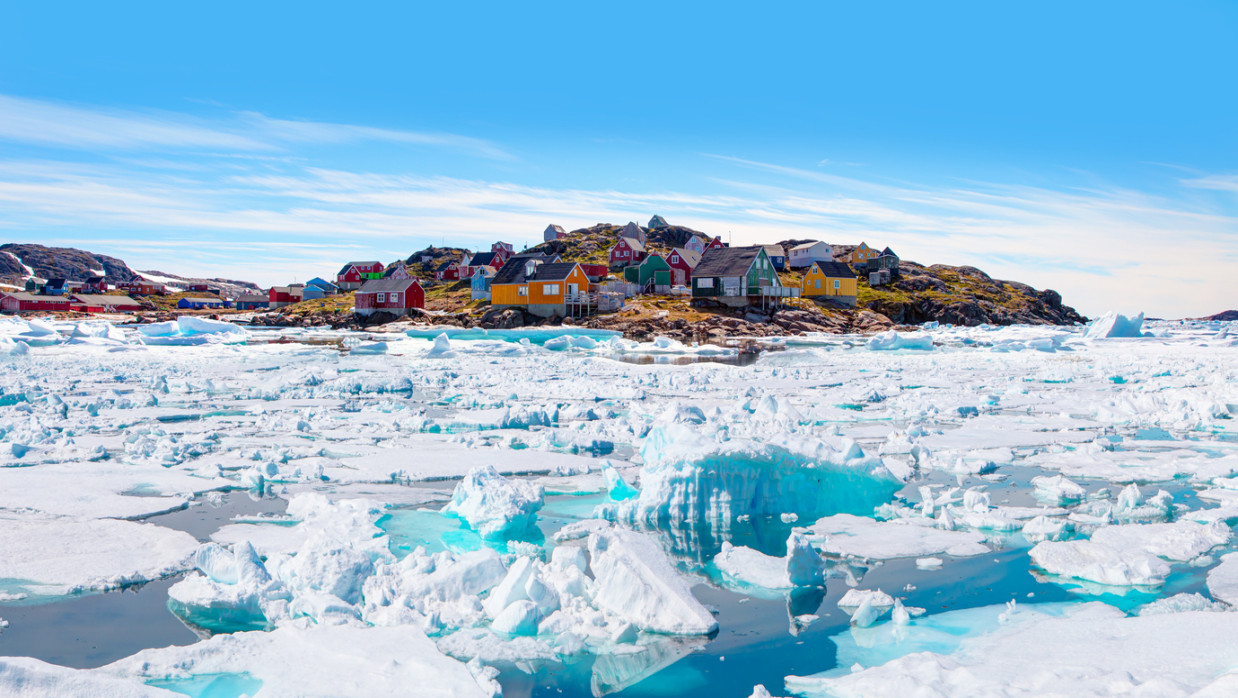
In the wake of escalating threats from the Trump administration to seize Greenland, European governments are now fully aware of the seriousness of these remarks. The rhetoric emanating from Washington has forced policymakers to move beyond dismissal and begin strategizing concrete responses to safeguard Greenland’s sovereignty. U.S. President Donald Trump’s increasing focus on the Arctic island has raised alarms across Europe and officials are scrambling to craft a coherent and unified European response that prevents Greenland from falling into American hands.
The Growing Threat of U.S. Aggression
Trump has repeatedly expressed interest in acquiring Greenland, citing its strategic importance to U.S. security. U.S. Secretary of State Marco Rubio confirmed discussions with Danish officials about the potential acquisition, with the White House signaling it may pursue either a negotiated deal or military action.
In response, European leaders, including French Foreign Minister Jean-Noël Barrot and counterparts from Germany and Poland, have started coordinating a joint strategy to counter the threat. The EU is concerned not only about Greenland’s fate but also the broader impact on European security, sovereignty and stability, fearing a direct confrontation with the U.S. may be inevitable.
Finding a Diplomatic Solution
In an attempt to resolve the issue without triggering a full-blown geopolitical crisis, a negotiated settlement that benefits both sides is seen as the most viable solution. Trump’s claims about Greenland’s importance to U.S. security particularly in relation to growing Chinese and Russian military activity in the Arctic remain central to his argument. The idea that Denmark has not done enough to protect the island from these emerging threats resonates with Trump’s “America First” ideology, but it is not enough to justify an outright military operation.
A former senior NATO official suggested that the alliance could serve as a mediator between Greenland, Denmark and the U.S. NATO’s involvement could help facilitate a settlement where Trump walks away with something he can present as a win, while Denmark and Greenland maintain their dignity and avoid a major loss of sovereignty. The challenge for the EU will be to ensure that any agreement reached with the U.S. does not involve compromising Greenland's political independence or its long-standing ties with Denmark.
Financial Incentives for Greenland
To further complicate matters, the Trump administration has shown support for Greenland’s independence movement. Trump’s strategy, essentially, is to offer Greenland a deal it cannot refuse: independence from Denmark in exchange for a favorable agreement with the U.S. The proposal, if enacted, would flood Greenland with American financial support, potentially offering a long-term economic boost. This carrot-and-stick approach plays into Trump’s broader foreign policy, where economic incentives often replace traditional diplomatic engagement.
However, there are significant hurdles to this strategy. Greenland’s local government has consistently expressed its desire to remain part of Denmark and the island’s geopolitical and strategic importance cannot be downplayed. While Trump has emphasized that he would prefer a peaceful, voluntary acquisition, his willingness to use military force to achieve his goal adds a dangerous dimension to the negotiation.
Economic Retaliation: The EU’s Lever
The EU, for its part, does have tools to deter Trump from further escalating tensions. One key weapon in its arsenal is the Anti-Coercion Instrument, a trade retaliation tool designed to push back against the kind of economic coercion that has defined much of Trump’s foreign policy. While the EU has previously threatened to use this "trade bazooka" in response to American tariffs, it has yet to deploy it fully. If Trump’s aggression over Greenland escalates, the EU may be compelled to invoke this instrument as a means of pressuring the U.S. to back down.
However, this strategy has its risks. Economic retaliation could strain already fragile transatlantic relations and could provoke a broader trade war, which would harm European economies. Therefore, the EU must tread carefully, ensuring that its responses are measured and proportional to the threat posed by the U.S.
The Military Angle
If the U.S. opts for military force to take Greenland, Europe would struggle to prevent it. While pre-emptively attacking U.S. forces would be considered an act of war, European nations may be able to arrest personnel in case of a small-scale incursion, as such actions would be deemed criminal under international law. However, if the U.S. takes forceful action, Europe could do little more than symbolic resistance, raising concerns of a potential military conflict.
Europe's response to this threat must balance diplomacy, economic leverage and military readiness. While the EU seeks peaceful negotiations, military escalation remains a significant concern and Europe must act decisively to prevent Greenland’s loss to the U.S.
Tofeeque Ahmed is a freelancer and media activist, writes on political developments and security issues with special focus regional affairs.


0 Comments
LEAVE A COMMENT
Your email address will not be published