

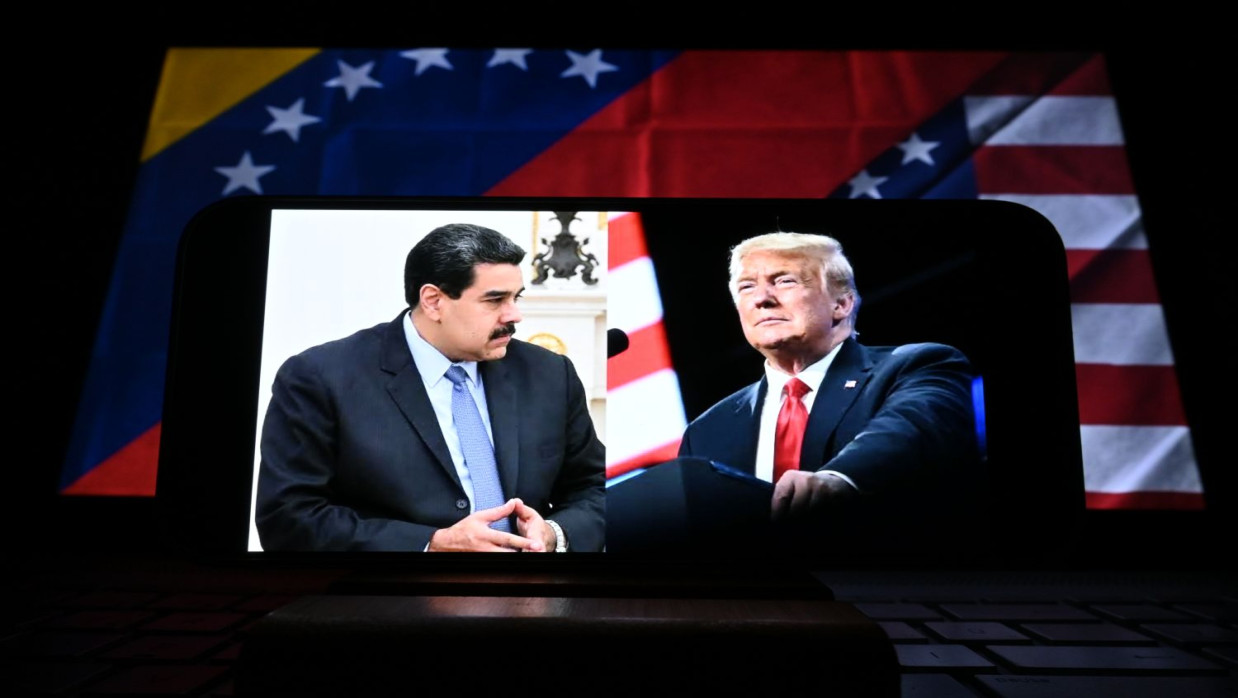
A new twist in Venezuela has captured global headlines in early 2026. Unprecedented U.S. military action in the country resulted in the capture of President Nicolás Maduro. This bold geopolitical move has reverberated around the world, signaling not only a regional shock but also the consolidation of a renewed Great Power rivalry in the Western Hemisphere. To outside observers, this may appear as yet another in a long line of U.S. interventions. In reality, the events in Caracas represent something much more significant: the most unambiguous signal yet that Washington is prepared to counter China’s growing influence in Latin America, even if that means military confrontation.
This is not a simple reiteration of the Monroe Doctrine, the 19th-century American policy declaration of hemispheric dominance. Nor is it merely an extension of Donald Trump’s personal idiosyncratic foreign policy style. Instead, what we are witnessing is the emergence of a hybrid doctrine that analysts have already begun to refer to as the “DONRO Doctrine”: a set of policies and actions aimed at forcibly reversing Chinese economic and strategic inroads into the Americas. The DONRO Doctrine is reshaping calculations in the region’s dictatorial states and could redefine 21st-century geopolitical order.
China’s Quiet Expansion in Latin America
Rewind two decades. At the turn of the millennium, China’s economic influence in Latin America was relatively small. Total trade between China and the Latin American and Caribbean region stood at a little over $12 billion in 2000, a mere fraction of the volume of economic exchange that dominated U.S.-region trade. By 2024, that number had surged past $500 billion, making China the region’s largest trading partner in terms of goods and, in many countries, also its leading lender, on par with or surpassing the U.S. economic presence.
China has long been financing infrastructure, providing development loans, building ports and power grids, and buying up critical commodities in the Americas. The purchases of oil, soybeans, copper, and lithium have made China a major market for the products that power its industrial machine and also play a growing role in the global economy’s transition to green technology and cleaner energy. The targeted development of strategic resources has been accompanied by a drive to control important infrastructure nodes in the global trade network.
The Port of Chancay in Peru exemplifies Chinese interests in both areas. Built with major financing and equity from China’s COSCO Shipping and officially opening in November 2024, the $3.3 billion deep-water megaport will connect China to Latin America over a shorter route and compete with existing Atlantic Ocean gateways for trade flows between Asia and South America. This push for critical infrastructure in the Americas dovetails with Beijing’s global Belt and Road Initiative, an umbrella term for the Chinese state banks and actors’ infrastructure investments and loans to countries across Asia, Africa, and Europe. In Latin America, China has a similar playbook, developing economic dependencies with political, not just commercial, payoffs.
Dictatorships and Strategic Dependencies
The result of China’s economic expansion has been a marked shift in the region’s political landscape, especially in countries where authoritarian regimes have been open to capital flows without regard for governance or transparency. Venezuela under Maduro, Bolivia and its lithium reserves, Cuba’s economic fragility, and Nicaragua’s external debt have all presented Beijing with opportunities to deepen its foothold in the Western Hemisphere through financial commitments and political partnerships.
Venezuela, in particular, has been a linchpin in China’s strategy. Providing billions of dollars in loans, Chinese companies have become a major destination for Venezuelan crude exports. This has not only kept Venezuela’s oil flowing despite U.S. sanctions but also established a resource partnership that, for Beijing, is strategically significant given its proximity to U.S. territory. To dictators like Maduro, Chinese investment and interest have often been an alternative to Western conditionality and ideological pressure. The Trump administration, however, is reading such connections as strategic entanglement.
The Emergence of the DONRO Doctrine
From tariffs to technological restrictions, Trump’s foreign policy has been marked by rhetorical and material challenges to Beijing. But in Latin America, this extends to a rollback strategy: U.S. efforts to upend China’s foothold in the region.
U.S. policymakers have been explicit that the Venezuela operation was not just about regime change in Caracas but a message to Beijing and Moscow to cease their incursions into the Western Hemisphere. In addition to toppling Maduro, the operation demonstrated the limits of Chinese protection for allied regimes when they come under military pressure.
The National Security Strategy, as released by analysts, contains an explicit “Trump Corollary” to the Monroe Doctrine: a stated U.S. policy to keep the Western Hemisphere free of “hostile foreign incursion or ownership of key assets.” This language is significant in signaling a doctrinal shift from the original text: if the Monroe Doctrine was simply a declaration of hemispheric separation from European powers, the DONRO Doctrine is openly about preventing strategic economic influence that could potentially bypass U.S. interests.
The result is a policy mix that couples assertive military action with economic pressure and diplomatic suasion. The message to Latin American nations is clear: choose to be on Washington’s side of the growing geopolitical divide or face sanctions, economic marginalization, and, in the most extreme interpretations of the Doctrine, the prospect of regime change.
Resources and Strategic Flashpoints
A constellation of factors and resources makes this policy so significant. Lithium, a key input for electric vehicles and batteries, is abundant in Argentina, Bolivia, and Chile, an area sometimes dubbed the “Lithium Triangle.” China’s companies are among the largest and most heavily invested offtakers in the three countries. Control over energy and minerals is only one dimension of the strategic picture. The infrastructure that facilitates the extraction and global transportation of these resources also forms a kind of strategic leverage in the global trade and investment system.
Ports, railways, and logistics hubs can lock in economic dependencies, leverage that China has taken pains to use in Africa, and that these Chinese-built hubs in Latin America also potentially represent. The opening of Chancay and its plans to serve as an Asia–South America trade gateway directly competes with the existing Panama Canal and U.S.-sphere-of-influence-dominated logistics routes. This is what critics of the expansion argue makes Latin America so strategic: it is not a regional backwater but a point of strategic inflection in the global balance of power, much as Europe was in the Cold War.
Why China Cannot Simply Back Down
The question then is: given these stakes, why has China not backed down? The answer has to do with economics and prestige. Latin America has been a major source of raw materials, trading partners, and political capital on the world stage for China’s leadership. There are limits to how much Beijing could simply decouple from the region without cutting off access to critical resources. This is not just about immediate material factors, but also about signaling in a broader strategic competition with the United States.
Beijing has built inroads and partnerships with many governments over the past two decades. These ties have economic importance, but they are also political and diplomatic investments that cannot be simply reversed or undone. Diplomatic costs are a real consideration for any administration, and even amid the public saber-rattling that has accompanied Venezuela and the conflict with the United States, Chinese leaders have issued public signals that they have no intention of stepping back from Latin America.
The Risk of Escalation
The danger of this new rivalry and competition is that it could escalate in ways destabilizing to Latin America and the global system more broadly. At present, the public debate is already bifurcated, with some governments calling for an end to U.S. intervention and others noting Chinese pretenses of friendship. But the risk of open military conflict over trade and resources, trade tariffs, naval blockades, and competition over critical infrastructure such as ports is real in an age of globally integrated markets and politics.
Implications for Dictatorial States and Global Order
The consequences of the DONRO Doctrine for the region’s dictators are immediate and potentially destabilizing. Where once economic ties with China and other partners provided a form of insulation against U.S. pressure and a hedge against Western hegemony, the threat of force and economic sanctions now imposes a form of coercion that requires recalculations of national strategies and interests. The question for these leaders is how to balance realignments with Washington, maintain ties to Beijing, or hedge between the two, and the stakes for getting those calculations right are existential.
On a global level, this change in U.S. posture marks the reemergence of hemispheric competition, less on ideological grounds and more around the strategic control of 21st-century economic lifelines: minerals, energy, trade, and logistics. Washington has made clear that the Americas are no longer a sphere of benign economic cooperation and are no longer geopolitically off-limits to China. Beijing has also made clear that it has no intention of decoupling from the region and is willing to invest heavily in its own vision of the region’s future. The coming together of these two trends, assets, and ambitions is the story that will shape global geopolitics for decades to come.
Conclusion: The Hemisphere as a New Front
DONRO is a seismic shift in U.S. foreign policy. It is a declaration that competition is not enough, that strategic dominance over the Western Hemisphere must now be prioritized. For dictatorial states in the Americas, this represents an imperative to navigate an increasingly treacherous geopolitical terrain. For the rest of the world, the consolidation of the Doctrine is a signal that a new era of strategic competition has arrived, one with implications for the global balance of power for years to come.
In this story, Latin America is not a peripheral stage. It is the center of a new battlefront between two global powers, one with profoundly negative consequences for the region's political futures and the overall architecture of international order.

0 Comments
LEAVE A COMMENT
Your email address will not be published