

The year 2025 approaching its end has been unprecedented since it has witnessed a number of conflicts, big and small, throughout the year. It has been a different year as wars and conflicts in the year has ranged widespread, from Asia, Africa, Europe to South America while tensions continue to brew in Middle East with repercussions for the entire globe.
While Russia-Ukraine and Israel-Palestine wars/conflicts hogging the limelight, a good number of regional conflicts with ravaging consequences for world peace, continued. The brief 88-hour India-Pakistan war over terrorist killings in Pahalgam (Jammu & Kashmir, India), Israel-Iran war (with Palestine/Hamas terror attacks in the background), Thailand-Cambodia, Rwanda and Congo, Armenia and Azerbaijan, Pakistan and Afghanistan are the other fleeting military conflicts took place.
In addition to, there has been palpable tensions, anticipation of military conflicts and continued civil unrest in many other nations/regions. In Africa, Egypt and Ethiopia were close to a war on newly-built Grand Ethiopian Renaissance Dam that Egypt feels could affect its supply of water from River Nile. Serbia and Kosovo are at loggerheads with each other for some time with Myanmar, Syria, Bangladesh, Nepal facing incessant civil unrest. The semi-arid Sahel Region in Africa comprising of Mali, Chad, Niger and Burkina Faso facing imminent humanitarian crisis. The intermittent crisis in South China Seas and tensions between China and Taiwan, Japan, Vietnam and Philippines on the other and US naval presence in the region, add to the growing tensions in global geopolitics. Taiwan and North Korea continues to remain volatile and unpredictable geopolitical hotspots for a long period.
US under Donald Trump’s second Presidency has developed a new-found fascination for tariff diplomacy. Trump has repeatedly been harping on his self-proclaimed achievement of using trade as a bargaining chip to stop eight wars and securing peace and that he deserved a Nobel Peace Prize in recognition of this unprecedented achievement. Also, his penchant for imposing additional and bizarre level of tariffs on major trading partners, EU, UK, Canada, China, Japan, India, Brazil, Indonesia and others have sent the global trading order in a turmoil.
There have been instances of some countries like Mexico, Indonesia, Japan, and EU bending backwards to please Trump accepting unreasonable and humiliating trading terms, facing domestic backlash and hurrying to review such trade pacts with the US. India and China are the only major powers to disobey US dictates and forcing it to negotiate new terms. Meanwhile, the world economy is in a disarray, growth is stagnating, major economies are finding going tough and inequality around the world is witnessing an unusual high.
Terrorism has evolved as one of the serious problems affecting global community. In 2025, it has affected countries around the world from US, France, Germany, Norway, Netherlands, Austria, Australia to Niger, Somalia, Kenya, Pakistan, Iran, Bangladesh, Israel, India and others. Financial Action Task Force (FATF) one of the few agencies that has had a proven track record of blocking/controlling flow of terror funds, had a mixed bag of results.
Global warming and climate change have been on the agenda of the world community for long. There have been a number of global conferences, meetings and declarations but real work on sustainable development goals (SDGs) has been seen limited to some of the major powers, particularly in US, Canada, EU, Scandinavian region, Japan, China, India, Brazil and Indonesia. Rest of the world remains substantially fragile to problems of climate change whose worst is yet to be seen.
Economic inequality has emerged as another big issue affecting the humanity. It has continued to outpace economic progress taking place in erstwhile poor and populous countries/regions including China, India, Indonesia, Bangladesh, South Africa, Egypt, Latin America and so on. While scholarly publications and intellectual discussions/seminars continue to express concern on rising inequality but no tangible actions could be seen on ground to overcome it.
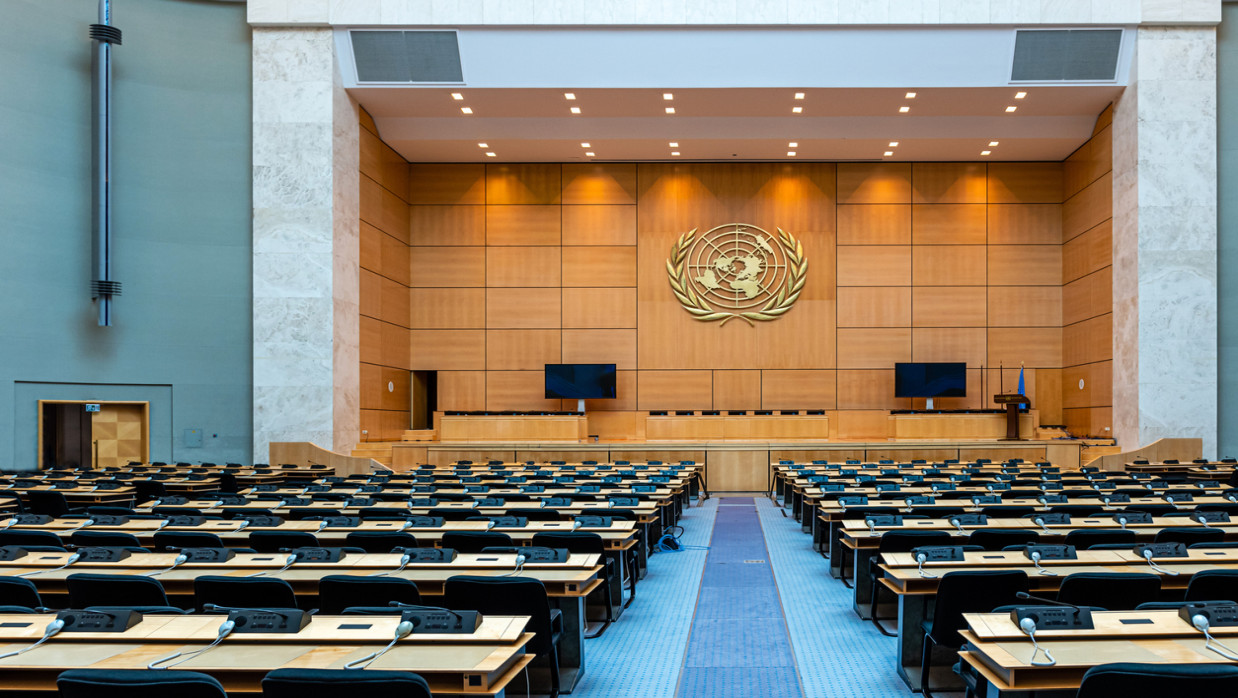
In the midst of all such dismaying developments, one can hardly notice any worthwhile role being played by the so-called world body, United Nations Organisation (UNO). One can rarely miss the similarity that was witnessed in mid 1940s when its predecessor League of Nations had been reduced to same degree of insignificance. All the major problems facing the world community today, be it wars/conflicts, trade issues, terrorism, climate change, economic inequality, domination of major politico/military powers, UNO seems totally irrelevant and non-existent.
It has failed to stop wars and limited conflicts raging in many parts of the world. Tariff and trade wars are extensively being used by US, EU, Japan, Canada, Germany, China, India, Brazil, Australia to further their politico-diplomatic goals. Sustainable development continues to look like a moral rhetoric to be twisted and moulded to suit one’s own objectives. The restructuring of UN Security Council (UNSC) remains hostage to Big-5’s whims and fancies. Its role in the functioning of global finances through its affiliates Word Bank, IMF, ADB is explicitly undermined by major donors like US, Japan, China, EU and the like with talks on BRICS Bank (making US uncomfortable), doing the round.
Seen in the backdrop of UN formation in 1945, its Charter Art1, stating the objective to maintain international peace and security, develop friendly relations among nations on the basis of equality and securing cooperation in solving global problems, the UN seems completely lost in the contemporary international context. To make matters worse, a proliferation of regional and international groupings like G-7, G-20, G-4 (Germany, India, Brazil and Japan), I2U2, BRICS, QUAD, SCO in addition to OECD, OPEC, ASEAN and others with individualistic agendas and objectives, further undermine UNO’s role as a global peacekeeper.
It leads us to a relevant question, does the world needs a UN any more…? That however, depends on another pertinent issue…do we have an alternative to UN with us…or something is better than nothing…till a situation evolves where a new world order and consensus emerges on a new, more effective global organisation, the UN may continue. This situation has developed because the UN has failed to act as a decisive body and fulfil most of its expectations…the UN has to perform or perish.

0 Comments
LEAVE A COMMENT
Your email address will not be published