


A Mission with Purpose
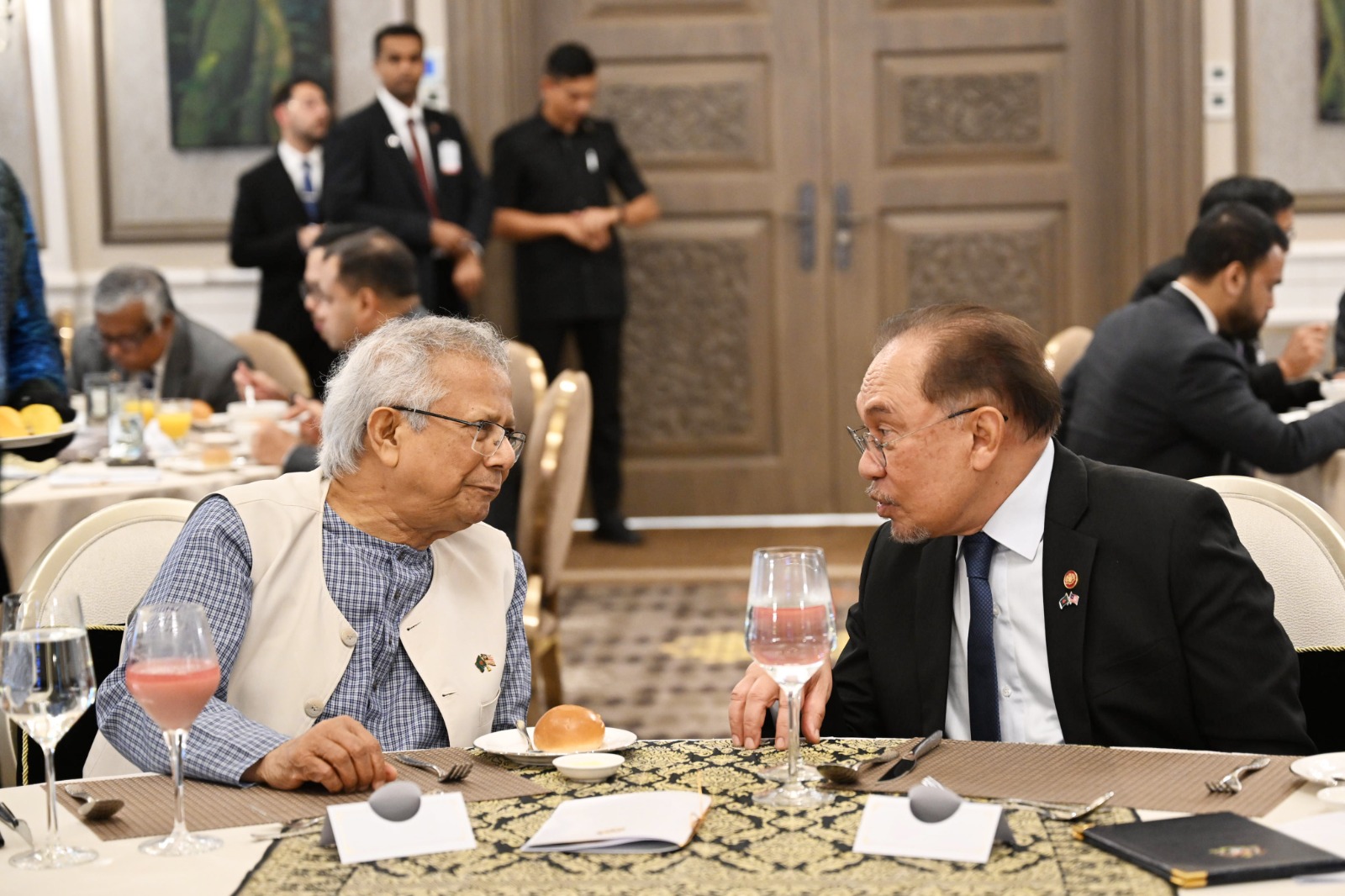
When Nobel laureate and Chief Adviser Dr. Muhammad Yunus arrived at Putrajaya on August 12, 2025, it was far from a courtesy call—it was a game-changer in rewriting the world position of Bangladesh. His visit carried the entire weight of the nation’s hopes in a time when the world order is undergoing change, being driven by post-pandemic recovery, supply chain restructurings, and rising geopolitical rivalries. For Bangladesh, the challenge is two-fold: how to maintain its high growth trajectory and how to diversify its partners away from old friends.
This visit to Malaysia was planned with an articulated and multifaceted aim—to develop new economic horizons, to forge long-term strategic ties, to solidify cultural and educational links, and to provide Bangladesh with a more powerful voice in regional security and humanitarian issues. It was, in every sense, a bold declaration that Bangladesh is ready to assume its position on the global stage not as a passive onlooker, but as an engaged, visionary partner mapping the region’s future course.
Ceremonial Welcome, Strategic Implications
The welcome at Perdana Putra Complex was full of diplomatic symbolism. The red-carpet reception, the guard of honour by the Royal Ranger Regiment, and the full military salute were not ceremonial niceties; they reflected Malaysia’s respect for Bangladesh as a friend that had special geopolitical weight. Prime Minister Anwar Ibrahim’s message underscored Kuala Lumpur’s importance placed on Dhaka’s role in regional and bilateral cooperation. It is a landmark development in the relationship. The engagement was traditionally transactional-focused—Bangladeshi workforce exports and imports of Malaysian palm oil—for decades. Today, Malaysia is also expressing a desire to engage equally with Bangladesh in fields like security, high-value trade, advanced-level education, and technology. The vision of the welcome also conveyed a message beyond Malaysia, projecting Bangladesh’s growing presence in ASEAN and the broader Asia-Pacific community.
Eight Agreements that Could Redefine the Partnership
The visit’s most tangible result was the signing of five Memoranda of Understanding (MoUs) and three Exchange of Notes. The agreements are a deliberate expansion of the Bangladesh–Malaysia agenda beyond its traditional parameters.
The defence cooperation agreement opens the way for joint naval and air training exercises, technology transfers, and officer training courses. Malaysia’s rich experience in regional maritime surveillance and anti-piracy patrols of the Strait of Malacca can most advantage Bangladesh as it guards the Bay of Bengal—a burgeoning region of energy shipping lanes and blue economy activities.
Energy partnership is also significant. Malaysia’s Petronas, with its modern LNG facilities and experience in developing offshore energy, will partner with Bangladesh to modernize terminals, add storage capacity, and even invest in renewable energy projects such as offshore wind and solar farms. Bangladesh wants this because it is seeking to de-risk its high-tariff spot-market LNG imports and cushion its energy prices against global market volatility.
ISIS Malaysia’s strategic research MoU with BIISS will give Bangladeshi policy analysts a seat at ASEAN’s strategic tables. This offers Dhaka the chance to influence policy discourse on matters of life-and-death importance to Bangladesh’s national interests, including regional connectivity, digital trade corridors, adaptation to climate change, and maritime law—fields in which Bangladesh’s national interests become increasingly directly involved.
Halal ecosystem agreement is a gateway to a rapidly growing $5 trillion global market by the year 2030. By synchronizing Malaysia’s globally renowned halal certification system, Bangladeshi industries can enter upscale export markets of the Middle East, Europe, and North America, not only for food but also for halal pharmaceuticals, cosmetics, fashion apparel, and tourism services.
In the education field, a higher education and diplomatic training agreement is an added-value investment in Bangladesh’s human resources. Academic level joint programs, inter-country faculty exchange, and specialized training for diplomats will produce a batch of professionals who can better represent Bangladesh in global circles.
The two private sector pacts—between NCCIM and FBCCI, and between MIMOS and BMCCI—establish business-to-business partnership institutional channels. These can fuel joint ventures in high-tech manufacturing, chip fabrication, ICT innovation parks, and agritech sectors, with the potential to diversify the export basket of Bangladesh away from the readymade garment industry.
Winning Investor Confidence
Dr. Yunus’s private encounter with Malaysian billionaires was as significant as the diplomatic signing of treaties. Collaboration with Jeffrey Cheah of the Sunway Group—a multifaceted group that invests in property, healthcare, education, and digital infrastructure—resulted in discussions on sustainable city development plans and joint university initiatives. Discussions with Syed Mokhtar Al Bukhary, owner of Proton and MMC Corporation, touched on opportunities in transport infrastructure, car assembly, and port operations.
Dr. Yunus framed Bangladesh as an emerging economy: one with a demographic dividend of its young and increasingly better-educated population, a steadily rising middle class, and a government that is bent on economic reform. This narrative resonated with Malaysian investors seeking to diversify out of their conventional ASEAN markets. Areas of interest also encompass renewable energy production, financial technology innovations, intelligent farming, and environmental tourism—sectors where Malaysian expertise can be combined with the cost advantage of Bangladesh to produce competitive global products.
Labor Migration: Enhancing the Quality Bar
Labor migration has been the economic lifeblood of Bangladesh–Malaysia ties, as nearly a million Bangladeshi migrants in Malaysia remit billions of dollars annually. The sector, however, has been plagued by chronic issues: illegal recruitment channels, middleman exploitation, underemployment, and weak protection for workers.
This journey shifted the focus towards enhancing the quality of the labor relationship. Adviser Asif Nazrul advocated a government-to-government recruitment process focusing on skilled professional engineers, physicians, and ICT professionals, along with traditional semi-skilled roles. This shift would not only boost remittance values but also Bangladesh’s reputation as a supplier of high-quality human resources.
Both deliberated mechanisms aim to regularize the status of illegal workers, increase social security allowances, and introduce Bangla-language complaint and support services. All of these reforms, if implemented, will increase workers’ welfare, reduce exploitation, and enhance the contribution of migration to Bangladesh’s economy.
Regional Peace and Humanitarian Diplomacy
This initiative to participate in a regional peace mission to Myanmar alongside Malaysia, Indonesia, the Philippines, and Thailand reflects Bangladesh’s development as a constructive regional actor. The mission will call for a ceasefire and relief for Rohingya refugees—a priority concern for Bangladesh that is sheltering over one million displaced Rohingya in Cox’s Bazar.
Malaysian chairmanship of ASEAN for this mission provides Dhaka with the stage to internationalize the crisis, secure broader humanitarian responsibility-sharing, and exercise diplomatic leverage on Myanmar’s military junta. Besides the Rohingya situation, participation in such regional tasks assigns Bangladesh more credibility in peacebuilding and humanitarian diplomacy—the key that can open doors to other multilateral endeavors.
Why This Visit Stands Apart
This was not a ceremonial state visit. Its significance spans multiple strategic domains, including defense, energy, education, research, migration, and humanitarian cooperation. The diversity of agreements reduces exposure to the risk of excessive dependence on one sector or partner.
Two-way trade, which stood at RM13.35 billion in 2024 (5.1% higher than 2023), may double if the scheme projects are agreed upon. Malaysian contributions to ASEAN can also help Bangladesh become more integrated into Southeast Asian economic corridors and thus qualify to benefit from the world’s fastest-growing regional market. Academic and social business collaboration enhances Bangladesh’s soft power to project a progressive national image across the globe.
From Agreement to Action
The real challenge is to transform signatures into measurable outcomes. All MoUs need to be backed by a shared implementation task force with quarterly report cards. Accelerating the Halal Industry Development Plan could enable Bangladesh to dominate export markets by 2027. High-skill migration agreements need to be operationalized to maximize remittance inflows and worker dignity.
Enhancing BIISS–ISIS collaboration in key areas, such as maritime security policy, digital economy governance, and climate resilience programs, will further consolidate Bangladesh’s intellectual dominance in the region. An annual Bangladesh–Malaysia Investment Forum, alternatively between Kuala Lumpur and Dhaka, can sustain business momentum and ensure ongoing stakeholder dialogue.
Diplomacy with a Social Business Ethos
Dr. Yunus’s diplomacy is a further expression of his life-long commitment to the principles of social sustainability, inclusion, and innovation—applied at the statecraft level. His Universiti Kebangsaan Malaysia keynote, which followed an honorary doctorate in Social Business, confirmed that economic partnerships must be sensitive to social needs while driving growth.
This approach aligns precisely with Malaysia’s development philosophy, which integrates industry with Islamic banking, halal leadership, and regional diplomatic activism in ASEAN. It has a powerful message: Bangladesh is no longer content to be just a low-cost location for making things—it intends to become a value-added player in the global economy.
A Blueprint for the Next Decade
This trip was not about ritual photos; it was about the bricks of a new chapter in Bangladesh’s rise. With discipline and enforcement of the commitments, Bangladesh was poised, over the next five years, to achieve energy security, make a mark in the precious halal economy, double two-way trade to $6 billion by 2030, transition to a high-skill migration profile, and increase its regional voice in humanitarian and peace diplomacy.
Whether August 2025 finds a place in history as a turning point will depend on the combined will of Bangladesh’s institutions, political leadership, and private sector. If they seize the moment, Dr. Yunus’s Malaysia mission will be marked as the day when Bangladesh began writing its next economic and diplomatic chapter in confidence and direction.

0 Comments
LEAVE A COMMENT
Your email address will not be published