

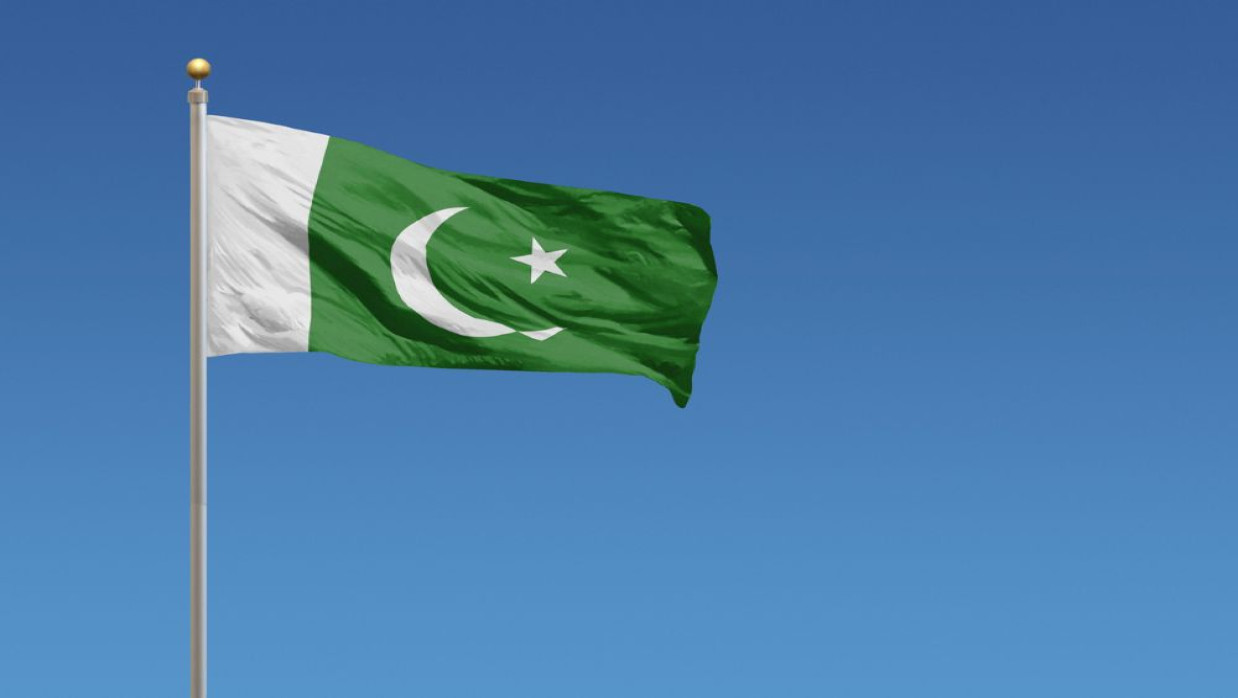
On 14 August 1947, Pakistan appeared on the world map as an independent state. Seventy-nine years later, its Independence Day tells a story that extends far beyond the circumstances of its birth. It is the story of a country repeatedly confronted by extraordinary pressures, and repeatedly demonstrating an ability to endure, adapt and move forward.
That resilience deserves greater international attention.
Pakistan’s history has unfolded at one of the world’s most consequential geopolitical crossroads. Positioned between South Asia, Central Asia, China and the Middle East, the country has experienced the consequences of regional wars, terrorism, displacement, economic disruption and climate disasters. Few states have had to navigate so many overlapping security and development challenges within such a relatively short national history.
Yet Pakistan remains standing, functioning and looking forward.
Perhaps nowhere is this resilience clearer than in Pakistan’s struggle against terrorism. For years, Pakistani communities lived with attacks on schools, markets, mosques, security installations and ordinary citizens. Thousands of Pakistani civilians and security personnel lost their lives. The consequences reached far beyond casualty statistics: families were shattered, communities displaced and economic opportunities disrupted.
Pakistan did not surrender to that violence.
Through security operations, intelligence efforts and the resilience of local communities, terrorist networks were confronted and areas once destabilised by militancy were reclaimed. The experience has given Pakistan something that cannot easily be acquired through theory: hard-earned knowledge of counterterrorism, community resilience and the enormous human cost of prolonged conflict.
Pakistan’s contribution to international peace, however, is not limited to its own borders.
For decades, Pakistani personnel have served under the United Nations flag in conflict zones around the world. From Africa to the Balkans and elsewhere, Pakistani peacekeepers have helped protect civilians, support fragile peace processes and operate in environments where international commitments are tested under exceptionally difficult conditions.
This service reflects an important dimension of Pakistan’s international identity: a country shaped by security challenges that has nevertheless continued contributing to collective security.
Pakistan’s geopolitical significance is also evolving.
Its location should not be understood merely through the traditional vocabulary of strategic competition. Pakistan can serve as an economic and diplomatic bridge connecting regions. Trade corridors, infrastructure, energy connectivity and expanding relationships across Asia and the Middle East offer possibilities for transforming geography into economic opportunity.
The country’s greatest strategic resource, however, may not lie beneath its soil or along its borders.
It lies in its people.
Pakistan has a remarkably young population. Across the country, young Pakistanis are entering technology, medicine, engineering, entrepreneurship, academia, diplomacy and the creative industries. Pakistani professionals already contribute to institutions and economies around the world.
Pakistani women are equally central to this national story.
From education and healthcare to science, entrepreneurship, public service, diplomacy and the armed forces, women are increasingly visible across areas once considered inaccessible to them. Their participation is not separate from Pakistan’s development; it is one of the forces capable of accelerating it.
This is particularly significant for peacebuilding. Pakistan’s experience demonstrates that security cannot be understood only through battlefields and borders. Families, educators, community leaders, women and young people all contribute to societies’ ability to resist extremism and recover from violence.
That experience gives Pakistan an important perspective to bring to global discussions about peace and conflict.
There is also another form of resilience that Pakistan increasingly represents: climate resilience.
The country has experienced devastating floods, extreme temperatures and other climate-related pressures despite contributing only a small fraction of historical global emissions. Pakistan therefore occupies an important position in international debates about climate justice. Its experience strengthens the argument that countries facing the greatest consequences of climate change should not be left to carry a burden they did little to create.
Pakistan’s future international influence can consequently extend across several areas: peacekeeping, counterterrorism experience, regional connectivity, climate diplomacy and the enormous potential of its young population.
None of this requires pretending that nation-building is ever complete. No country reaches a point where development stops or improvement becomes unnecessary. Pakistan’s achievement is that, despite repeatedly being tested, it has continued to move forward.
That distinction matters on Independence Day.
The Pakistani flag raised on 14 August represents more than the creation of a state in 1947. For millions of Pakistanis, it represents families who rebuilt after displacement, communities that refused to be intimidated by terrorism, soldiers and civilians who lost their lives to violence, peacekeepers who carried Pakistan’s flag into distant conflict zones, and younger generations determined to build lives larger than the challenges they inherited.
International discussions about Pakistan too often begin with what the country has endured.
Perhaps it is time they paid equal attention to what Pakistan has overcome, and what it can contribute.
At seventy-nine, Pakistan does not need to be defined by the crises through which it has passed. It can increasingly be defined by what those experiences have produced: resilience, strategic maturity, an understanding of the price of conflict and a determination to pursue stability and development.
Seventy-nine years ago, Pakistan secured its independence.
Its next achievement can be converting that hard-won resilience into greater prosperity at home and a stronger contribution to peace abroad.
That would be an Independence Day legacy worthy of the generations that made 14 August possible.


0 Comments
LEAVE A COMMENT
Your email address will not be published