

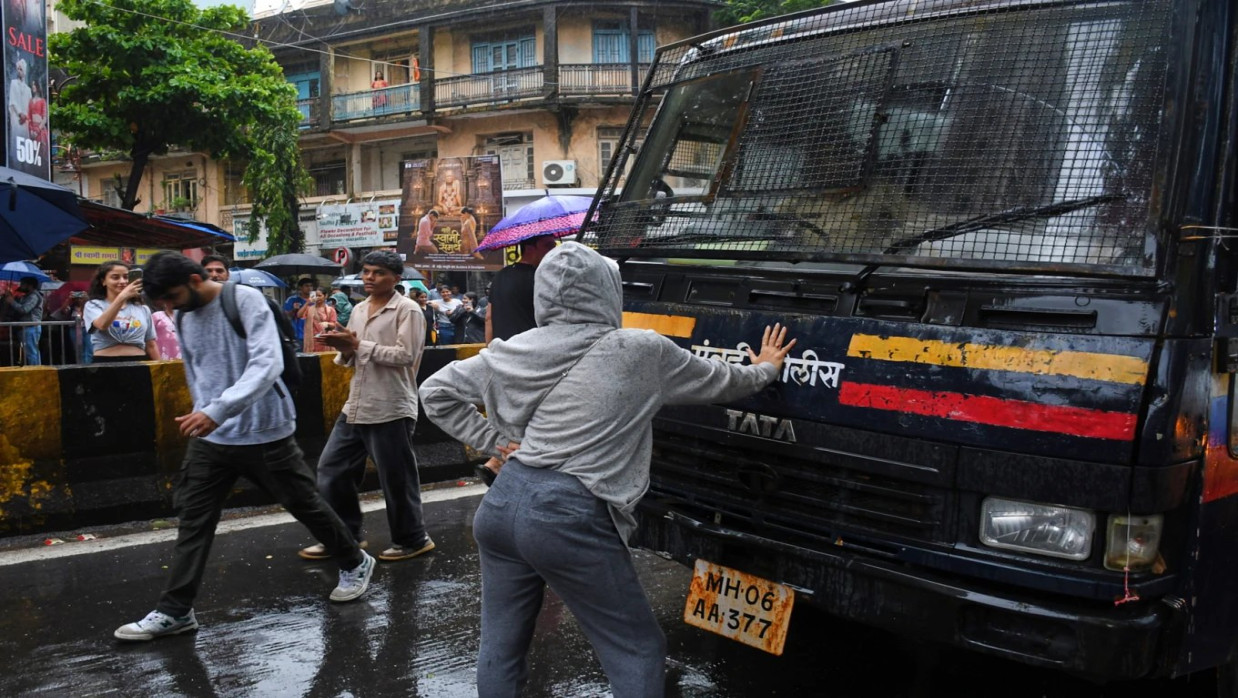
India's on-going movement by the emerging Cockroach Janata Party (CJP) is taking space gradually. The CJP is not a registered political party but a grassroots youth movement born out of frustration with repeated examination paper leaks, unemployment, and declining trust in public institutions. What began as an ironic response to students being dismissed as ‘cockroaches’ has evolved into a powerful symbol of resistance against misrule in India? Protesters have reclaimed the label to express resilience, arguing that they refuse to remain invisible despite systemic neglect and corruption in the educational system. It reflects growing concerns about meritocracy, governance, accountability, and the widening gap between economic growth and opportunities for educated youth.
India’s protests are part of a movement happening across the region. Young people are standing up against government systems. They are not just asking for changes in policies. They are fighting for changes. Similar situations happened in Bangladesh in July 2024. Also in Sri Lanka there was a movement called Aragalaya. There are also protests led by people in other parts of South Asia.
The main thing connecting all these protests is fairness. In the region, young people are asking for fair systems. They want ways to get jobs and exams. They want chances, for everyone. They want government officials to be responsible. They want leaders who listen to the people and not to political leaders. They want answers to their questions and clarifications as per norms of democratic governance. But in most cases, the voices of authorities concerned fail to uphold logic and like to use the language of power and arrogance.
Although India’s movement has no connection with other regional protesters, a moral linkage with Bangladesh’s uprising in July 2024 is similar. What happened in Bangladesh shows that when students lead a movement and people are already upset about a lot of things it can change the country’s politics quickly. India is gradually going that way as different cities and towns are following the style and pattern of Delhi’s outburst. The clear evidence shows that the Indian protest is very much India’s own. But the connection between the regional protest experiences is not that one is copying the other. It is like the ideas of one movement are inspiring another movement to show what people can do when they work together. Because of the internet and social media people in countries can share information and see what is working for others. This means that ideas and strategies for protests can spread across borders. Bangladesh’s experience and India’s movement are examples of this, where people are using ideas to express their frustrations.
The CJP also illustrates how political mobilization is changing in the digital age. Instead of relying on traditional party organizations, today's youth are increasingly organized through social media, memes, satire, and decentralized online networks. This reflects the emergence of a new digital public sphere, where political legitimacy is increasingly contested outside conventional institutions.
India’s CJP is about much more than a provocative name. It symbolizes a generation that refuses to accept exclusion, broken promises, and institutional failure. Whether this movement develops into a lasting force for democratic reform remains uncertain. Yet it signals that South Asia is witnessing the emergence of a new generation of civic politics—one driven less by traditional ideological divisions and more by demands for dignity, merit, accountability, and democratic responsiveness.
The thing about Bangladesh's uprising in July 2024 is that it will be remembered for a time. It is not about what happened with the government. It shows that young people can come together and change the way people think about things in their country and even in countries.
This is happening in places in South Asia. People are protesting about these things. They do not like corruption, they want jobs, they want the government to listen to them and they do not like it when the government is too powerful.
These protests are not just copying each other. They are happening because young people in the region are connected and they are talking about the problems. Bangladesh’s uprising and other protests like it are showing that young people can make a difference. They can come together across the region to demand meaningful, democratic and institutional changes leading to inclusiveness and free from political corruption, dominance as well as socio-cultural-politico discrimination.
This is something that is happening not all over South Asia but in different countries separately. It shows that young people are more and more willing to speak up for what they believe in and to play a role in deciding what happens in their own countries. But the picture may be changed over time. As young people become more involved and connected through digital platforms, they are gaining greater insights of regional common issues and also the inspirations to work together both online and offline as a form of civic awareness initiative to promote meaningful change in governance. When we look at the protests led by youth in Bangladesh, Sri Lanka and Nepal we should not think of what is happening in India as something separate. It is all part of a movement of young people coming together to make their voices heard across South Asia.
After the two years of July Revolution in Bangladesh, what is happening in India right now in July 2026 shows that young people are not just asking for small changes in policies. They are asking questions about the kind of government they have, whether the people in charge are honest, whether they are really listening to what people want and whether they care about what happens to the country. Young people in India and in South Asia want to see change and they want to have a say in how their countries are run democratically, inclusively, and lawfully.

0 Comments
LEAVE A COMMENT
Your email address will not be published