

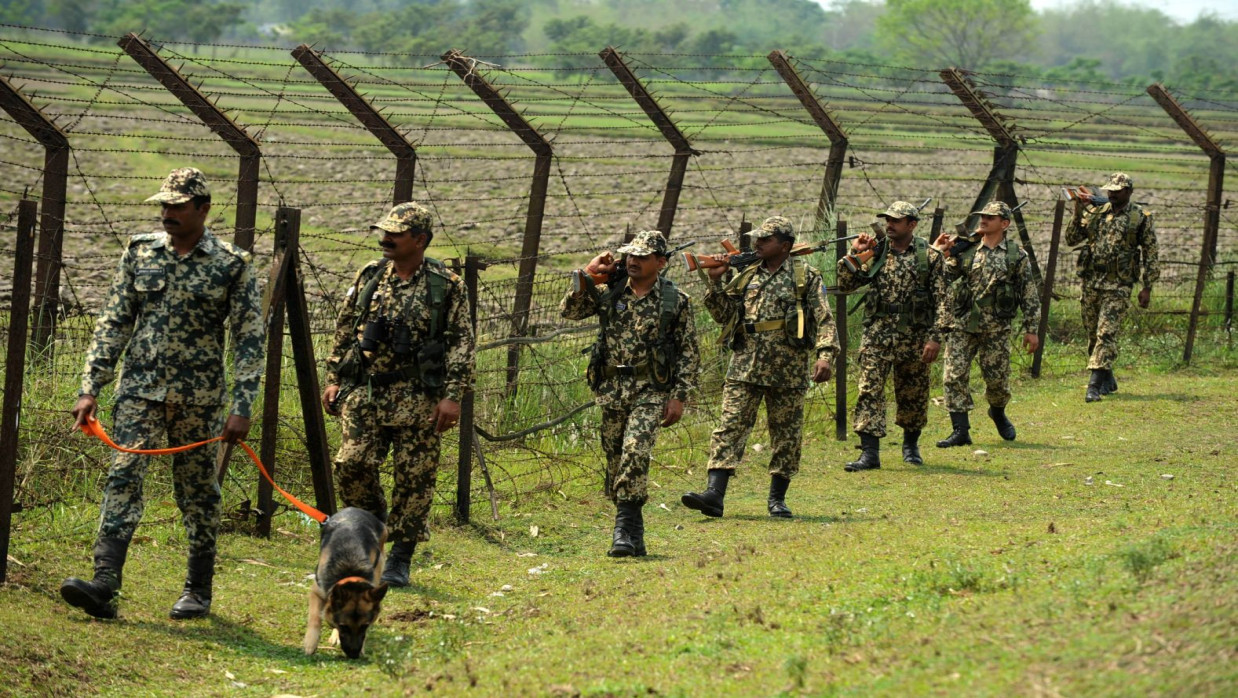
Border regions present dangerous situations because security threats conflict with everyday activities of local residents. The recent shooting of two individuals in Assam’s South Salmara–Mankachar district has once again highlighted the difficulties faced by security forces operating in such environments, as well as the risks encountered by local populations.
The two injured men were fishing near the border when Border Security Force personnel shot them during the early hours of 9 March 2026 according to reports. Security agencies have not released their complete report about the incident while family members say the men were civilians who engaged in normal activities. The investigation needs to establish the precise order of events which happened before investigators can make their final determination.
Assam has maintained its status as a sensitive area because of ongoing problems with cattle smuggling and illegal border crossings and trafficking activities which occur along the India-Bangladesh border. Security forces who work in these zones face intense challenges because they must patrol during nighttime while they handle sudden emergency situations. The situation becomes difficult because people need to identify who is a smugger and who is an ordinary citizen.
The region's current security issues demonstrate its intricate nature. The BSF fired upon a group of people who officials suspected of smuggling cattle which resulted in a local resident sustaining injuries. A suspected smuggler received pellet wounds during an early March operation which targeted anti-smuggling activities. Official sources reported that the suspects attempted to escape police capture after police had already delivered their first warning.
Security officials often emphasize that their actions are guided by rules of engagement designed to prevent illegal activities while minimizing harm. Decision makers must handle high-risk situations through their operational procedures because they require immediate choices between two opposing forces. The process increases the chances that unexpected results will occur.
The present situation involves two different issues which require attention because both issues need resolution. Border communities require access to nearby land and water resources which they use for their essential needs thus creating direct contact with security operations. The existing situation creates a situation which allows people to misunderstand each other because authorities fail to establish proper communication with residents.
The reported Assam shooting has prompted calls for a thorough and impartial investigation. The public needs these inquiries because they help establish facts and build public confidence. Investigators must show their work to demonstrate whether they followed established protocols while dealing with family and community concerns.
Experts recommend that better security force coordination which involves working together with local communities will help decrease the chances of identical incidents happening again. The implementation of awareness campaigns together with the establishment of clear boundaries for restricted areas and the deployment of surveillance technology will help decrease instances of direct confrontations. The implementation of non-lethal crowd control methods together with interception techniques will create safer conditions for civilians.
Border areas require an evaluation that includes their social and economic conditions as a fundamental element of their assessment. People living in poverty with no job opportunities available to them will turn to illegal activities which include smuggling. The implementation of development programs will help solve these fundamental problems because it will decrease the need for people to engage in such activities which will result in decreased tensions.
The generalization of all community members should be avoided according to established academic standards. The narratives which present these incidents as communal conflicts need to be avoided because they create more division while they make it harder to see actual on-the-ground obstacles. The balanced approach needs to use evidence for accountability purposes which should lead to systemic improvements instead of making intent-based judgments without proof.
The situation at the India-Bangladesh border demonstrates a larger security challenge which requires maintaining strong protection measures while safeguarding local resident rights. The Assam incident demonstrates that organizations must assess their training methods and policy frameworks together with their public engagement techniques on an ongoing basis.
The primary goal of the ongoing investigations requires organizations to establish factual information while they support victims and build measures that will stop future incidents from happening. Security effectiveness requires improvement through dual efforts that need to work together with humanitarian safeguards because both elements are necessary for achieving stability in border regions.

0 Comments
LEAVE A COMMENT
Your email address will not be published