

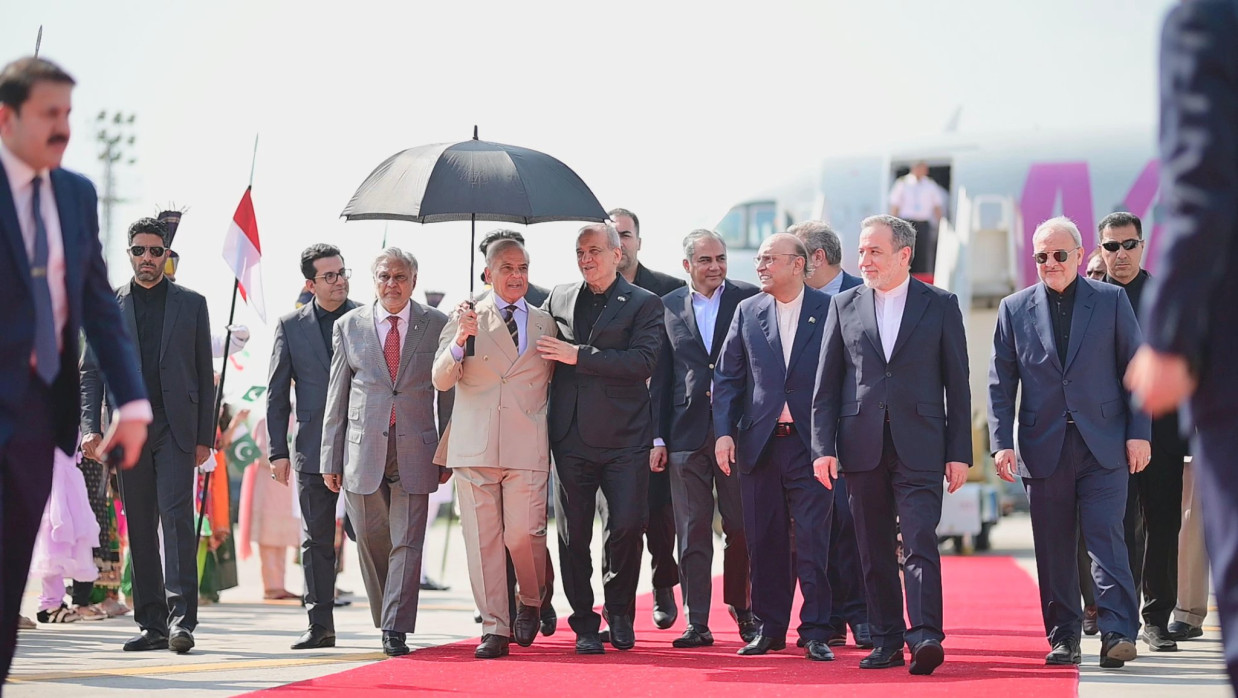
The June 2026 Islamabad Memorandum of Understanding (MOU), brokered with the support of Pakistan and Qatar, may not be a perfect agreement, but it represents the first serious opportunity to pull the Middle East back from the brink of a wider regional war. After months of devastating conflict between the United States, Israel, and Iran, the agreement has halted active hostilities, reopened the Strait of Hormuz, and revived the possibility of diplomacy on the most dangerous issue in the region: Iran's nuclear program.
The war itself was a strategic failure. Washington and Tel Aviv argued that military strikes were necessary to degrade Iran's nuclear capabilities and prevent Tehran from acquiring a nuclear weapons option. Yet after two years of conflict and repeated attacks on Iranian nuclear infrastructure, Iran retains much of the scientific knowledge, technical expertise, and industrial capacity necessary to rebuild critical elements of its program. While physical facilities can be destroyed, knowledge cannot.
History demonstrates that military action can delay nuclear programs but rarely eliminate them. Iraq's Osirak reactor strike in 1981, NATO's interventions in the Balkans, and decades of sanctions on various states all illustrate the limits of coercive approaches when confronting deeply embedded national security calculations. The lesson from the Iran conflict is straightforward: military operations may buy time, but only diplomacy can create lasting barriers against proliferation.
The Islamabad MOU deserves support because it creates space for precisely that diplomacy. Critics argue that the agreement does not immediately eliminate Iran's pathways to nuclear weapons. They are correct. The document is fundamentally a ceasefire and framework agreement rather than a comprehensive non-proliferation accord. It postpones rather than resolves key disputes over uranium enrichment, stockpiled fissile material, inspections, and sanctions relief.
Yet expecting a ceasefire agreement to solve every nuclear issue is unrealistic. The more important question is whether the MOU establishes a credible pathway toward a verifiable and enforceable nuclear arrangement. On that measure, the answer appears to be yes. The most encouraging aspect of the agreement is its recognition that verification, not trust, must form the basis of any future settlement. Iran's reaffirmation that it will not pursue nuclear weapons is politically useful but strategically insufficient. Similar commitments have been made before. What matters is the establishment of mechanisms capable of detecting violations and providing sufficient warning time for international action.
This is where the International Atomic Energy Agency (IAEA) becomes indispensable. The reported understanding regarding the return of inspectors to Iranian nuclear facilities is perhaps the most important development emerging from the current diplomatic process. Effective verification can transform political commitments into measurable obligations. The future agreement must therefore prioritize intrusive inspections, continuous monitoring, and transparent reporting mechanisms. Such provisions are not designed to undermine Iranian sovereignty; rather, they serve as confidence-building measures that benefit all parties. They reduce uncertainty, limit opportunities for miscalculation, and provide objective assessments that can counter politically motivated narratives.
There are inevitable comparisons between any future agreement and the 2015 Joint Comprehensive Plan of Action (JCPOA). Such comparisons are understandable but imperfect. The JCPOA was undoubtedly one of the most sophisticated arms control agreements of the modern era. It significantly extended Iran's breakout time, imposed unprecedented monitoring requirements, and effectively constrained Tehran's nuclear activities. However, the strategic environment of 2026 differs fundamentally from that of 2015.
Iran today possesses greater technical knowledge, more advanced centrifuge expertise, and a significantly different nuclear infrastructure. The country has also experienced direct military attacks on its territory and nuclear facilities, altering its threat perceptions and strategic calculations. Any future agreement must therefore reflect contemporary realities rather than attempt to recreate the exact framework of the JCPOA.
This does not mean abandoning the lessons of the JCPOA. On the contrary, the agreement offers two critical lessons. First, diplomacy can work. For years after implementation, international inspectors repeatedly verified Iranian compliance with the deal's nuclear provisions. Second, abandoning effective agreements without viable alternatives carries significant consequences. The collapse of the JCPOA contributed to escalating tensions, renewed enrichment activities, regional instability, and ultimately military confrontation. The current negotiations must avoid repeating those mistakes.
From Pakistan's perspective, the success of these talks carries implications that extend beyond the Gulf region. Pakistan's economy, like many others, is vulnerable to disruptions in energy markets and maritime trade routes. The closure of the Strait of Hormuz threatened global energy supplies and generated economic uncertainty across Asia. Reopening this critical waterway through diplomatic means has therefore produced benefits far beyond the immediate parties to the conflict. Moreover, Pakistan has long advocated peaceful dispute resolution, strategic restraint, and respect for international law. The Islamabad initiative aligns with these principles while reinforcing Pakistan's growing diplomatic relevance in regional security affairs. In an increasingly polarized international environment, states capable of facilitating dialogue possess significant strategic value.
However, substantial challenges remain. The proposed sixty-day timeline for negotiating a comprehensive nuclear agreement is ambitious. Technical issues involving highly enriched uranium stockpiles, enrichment restrictions, centrifuge production, and verification procedures are extraordinarily complex. Arms control negotiations typically require months, if not years, of sustained engagementThese challenges underscore the importance of maintaining diplomatic momentum. The establishment of technical working groups, announced by Pakistani and Qatari mediators, represents a positive step. Successful negotiations require experts, scientists, and verification specialists, not merely political declarations. Ultimately, policymakers should evaluate any future agreement using a simple standard: Does it make it significantly more difficult for Iran to build a nuclear weapon, and does it provide sufficient transparency to detect violations quickly? If the answer is yes, the agreement should be supported regardless of political sensitivities or ideological preferences.
The alternative is far less attractive. A collapse of diplomacy would likely return the region to cycles of sanctions, military escalation, and potential war. Such an outcome would neither eliminate Iran's nuclear capabilities nor enhance regional security. Instead, it would increase incentives for nuclear hedging, deepen regional rivalries, and further destabilize an already fragile Middle East. The Islamabad MOU is not a final destination. It is a bridge toward a possible settlement. Whether that bridge leads to lasting stability depends on the willingness of all parties to prioritize pragmatic security interests over political symbolism. For now, diplomacy has been given another chance. In a region exhausted by conflict and uncertainty, that alone makes the Islamabad agreement worth defending.


0 Comments
LEAVE A COMMENT
Your email address will not be published