

Invisible Wars on India's Eastern Frontier: From Manipur to the Chattogram Hill Tracts
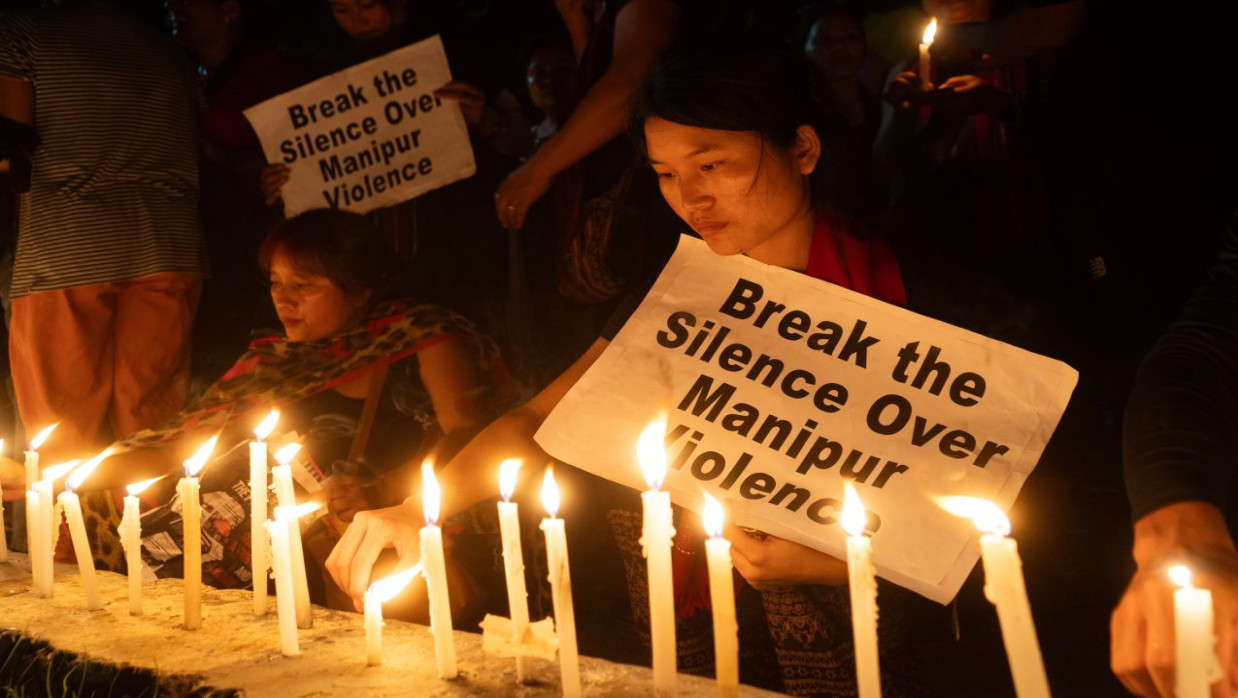
India's northeast has once again been thrown into uncertainty and potential conflict. On Monday, India's National Investigation Agency (NIA) arrested seven foreign suspects, including an American and six Ukrainians. Attention has been drawn to the violence in Manipur from across the world. However, indications suggest it is a conflict with regional linkages. Coupled with Non-State Actors, Financing of Insurgency, and the power politics of the great powers, violence in Manipur can destabilize the neighboring country, Bangladesh, especially the geopolitically important and sensitive region of the Chattogram Hill Tracts (CHT).
Foreign Hands and the New Theatre of Hybrid Conflict
Their discovery confirms that insurgents based in India's northeast are not acting alone; they have been aided and abetted by foreign "elements". It also marks the evolution of insurgency into hybrid warfare. While insurgents continue to wage violence, foreigners are now attacking on multiple fronts using tech-savvy, financial proxies, and propaganda.
If Matthew VanDyke and the six Ukrainians captured were indeed acting on their own, their arrest might have been written off as a coincidence. But it appears likely that they are part of a larger trend: foreigners or proxies identifying weaknesses (ethnic, ideological, financial) and submerging themselves to heighten tensions and create problems.
In the short term, India needs to worry about the threat to law and order in Manipur and the Northeast. In the long term, it should be concerned about efforts to undermine its Act East Policy, which seeks connectivity and trade corridors with Southeast Asia.
Shadow Economies and Parallel Governance
Another disturbing trend has been the setup of "shadow governments" in certain regions of Nagaland and Manipur. Militant organizations like NSCN-IM and its offshoots have established their own rule, collecting levies, maintaining enforcement squads, and running their rackets.
When militant outfits are raking in an estimated ₹170 crore a year as protection/extortion money just from one faction, they are less rebels and more like quasi-states. Illicit revenue streams such as these foster violent conflicts that feed on themselves. Where there's profit in conflict, there's little incentive to stop fighting.
Bangladesh too saw a similar pattern of tribal militants administering "justice" and collecting "taxes" in some parts of the CHT. Two groups have been prominent, the United People's Democratic Front (UPDF) and Parbatya Chattagram Jana Samhati Samiti (PCJSS). They extort money, making it impossible to run any commercial activities without paying them a ransom.
Manipur's Ethnic Fracture and Regional Spillover
Firstly, the ongoing Kuki-Meitei conflict has made Manipur a zone of instability. As fresh eruptions between Kukis and Nagas continue to gain momentum, along with the demand for a separate Kuki-Zo homeland, the fragmentation may trigger possibilities that could spill over borders.
India has also accepted that the influx of groups from across the borders of Myanmar was one of the reasons for the escalation of the crisis. Borders don't bind ethnic groups; unfortunately, conflicts often pick up transnational scales.
Secondly, there are immediate concerns for Bangladesh too. The ethnic makeup of CHT comprises Chakma, Marma, and many other indigenous communities that share ancestral, cultural, and historical ties with ethnic groups in northeast India and Myanmar. Conflict doesn't remain within a single border.
Implications for Bangladesh's Chattogram Hill Tracts
The situation in Manipur will have direct and indirect consequences on Bangladesh's CHT.
- Revival of Insurgent Groups:
Operating or dormant insurgent groups located or remnants in India's northeast may attempt to resurrect themselves within Bangladesh's CHT through sanctuary bases across the border, illegal arms smuggling and insurgents travelling across the border propagating their ideology.
- Drug and Arms Smuggling Rackets:
Trade routes between Mizoram and Myanmar have already been identified as a smuggling hotspot for drugs and small arms. The existence of these rackets may spill over into Bangladesh something Dhaka must keep an eye on. Bangladesh's CHT, which borders conflict zones in Myanmar and is characterized by rugged terrain, will only be a stepping stone for these cross-border operations.
- External forces playing the ethnic card:
Chinese interest and involvement in Manipur may push Bangladesh authorities to believe that pressure might be applied through various ethnic insurgent groups inside CHT. Existing fault lines can quickly escalate if external pressure is applied from across the border.
- Strategic Competition Heats Bangladesh:
Tensions rising along India's eastern border might spill over into Bangladesh, driving geopolitical competition. Dhaka will be forced to balance interests between belligerent stakeholders.
A Region at the Crossroads
Call it what you will, but what is happening in India's northeast isn't just an internal law-and-order problem; it is a battlefront in a geopolitical game. Actors from outside the country are connecting the insurgent economies of South and Southeast Asia with local ethnic strife, creating mischief intentionally or opportunistically.
Bangladesh can and should learn from this. Ensuring peace in the CHT will require not just managing what happens within its territory but also keeping a close eye on developments in both India and Myanmar, with whom it shares borders. Cooperation and proactive efforts by the governments in Dhaka will be required if the "invisible wars" in Manipur are not to spill over into Bangladesh's hills.
In today's age, many wars will be fought invisibly. Let us hope that ours never comes close to what was fought in Manipur.

0 Comments
LEAVE A COMMENT
Your email address will not be published