

Authoritarianism condoned in Washington, threatening rules-based order, annual report says
 |
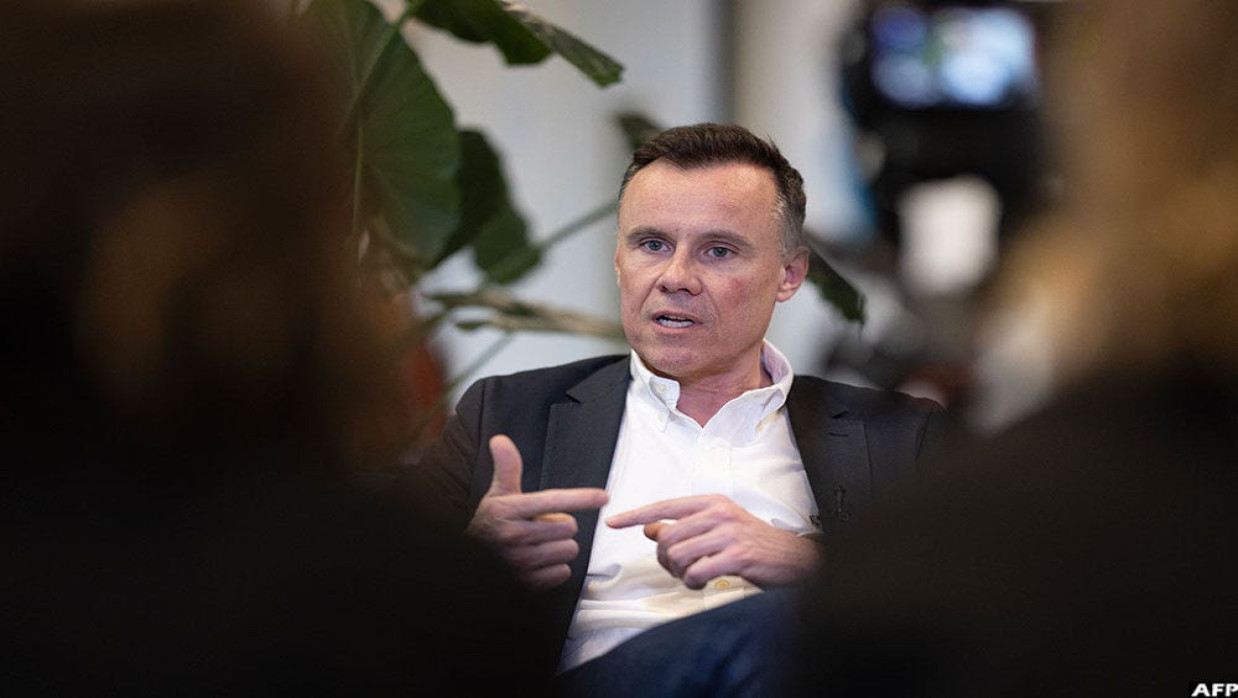
The New York-based NGO Human Rights Watch has launched a blistering attack on the administration of US President Donald Trump, accusing him of using relentless pressure to crush the rules-based international order, “threatening to take with it the architecture human rights defenders have come to rely on to advance norms and protect freedoms” and with traditional western allies choosing to stay silent out of a fear of erratic tariffs and blowback to their alliances.
The assault, written by Philippe Bolopion, the organization’s executive director, is contained in a near-3,000 executive summary to Human Rights Watch’s World Report 2026, a 539-page compendium of rights conditions in 98 countries across the world. Considered one of the world’s most powerful NGO’s, Human Rights Watch has staff in more than 40 countries and offices in 18.
 |
There is little encouraging in the report concerning the countries of Asia. The Chinese government has intensified its repression across the country, it says, in Indonesia President Prabowo Subianto has adopted policies benefiting military officers and lawmakers, Vietnamese authorities have cracked down harshly on dissidents and perceived critics of the government; in the Philippines, persistent harassment, threats, and killings of critics of the government continue by security forces, with drug-related killings continuing with impunity. In Afghanistan, the Taliban have deepened repression by intensifying restrictions on the rights of women and girls and added new regulations to curb media freedom amid a worsening humanitarian crisis. Malaysia continues to criminalize dissent, censor critical speech and harass human rights defenders. Singapore continues to use the death penalty for drug-related offenses and authorities have continued their crackdown on dissent, leveraging censorship laws to target international media outlets, social media platforms, and foreign comedians.
But the common denominator in too much of this is the United States, with “the global democratic wave that began over 50 years ago having given way to what scholars term a ‘democratic recession,’” Bolopion writes. “Democracy is now back to 1985 levels according to some metrics, with 72 percent of the world’s population now living under autocracy. Russia and China are less free today than 20 years ago. And so is the United States.”
While recognizing that democracy is not a panacea for human rights violations and that the US and other longtime democracies have their own histories of colonial crimes, racism, abusive justice systems and wartime atrocities, he writes, “authoritarian leaders have exploited public mistrust and anger to win elections and then dismantled the very institutions that brought them to power. Democratic institutions are crucial to represent the will of the people and keep power in check. It’s no surprise that whenever democracy is undermined, rights are too, as evident in recent years in India, Türkiye, the Philippines, El Salvador, and Hungary.”
 |
Bolopion suggests 2025 may be seen as a tipping point, with the Trump administration carrying out what he called a broad assault on the key pillars of US democracy and the global rules-based order, which the US, despite inconsistencies, was instrumental in helping to establish. The administration “has undermined trust in the sanctity of elections, reduced government accountability, gutted food assistance and healthcare subsidies, attacked judicial independence, defied court orders, rolled back women’s rights, obstructed access to abortion care, undermined remedies for racial harm, terminated programs mandating accessibility for people with disabilities, punished free speech, stripped protections from trans and intersex people, eroded privacy, and used government power to intimidate political opponents, the media, law firms, universities, civil society, and even comedians.”
The government has cast entire populations as unwelcome in the US, embracing policies and rhetoric that align with white nationalist ideology and subjected immigrants and asylum seekers to inhumane conditions and degrading treatment, the report alleges, with masked immigration enforcement agents targeting people of color, “using excessive force, terrorizing communities, wrongfully arresting scores of citizens, and, most recently, unjustifiably killing two people in Minneapolis.” It has denied legal process to asylum seekers, mistreated undocumented migrants, or unlawfully discriminated against them.
In addition, US foreign policy has “upended the foundations of the rules-based order that seeks to advance democracy and human rights, even if imperfectly. Trump has boasted that he doesn’t ‘need international law’ as a constraint, only his ‘own morality.’ His administration has politicized the US State Department’s annual human rights report, stepped away from the global prohibition on antipersonnel landmines, voiced support for rewriting international rules on asylum, and skipped the UN’s Universal Periodic Review of the US’ human rights record. His administration withdrew from the UN Human Rights Council and the World Health Organization and plans to quit 66 international organizations and programs that it describes as part of an ‘outdated model of multilateralism,’ including key forums for climate negotiations. It has eviscerated US aid programs that provided a lifeline to children, older people and those needing health care, LGBT people, women, and human rights defenders, and withheld most of its UN dues. Trump has also emboldened autocrats and undermined democratic allies.”
The institutional response in the US to Trump’s power grabs has been shockingly muted, Bolopion writes, with much of the US Congress, controlled by his own party, declining to challenge his expansion of executive power and with the executives of the most powerful technology companies making significant donations and seeking to placate him.
That has allowed a loose international network of countries such as North Korea, Iran, Venezuela, Myanmar, Cuba, and Belarus work in concert with Russia and China to align in undermining human rights and promoting a regressive international agenda. “The US government is now helping them in this endeavor.” Its weakening of multilateral institutions also dealt a serious blow to global efforts to prevent or stop grave international crimes.
Human Rights Watch flatly accuses the Israeli armed forces of committing acts of genocide, ethnic cleansing and crimes against humanity, killing over 70,000 people since the October 2023 Hamas-led attacks on Israel and displacing the vast majority of Gaza’s population.
 |
“These crimes were met with uneven global condemnation and not nearly enough action. Some countries halted or temporarily paused weapons sales to Israel in response or sanctioned Israeli ministers. Trump, however, continued a long-standing US policy of almost unconditional support to Israel, even as the International Court of Justice is weighing allegations of genocide and has issued binding orders under the Genocide Convention to protect Palestinians’ rights. “
In Sudan, Gaza, Ukraine and a long string of countries formerly protected under the US’s democratic umbrella, the message is clear: “in Trump’s new world disorder, might makes right and atrocities are not dealbreakers. With the US undermining the global human rights system, who will rise in its defense? Despite rhetorical flourishes, many governments treat rights and the rule of law as a hindrance, rather than a benefit, to security and economic growth. The European Union, Canada, and Australia appear to hold back out of fear of antagonizing the US and China. Others are weakened by the way political parties displaying illiberal tendencies have skewed their domestic politics and discourse away from a rights-respecting approach.”
Bolopion called urgently for a new global alliance to support international human rights within a rules-based order, a global coalition of rights-respecting democracies to offer incentives to counter Trump’s policies that have undermined multilateral trade governance and reciprocal trade agreements that included rights protections.
“Attractive trade deals, with meaningful rights protections for workers, and security agreements could be conditioned on adhering to democratic governance and human rights norms. Democracy already comes with benefits. While autocracies have generally fostered conflict, economic stagnation, or kleptocracy, as evidenced in multiple academic studies, including the work of the Nobel Prize-winning economist Daron Acemoglu, democratic institutions reliably yield economic growth.”


0 Comments
LEAVE A COMMENT
Your email address will not be published