

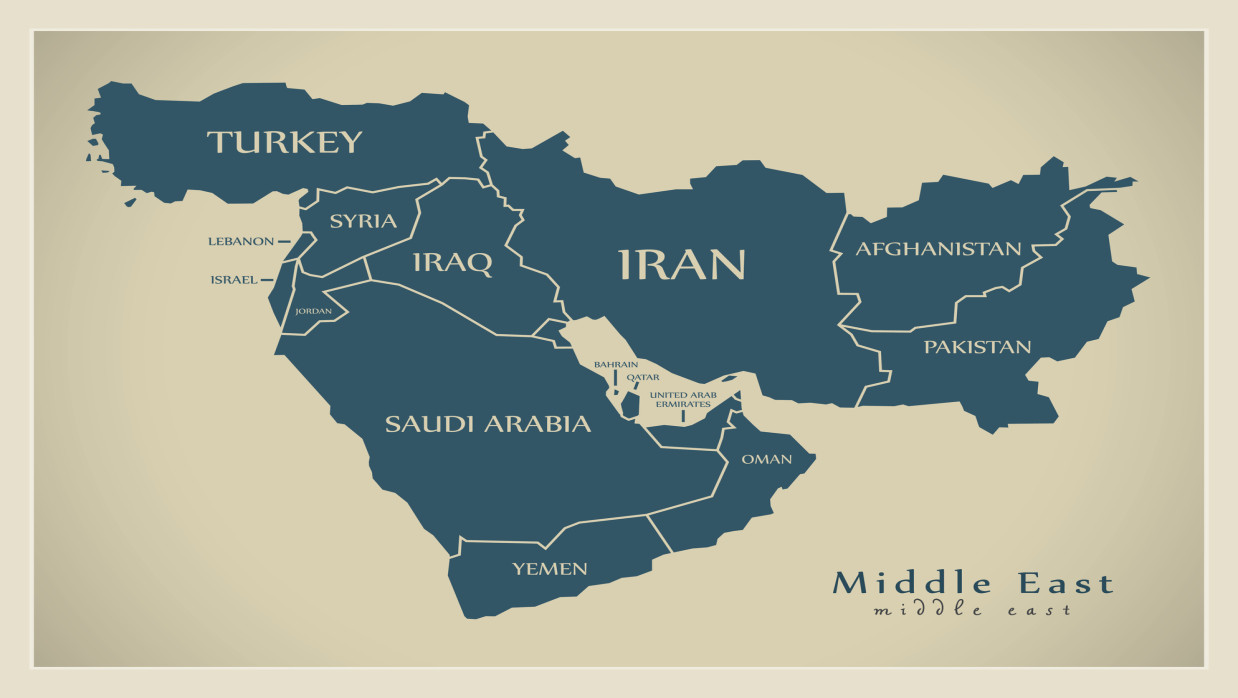
The contemporary Middle Eastern landscape is shaped by shifting Gulf alignments, persistent regional conflicts, and intensified great-power competition. These pressures have exposed policy fragilities across much of the Muslim world, where reactive diplomacy and ideological overreach often substitute for strategic coherence. Against this backdrop, Pakistan stands out as a notably disciplined actor, navigating regional complexity without strategic drift or diplomatic overextension. Its approach reflects a mature recalibration of policy grounded in historical lessons and a sober assessment of national interest rather than emotional alignment or short-term gain.
Pakistan, leveraging its long-standing relationships with Saudi Arabia and the UAE, has maintained trust with both while steering clear of intra-Gulf disputes over Iran, Yemen, or Palestine. Meanwhile, Riyadh’s regional posture of has been primarily focused on security guarantees and collective defense, Abu Dhabi has gradually shifted toward a more economically and politically diversified foreign policy, emphasizing trade, investment, and strategic autonomy. Pakistan has, accordingly, adjusted its position- strengthening military ties with Saudi Arabia while simultaneously engaging the UAE as a partner on economic, infrastructure, and labor issues-thus managing two distinct Gulf perspectives without favoring one over the other. Rather than succumbing to external pressures, Pakistan has pursued a policy of neutrality based on dialogue, regional stability, and sovereign decisions making.
This calibrated posture has produced tangible dividends: sustained high-level engagement, expanded investment flows, strengthened energy and labour partnerships, and timely financial support during periods of economic stress-without compromising strategic autonomy.
From Peripheral Partner to Strategic Stakeholder
The most significant factors contributing to Pakistan's rising importance in the Middle East are military credibility, economic interdependence, and institutional reliability, all of which have taken years to establish and nurture. However, the year 2025 was a distinct turning point.
The brief but consequential Pakistan-India May 2025 standoff compelled policymakers beyond South Asia to reassess Islamabad’s strategic profile. Pakistan demonstrated qualities such as crisis resilience, escalation control, and command discipline under pressure-traits that are increasingly rare in an era of impulsive and performative state diplomacy. For Gulf States that are highly sensitive to the risks posed by regional shocks, Pakistan’s ability to absorb pressure without triggering uncontrollable escalation enhanced its credibility as a reliable security partner.
That credibility soon translated into formal policy. In September 2025, Pakistan and Saudi Arabia took a significant step toward military cooperation by signing a Strategic Mutual Defence Agreement, formalizing cooperation through intelligence sharing, joint training, counterterrorism, and defence industry cooperation. Pakistan made it clear that its nuclear capabilities lie outside the scope of the pact, reaffirming its defensive posture. Notably, the agreement marked a shift in how the West perceives Pakistan as a Muslim-majority power and reflected changes in the dynamics of Western security guarantees which have become increasingly uncertain.
For Pakistan, the agreement marked a transition from being viewed primarily as a supplier of manpower and training to being recognised as a co-shaper of Gulf security dynamics.
Managing Gulf Contradictions
What distinguishes Pakistan’s Middle East policy is not alignment, but balance. Islamabad has deepened strategic cooperation with Saudi Arabia while maintaining strong economic and political ties with the UAE, deliberately avoiding participation in regional proxy conflicts. Simultaneously, it has preserved working relations with Iran despite sectarian sensitivities and geopolitical pressure.
This equilibrium requires sustained discipline. Pakistan welcomed the Saudi–Iran rapprochement mediated by China in 2023, and framed it a positive move for both regional peace and Muslim solidarity. While working closely with Riyadh, Islamabad reassured Tehran that its involvement in the Gulf was defensive rather than offensive and aimed at promoting regional peace and stability.
Iran’s response has been instructive. Despite historical suspicion, official rhetoric has largely avoided antagonizing Pakistan over its Saudi ties, reflecting pragmatic recognition that Islamabad’s expanding role could contribute to stability rather than exacerbate confrontation. In a region where perception often matters as much as power, Pakistan’s ability to sustain this balance has become a strategic asset.
Palestine, Principle, and Restraint
The Israel–Gaza conflict has tested Pakistan’s diplomacy more severely than any Middle Eastern crisis in recent years. Islamabad’s position remains unequivocal: it does not recognised Israel and continues to advocate Palestinian self-determination and a two-state solution. Pakistani passports still prohibit travel to Israel, reinforcing this stance symbolically.
Yet Pakistan’s conduct has been marked by restraint. It mobilized diplomatic pressure through the United Nations and the Organisation of Islamic Cooperation, led human rights initiatives, and provided humanitarian assistance-while avoiding military involvement that could undermine domestic cohesion or regional relationships. This approach preserved moral credibility without sacrificing strategic flexibility as regional actors recalibrate their positions.
Economics as Strategic Anchor
Pakistan’s diplomacy with the Gulf countries is based on their mutual economic interdependence. The number of Pakistani workers in Gulf countries exceeds four million and total remittances of over $38 billion during the fiscal year 2024–25 are crucial for Pakistan’s economic stability. A substantial portion of these remittances comes from Saudi Arabia and the UAE.
This interdependence is reciprocal. Pakistani labour supports key Gulf sectors, while Pakistan relies on Gulf energy supplies, investment, and financial support during periods of stress. Islamabad’s diplomacy has ensured these economic ties remain insulated from political turbulence.
Pakistan’s strategic geography further enhances its value. Through CPEC and Gwadar, it offers Gulf states alternative trade and energy corridors that reduce reliance on vulnerable chokepoints such as the Strait of Hormuz-an increasingly attractive proposition amid heightened regional risk.
Limits and Opportunities
Pakistan’s ascent is not without constraints. Domestic political volatility, inflationary pressures, and recurring IMF negotiations limit capacity for sustained external commitments. Over-identification with any single Gulf actor could erode the neutrality underpinning Islamabad’s credibility, while sudden regional escalation could force difficult choices.
Yet the broader lesson of Pakistan’s Middle East diplomacy is clear. In a fragmented regional order, success lies not in choosing sides, but in managing contradictions. By combining restraint, credibility, and economic pragmatism, Pakistan has positioned itself as a stabilising middle power rather than a reactive participant.
If Islamabad sustains internal coherence and policy discipline, it may convert its current diplomatic advantage into enduring influence-serving its national interest while contributing to a more balanced and multipolar Middle East.


0 Comments
LEAVE A COMMENT
Your email address will not be published