

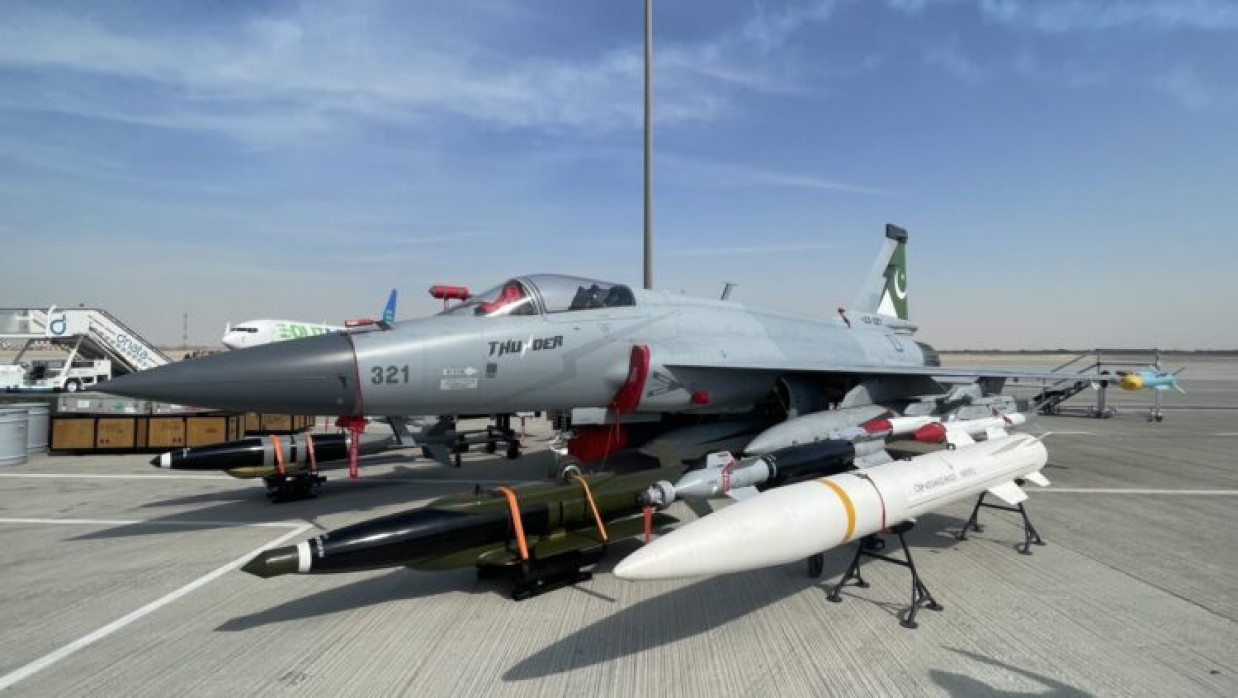
(DEFENCE SECURITY ASIA) — Pakistan and Saudi Arabia are advancing negotiations to convert approximately US$2 billion (≈ MYR 8 billion) in outstanding Saudi financial assistance into a structured procurement programme centred on the JF-17 Thunder, a move that fuses urgent fiscal relief with strategic force modernisation while operationalising their September 2025 mutual defence agreement under conditions of acute economic strain and accelerating geopolitical fragmentation across the Middle East and South Asia.
Senior Pakistani defence officials describe the initiative as a debt-to-capability exchange designed to preserve Islamabad’s rapidly depleting foreign-exchange reserves while transforming Riyadh’s long-standing balance-sheet support into deployable combat power at a time when confidence in long-term U.S. security guarantees across the Gulf is increasingly uncertain.
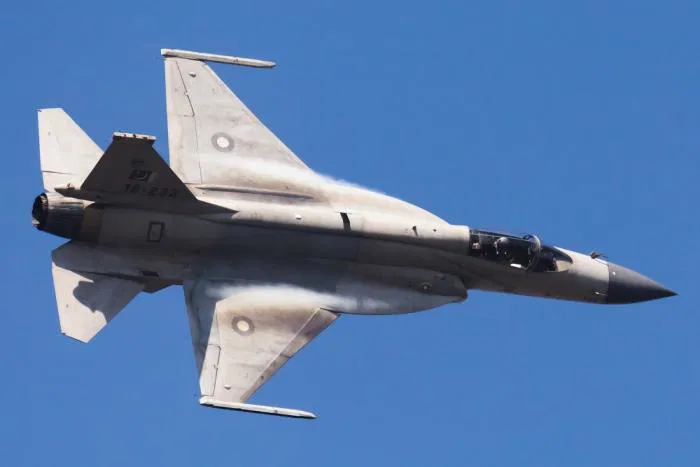
The proposed arrangement reflects Pakistan’s urgent macroeconomic calculus following repeated balance-of-payments crises, including its 24th IMF programme valued at US$7 billion (≈ MYR 32.9 billion), while simultaneously advancing Saudi Arabia’s drive to diversify defence suppliers amid growing exposure to sanctions risk, export controls, and geopolitical policy unpredictability.
At the centre of the talks is the JF-17 Block III, Pakistan’s most advanced multirole fighter configuration, incorporating AESA radar, modern electronic warfare suites, and credible beyond-visual-range strike capability, features increasingly demanded by regional air forces seeking affordable yet operationally relevant deterrence platforms.
Pakistani defence planners frame the negotiations as a test case for monetising indigenous aerospace capacity developed through long-term Chinese cooperation, while Saudi strategists view the aircraft as a politically resilient supplement to high-end Western fleets rather than a direct replacement for legacy U.S.-origin combat aircraft.
The talks are unfolding against the backdrop of intensifying proxy conflicts, expanding regional air-defence saturation, and the erosion of long-standing alliance certainties following U.S. policy oscillations and episodic disengagement signals across the Middle East.
By embedding a defence-industrial transaction within a sovereign-debt restructuring logic, both sides are effectively redefining bilateral security cooperation from a model of financial patronage into one of reciprocal force generation and operational burden-sharing.
This convergence of economic necessity, defence-industrial ambition, and strategic hedging explains why the proposed JF-17 deal has rapidly emerged as one of the most consequential arms-financing experiments currently under discussion in the Islamic world.
Debt-to-Defence Conversion: Structure, Scale, and Negotiation Dynamics
The core proposal under negotiation centres on offsetting roughly US$2 billion (≈ MYR 9.4 billion) in Saudi loans against deliveries of the JF-17 Block III, with Pakistani officials indicating that the total package could expand to US$4 billion (≈ MYR 18.8 billion) once weapons, training, simulators, spares, ground-support equipment, and long-term sustainment are incorporated.
This structure represents a significant evolution in bilateral military-economic interaction by transforming sovereign credit exposure into tangible force capability while shielding both parties from immediate cash outflows during periods of fiscal tightening and defence-budget scrutiny.
The JF-17’s estimated unit cost of US$50–60 million (≈ MYR 235–282 million) positions it at a fraction of the acquisition and lifecycle expense associated with Western fourth-generation fighters, a factor increasingly decisive as Gulf states reassess force-structure affordability under fluctuating energy revenues.
Negotiators on both sides emphasise that the Block III’s sensor fusion, digital avionics architecture, and open-system integration substantially mitigate concerns about capability gaps relative to legacy Western platforms.
The aircraft’s compatibility with a broad inventory of precision-guided munitions further enhances its appeal as a flexible multirole asset rather than a narrowly configured point-defence solution.
By anchoring the transaction in a loan-conversion mechanism, the deal also sidesteps immediate exposure to volatile international capital markets and the conditionalities typically attached to emergency external financing.
Strategically, the structure reflects a shared recognition that defence procurement is increasingly inseparable from macroeconomic resilience and sovereign financial engineering in an era of fiscal stress.
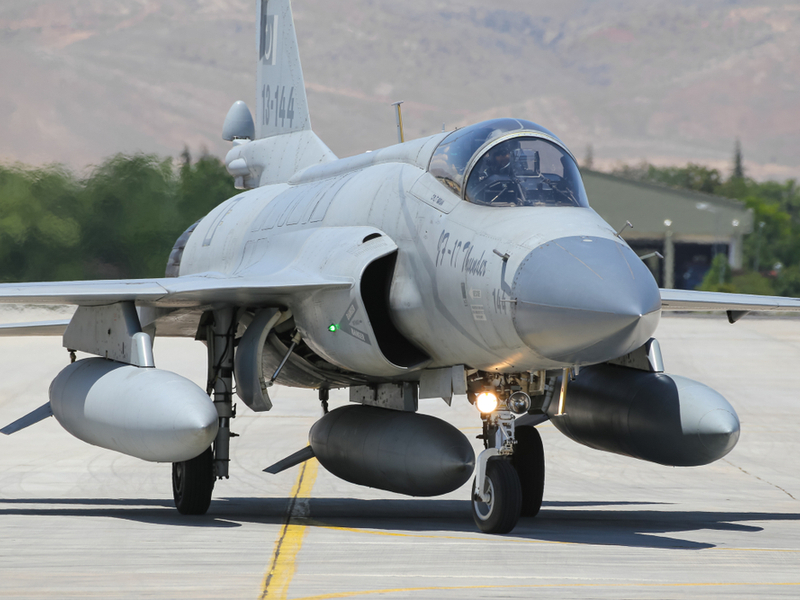
JF-17 Block III: Combat Credibility, Capability Growth, and Export Logic
The JF-17 Block III represents the most mature iteration of Pakistan’s lightweight fighter programme, integrating AESA radar, helmet-mounted display systems, modern data links, and expanded electronic warfare capacity designed to meet contemporary beyond-visual-range engagement requirements.
Its combat relevance was underscored by Pakistan’s May 2025 aerial engagements with Indian forces, events cited by domestic officials as empirical validation of the platform’s survivability and sensor-shooter integration under contested electromagnetic conditions.
From an export perspective, these operational references carry disproportionate weight among air forces seeking demonstrated performance rather than brochure-driven specifications.
The aircraft’s multirole flexibility, spanning air-defence interception, precision ground attack, and maritime strike, aligns closely with Saudi Arabia’s requirement for distributed air-power assets capable of operating across diverse theatres.
Equally significant is the platform’s logistical simplicity relative to heavier Western fighters, reducing basing demands and enabling faster force regeneration during sustained high-tempo operations.
For Riyadh, the JF-17 is not positioned as a substitute for high-end assets but as a complementary layer that enhances sortie density, redundancy, and operational resilience.
The Block III’s open-architecture design also offers future upgrade pathways without total dependence on a single foreign supplier.
Collectively, these attributes explain why the aircraft is increasingly framed as a cost-effective deterrence multiplier rather than a budget-driven compromise.
Pakistan’s Economic Imperatives and Defence-Industrial Strategy
Pakistan enters the negotiations under persistent fiscal pressure, having relied on repeated multilateral bailouts and foreign deposit rollovers to stabilise its balance of payments.
The proposed conversion of Saudi loans into aircraft deliveries directly reduces near-term debt-servicing obligations while sustaining industrial output at the Pakistan Aeronautical Complex, a cornerstone of Islamabad’s defence-export ambitions.
Defence Minister Khawaja Asif, speaking on the strategic role of arms exports, argued that sustained defence sales could eliminate the need for IMF assistance “within six months,” framing military manufacturing as an instrument of national economic sovereignty rather than merely a security policy tool.
Recent export activity, including a reported US$4 billion (≈ MYR 18.8 billion) package involving fighters and training aircraft for Libya’s eastern forces, reinforces this narrative of industrial scalability.
Parallel discussions with Bangladesh further signal Islamabad’s intent to normalise defence exports as a recurring revenue stream rather than episodic transactions.
By anchoring Saudi engagement in long-term production commitments, Pakistan gains predictability in workforce utilisation, supply-chain investment, and technology absorption.
This strategy also reduces over-reliance on Chinese financial underwriting by substituting export earnings for concessional support.
In macroeconomic terms, the deal illustrates how defence industrialisation is being repositioned as a stabilisation instrument within Pakistan’s broader economic recovery framework.
Saudi Arabia’s Security Diversification and Strategic Hedging
For Saudi Arabia, the prospective acquisition reflects a calculated policy of supplier diversification driven by mounting concerns over export controls, political conditionality, and the demonstrated willingness of traditional partners to recalibrate or delay security commitments during periods of acute regional crisis.
Riyadh’s long-standing financial support to Pakistan—including US$6 billion (≈ MYR 28.2 billion) in 2018 assistance, US$3 billion (≈ MYR 14.1 billion) in deposit extensions in 2024, and US$1.2 billion (≈ MYR 5.64 billion) in deferred oil facilities in 2025—has functioned less as economic relief and more as a strategic instrument designed to preserve influence, access, and leverage within a key Muslim-majority military power.
Converting these financial instruments into deployable air-power assets effectively translates abstract balance-sheet leverage into tangible military capability, thereby operationalising the bilateral defence pact through force generation rather than declaratory commitments alone.
Saudi defence planners increasingly view the JF-17 as a politically resilient platform insulated from sanctions volatility, supply-chain disruption, and export-licence uncertainty that have begun to constrain the availability and upgrade pathways of Western-origin combat aircraft.
The aircraft’s comparatively low acquisition and lifecycle costs further allow Riyadh to expand force structure and sortie capacity without diverting scarce resources away from high-end platforms that underpin strategic deterrence and coalition interoperability.
At the regional level, the addition of multirole fighters enhances Saudi Arabia’s capacity to sustain air-defence and strike coverage across multiple axes simultaneously, a requirement shaped by the proliferation of missiles, drones, and asymmetric threats in neighbouring theatres.
The move also serves as a strategic signal to external partners that Riyadh retains credible autonomous options in shaping its security architecture, reducing the coercive leverage traditionally associated with supplier dependency.
In deterrence terms, diversification itself becomes a strategic tool, as the uncertainty it introduces into adversary planning complicates assumptions about Saudi Arabia’s operational constraints, escalation thresholds, and external political dependencies.
Integration Challenges, Geopolitical Impact, and Forward Trajectories
Despite its apparent strategic coherence, the proposed arrangement confronts non-trivial integration challenges rooted in the need to synchronise the JF-17’s Chinese-influenced avionics architecture, data links, and maintenance philosophy with Saudi Arabia’s deeply entrenched Western-origin command-and-control, logistics, and weapons-management ecosystems.
Interoperability constraints extend beyond hardware compatibility to doctrinal alignment, as seamless integration with U.S.-supplied airborne early warning, aerial refuelling, and network-centric battle-management systems will require extensive software adaptation, sovereign data-access negotiations, and sustained political signalling to mitigate concerns over technology exposure.
The presence of Chinese-derived subsystems within the JF-17 further introduces a layer of strategic sensitivity, compelling Riyadh to carefully balance operational utility against potential scrutiny from Washington, particularly in an environment where defence interoperability increasingly intersects with alliance trust and intelligence-sharing thresholds.
For Pakistan, overcoming these barriers would represent a decisive inflection point, demonstrating an ability not merely to export platforms but to support them within complex, high-end air-force ecosystems that demand sustained integration, lifecycle management, and coalition-level interoperability.
For Saudi Arabia, successfully operationalising a mixed-origin fighter fleet would materially enhance force resilience by reducing single-supplier dependency, complicating adversary targeting assumptions, and insulating operational readiness from external political leverage during periods of crisis.
At the regional level, the deal would signal a structural shift toward more pluralistic security alignments across the Middle East and South Asia, reflecting a broader trend in which states increasingly hedge between competing defence ecosystems rather than anchoring exclusively to a single strategic patron.
The transaction would also reinforce the growing precedent of barter-style defence financing as a pragmatic response to fiscal stress, sanctions exposure, and constrained access to traditional capital markets, particularly among states seeking to preserve military modernisation trajectories under economic duress.
Ultimately, the Pakistan–Saudi JF-17 negotiations exemplify how contemporary arms deals are no longer defined solely by platform performance, but by their positioning at the convergence of macroeconomics, alliance politics, industrial capability, and long-term strategic autonomy.
JF-17 THUNDER BLOCK III – TECHNICAL SPECIFICATIONS
| Category | Specification | Detail / Performance |
|---|---|---|
| Role | Multirole Fighter | Lightweight combat aircraft designed for air-to-air, air-to-surface, and maritime strike missions |
| Generation | 4.5-Generation | Incorporates AESA radar, network-centric warfare capability, and advanced electronic warfare systems |
| Crew | 1 | Single-seat configuration |
| Length | ~14.3 m | Compact airframe optimised for agility and dispersed basing |
| Wingspan | ~9.44 m | Aerodynamically optimised for manoeuvrability and payload carriage |
| Height | ~4.57 m | Low-profile fighter configuration |
| Empty Weight | ~7,965 kg | Baseline configuration without fuel or external stores |
| Maximum Take-Off Weight | ~13,500 kg | Full combat load configuration |
| Engine | Klimov RD-93 / RD-93MA turbofan | Afterburning turbofan producing approximately 19,000 lbf of thrust |
| Maximum Speed | Mach 1.6–1.8 | Supersonic dash capability |
| Service Ceiling | ~16,900 m (≈ 55,500 ft) | High-altitude operational envelope |
| Thrust-to-Weight Ratio | ~1.07 | Strong climb rate and dogfighting performance |
| Combat Radius | ~900 km | Extendable with external fuel tanks |
| Ferry Range | ~1,741 km | Long-range deployment capability |
| Hardpoints | 7–8 | Wingtip and under-wing stations for mixed weapon loads |
| Maximum Payload | ~3,400 kg | Air-to-air, air-to-surface, and maritime weapons |
| Radar | KLJ-7A AESA | Multi-target tracking, enhanced BVR detection, electronic counter-countermeasures |
| Avionics | Fully digital glass cockpit | Fly-by-wire controls, advanced mission computer, helmet-mounted display system |
| Electronic Warfare Suite | Integrated EW & self-protection | Radar warning receiver, missile approach warning system, countermeasure dispensers |
| Air-to-Air Missiles | PL-15, SD-10, PL-10 / PL-5EII | Beyond-visual-range and within-visual-range engagement capability |
| Air-to-Surface Weapons | Precision-guided munitions, anti-ship missiles | Includes glide bombs, cruise missiles, and maritime strike weapons |
| Gun Armament | 23 mm twin-barrel cannon | Internal close-combat and ground-attack weapon |
| Operational Cost | ~US$5,000 per flight hour (≈ MYR 23,500) | Designed for high sortie rates and cost-efficient operations |
| Estimated Unit Price | ~US$25–30 million (≈ MYR 118–142 million) | Varies by configuration, weapons, and support package |
The article appeared in the defencesecurityasia
DEFENCE SECURITY ASIA
0 Comments
LEAVE A COMMENT
Your email address will not be published