

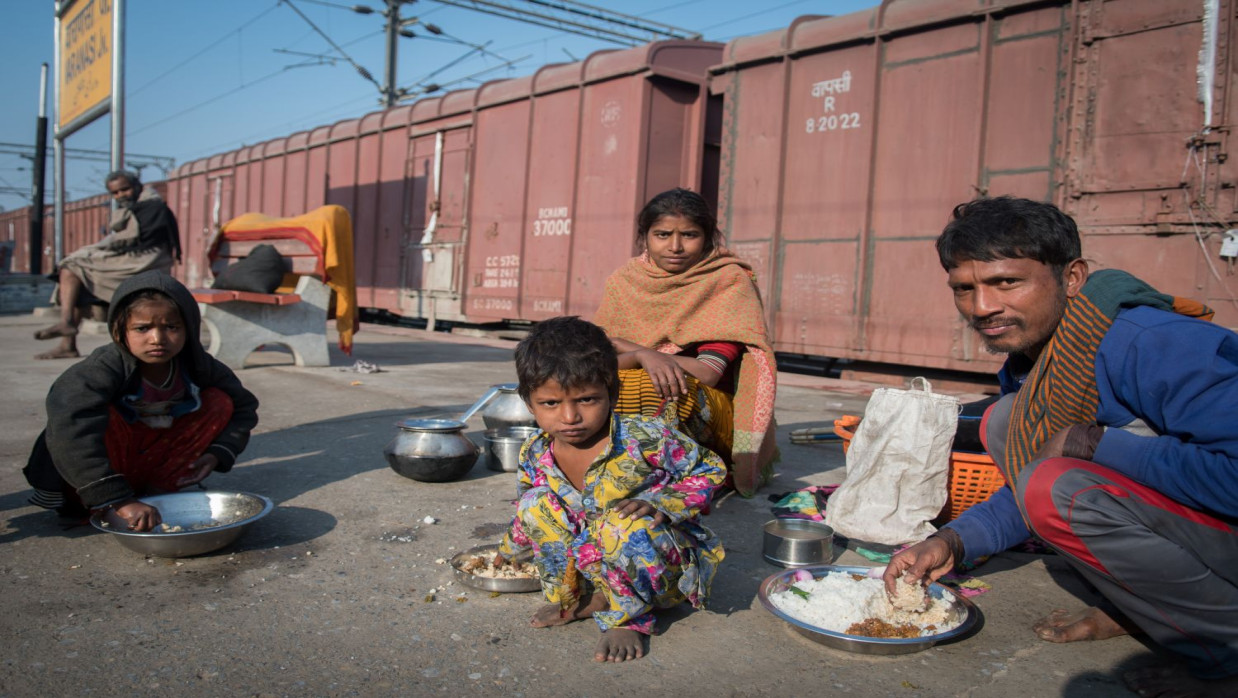
From the congested slums of Mumbai to the neglected neighbourhoods of Delhi, where the poor struggle to survive each day, the widely-documented ground realities in India have long reflected the country’s weak social and human development conditions. Its ranking of 130ᵗʰ on the Human Development Index (HDI) further speaks of these realities. Against this backdrop, the government has relied heavily on headline GDP figures to project a narrative of prosperity, but growing evidence suggests that this part of the narrative, too, may have been based on overstated numbers.
The International Monetary Fund (IMF), in late November 2025, released its Consultation Report on India, assigning the country’s national account statistics, including GDP data, a ‘C’ rating for the second consecutive year, citing methodological weaknesses. Released just days before the publication of India’s quarterly GDP growth rate, estimated at 8.2 per cent, and amid repeated claims by the ruling government and domestic media that India had overtaken Japan in 2025 to become the world’s fourth-largest economy, the assessment is of particular significance. It has brought fresh attention to concerns that had already been accumulating about the reliability of India’s headline GDP figures.
Notably, economists from leading global multinational investment and commercial banking groups, including Goldman Sachs and HSBC Holdings plc, had noted earlier that India’s real GDP growth for the first quarter of the current fiscal year would have likely been 0.5 to 1 percentage points lower than the official figure, if the correct deflator had been used. Simply put, they suggested that the deflator used to separate the effects of price changes from actual economic output was lower compared to the price pressures, plausibly leading a part of inflation to be reflected in real growth. For context, India has long relied on a GDP deflator closely aligned with the wholesale price index, which excludes most services.
What’s more, their assessment captured only one of the many methodological issues. Professor Arun Kumar, a well-known Indian economist, repeatedly contended that real growth could be well below the official figure. Following the report’s publication, he has further argued that the size of India’s GDP may be closer to USD 2.5 trillion rather than the officially reported USD 3.8 trillion. According to Professor Kumar and Dr Pronab Sen, a former Chief Statistician of India, the major problem arises from India’s method of estimating the unorganised sector, which, including agriculture, accounts for nearly 45 per cent of GDP, by using the organised sector as a proxy. This proxy-based practice can significantly distort estimates when the two sectors are moving in divergent directions, as seen after demonetisation, the 2017 tax reform, and the pandemic.
The list of critics does not end there. Another finding of particular note comes from Dr Arvind Subramanian, former Chief Economic Advisor to the Government of India. Published in 2019, his study concluded that India’s real GDP growth for the period since 2011-12 had likely been overstated by about 2.5 percentage points per year due to changes made to data sources and methodology. He highlighted similar concerns of proxy-based practice and inadequate price adjustment methods, alongside an increasing reliance on companies’ accounting data instead of actual factory output for measuring the value added by the manufacturing sector.
Besides, other major concerns of relevance, shared by both the IMF and several economists, include the use of an outdated base year and a lack of seasonally adjusted data.
The validity of the observations is reflected in the fact that it is only after mounting criticism that the government recently announced a plan to introduce improvements for GDP calculation, including updating the base year to 2022-23 from the current 2011-12, moving towards a revised system for measuring informal sector output, and introducing a new deflator – changes that could and should have been introduced years earlier.
All of this has real-world consequences. Populations have a tendency to believe in the numbers provided by their governments, especially when the counter-narratives also remain on the margins. When large headline figures are presented, people are left with little, if any, appetite to call on their government for reforms, in the hope that national income will eventually translate into better living conditions for them. To the government, this provides a free pass to pursue policies at will, including at the expense of reforms that can help improve the social and human development conditions for the vast majority. India’s current ranking on the HDI, far below Japan’s 23ʳᵈ despite claims of economic parity, thus comes as no surprise.
Now that the government has announced plans to improve data sources and methodology, it remains to be seen whether these planned changes can translate into genuine implementation. Even when implemented, certain long-standing concerns, such as reliance on firms’ accounting data instead of actual output, may continue to persist, affecting the precision of GDP estimates. Finally, questions arise whether these changes will follow regular updates or continue to be used unchanged long after they have also become outdated. And last but not least, until India’s human and social development indicators show a marked improvement, its growth and prosperity narrative will remain unconvincing.

0 Comments
LEAVE A COMMENT
Your email address will not be published