

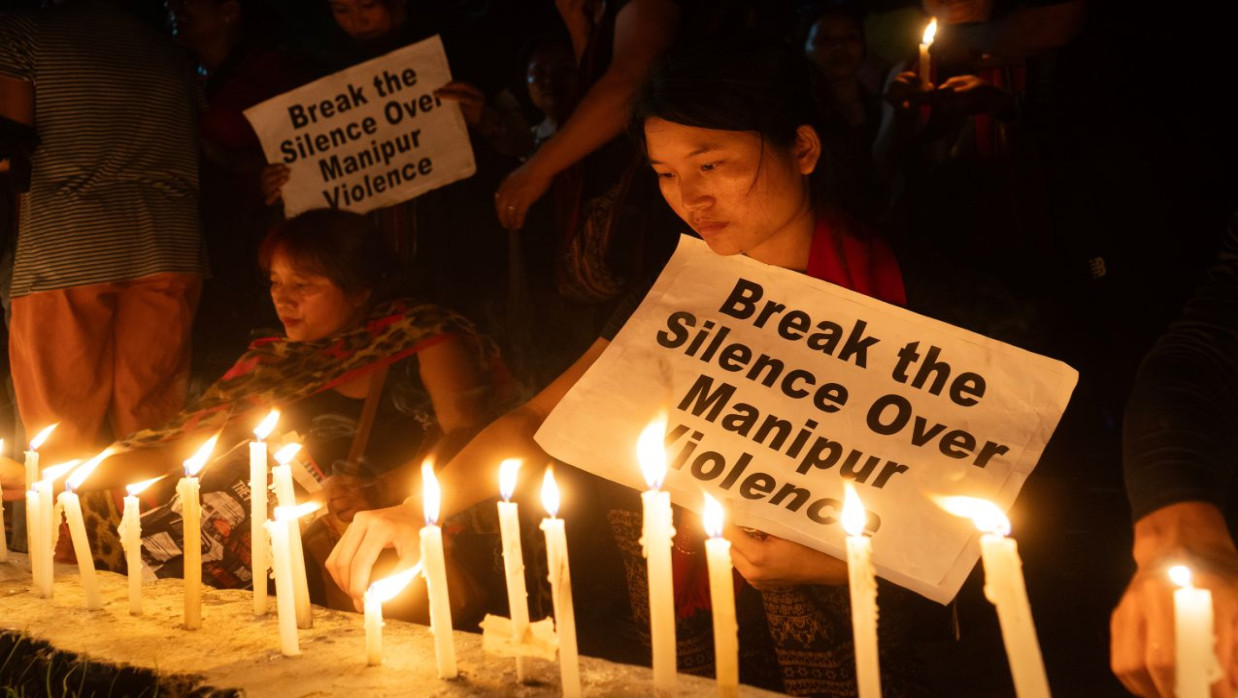
The crisis in Manipur, reignited by the deadly Meitei–Kuki-Zo conflict of May 2023, has once again escalated into a dangerous confrontation. Fresh tensions in Dolaithabi and the Saikul Sadar Hills have exposed the deep fractures that continue to define the state’s communal landscape. Reports that Meitei groups attempted to push across the designated buffer zone have alarmed the Kuki-Zo community, which already faces chronic insecurity, displacement, and political marginalization. What was meant to be a delicate arrangement to prevent clashes has instead become a symbol of growing mistrust and state failure.
The heart of the current unrest lies in the Kuki-Zo community’s long-standing demand for autonomy—an appeal for separate administration or Union Territory status. For the Kukis, autonomy is not an abstract political aspiration; it is a plea for survival, dignity, and protection from majoritarian violence. They argue that the existing political structure does not safeguard their security or representation. Each new breach of the buffer zone reinforces their fear that the state machinery remains structurally aligned with dominant Meitei interests, leaving the minority vulnerable and voiceless.
The buffer zone itself has become a flashpoint. Its purpose is to prevent direct clashes, yet its violation—even attempted—carries serious implications. The Kukis interpret any Meitei advancement toward their areas as a deliberate provocation, a challenge to their safety and territorial integrity. Local Kuki groups have repeatedly warned that further breaches will be met with strong resistance. Central forces, heavily deployed in the region, maintain high alert but have failed to assuage concerns among Kuki civilians. In fact, the militarization of Kuki-dominated areas is increasingly viewed as an occupation rather than a means of protection. This sentiment is exacerbated by what many describe as selective security responses—swift action in Meitei-majority zones but inconsistent, delayed, or absent intervention when Kuki areas are under attack.
New Delhi’s categorical rejection of any form of autonomy adds another layer of frustration. To the Kuki-Zo community, this dismissal signifies a systematic denial of their political identity and their right to self-governance. It is this impasse that has led Kuki bodies to call for a plebiscite, convinced that the Indian state has neither the intention nor the willingness to address their grievances within the current constitutional framework. The very fact that a referendum is being sought reflects the depth of alienation and disillusionment.
International human rights bodies have taken note of the unfolding humanitarian crisis. UN experts have sharply criticized the targeted violence against Kuki-Zo civilians, documenting extrajudicial killings, forced displacement, destruction of homes and churches, and a broader failure of the Indian state to protect minorities. Their assessments highlight not only the widespread brutality but also the systemic impunity that shields perpetrators from accountability. Amnesty International’s findings echo these concerns—selective policing, collapse of law and order, and free movement of armed mobs have all contributed to one of the worst ethnic crises in recent Indian history. Tens of thousands have been forced into relief camps where overcrowding, inadequate sanitation, limited healthcare, and the absence of long-term rehabilitation efforts are now grim realities.
The numbers underscore the severity of the crisis: more than 60,000 people displaced, over 258 killed, more than a thousand injured, hundreds of villages burned, and vast stretches of agricultural land abandoned due to militarization. Many Kuki villages destroyed in 2023 remain unreconstructed. Families who fled violence have been unable to return, their lands overtaken, their homes turned to ashes. Decisions concerning Kuki regions are routinely made without consulting local tribal bodies, further fuelling resentment and deepening the perception that the state’s actions are aimed at suppressing Kuki identity rather than restoring peace.
The suppression of Kuki-Zo political rights cannot be disentangled from the heavy-handed security approach adopted by the Indian government. Central forces dominate the landscape, while the political leadership insists on territorial unity without acknowledging the lived realities of the minority communities. What emerges from this combination is a governance model that prioritizes control over reconciliation. A durable settlement cannot be built on fear, militarization, or denial of legitimate grievances.
Manipur today stands at a critical crossroads. The unresolved conflict has exposed the limitations of the current political structure and the dangers of dismissing minority aspirations. The Kuki-Zo demand for autonomy is not merely a challenge to Indian federalism; it is a reminder that peace is achievable only when all communities feel protected, represented, and respected. Continued suppression and selective policing will only push the state toward long-term instability, embittering generations and widening the gap between the valley and the hills.
If New Delhi wishes to restore stability and rebuild trust, it must rethink its approach. Dialogue with Kuki-Zo leadership, impartial security arrangements, credible investigations, and a willingness to consider genuine political solutions are essential. Ignoring these demands or responding with force will only entrench divisions further. Manipur cannot afford another cycle of violence, nor can India ignore the growing chorus—domestic and international—calling for justice, accountability, and the recognition of minority rights.


0 Comments
LEAVE A COMMENT
Your email address will not be published