

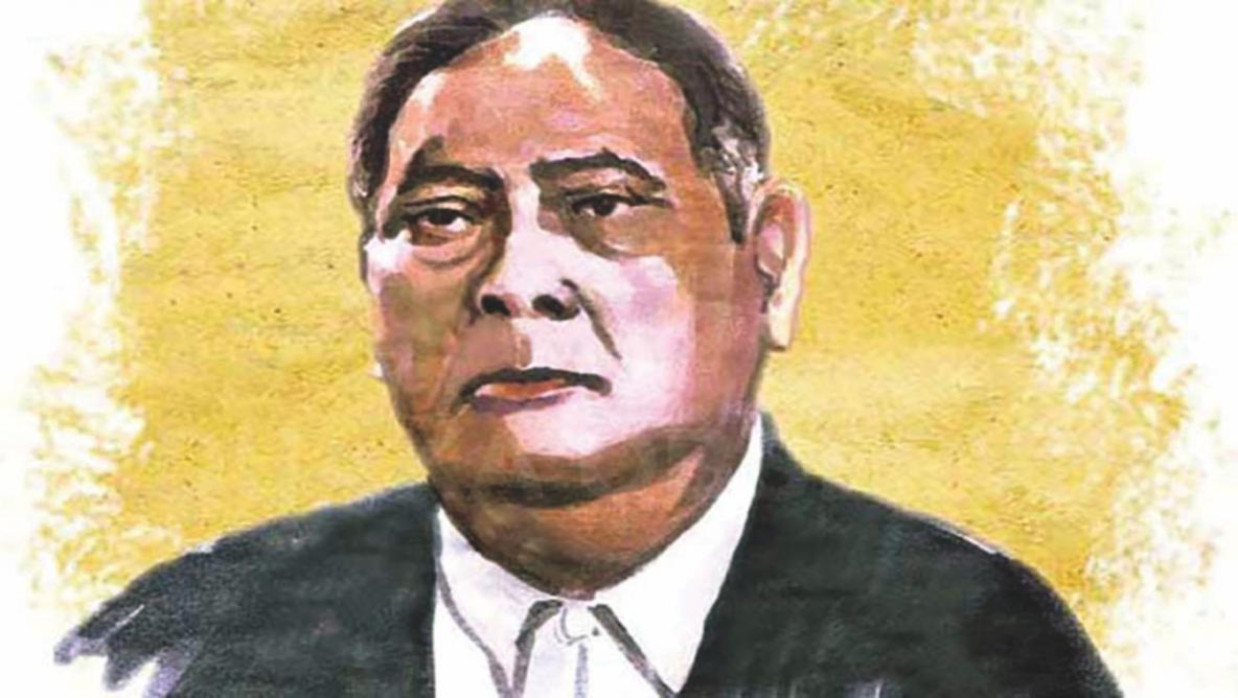
In their essay, “How Fazlul Huq's Krishak Praja Party Reshaped Peasant Politics in Bengal,” Mehrab Islam Sakib and Dr. Saleh Shahriar of NSU offer a vivid, narrative-driven exploration of the interlocking networks of debt, land tenure, and political mobilization in colonial Bengal. The authors trace the remarkable shift of the Bengali peasantry from victims of a generational, structural debt trap into an organized, institutionalized electoral force under the leadership of A. K. Fazlul Huq and the Krishak Praja Party (KPP).
While the essay succeeds as an engaging historical synthesis of 1930s electoral populism, it suffers from a fatal conceptual and chronological misfire. By attempting to create a seamless bridge between pre-colonial property rights and 20th-century peasant grievances, the authors conflate entirely separate historical epochs and ignore the total structural rupture caused by British colonial policy.
The result is not merely a matter of historical imprecision. It affects how readers understand the origins of peasant indebtedness, the social foundations of Fazlul Huq's political appeal, and the very nature of the agrarian crisis that shaped late colonial Bengal.
The Chronological Misfire: Conflating Habib and Bose
The core logical flaw of the essay lies in its "Historical background" section, where the authors attempt to synthesize two dominant but structurally incompatible frameworks of South Asian agrarian history. They graft the vocabulary of Prof. Irfan Habib — the foremost authority on Mughal agrarian institutions — onto a regional twentieth-century landscape later theorized by historians like Sugata Bose.
The authors posit that the pre-colonial Mughal framework was characterized by "overlapping claims among the peasant, the zamindar, and the state," yet immediately pivot to declare that the peasant held a "hereditary right of possession, officially recognized as proprietary" and understood as "genuine property". To prove this, they note that imperial records actively "protested against the sale of peasants’... lands".
This is classic Habibian scholarship, which describes a highly centralized, penetrating 17th-century Mughal fiscal machine designed to keep the resident cultivator attached to the soil to secure imperial revenue. Yet Professor Habib himself carefully distinguished between the cultivator's hereditary occupancy rights and modern notions of absolute ownership. Mughal agrarian relations were layered and negotiated, involving overlapping claims rather than exclusive proprietary titles. By translating these complex arrangements into the language of modern property rights, the essay risks simplifying a historically contested terrain.
However, the authors immediately undermine this premise by noting that in Bengal, central administrative penetration was virtually non-existent, with only 1.5 percent of villages measured for revenue under Aurangzeb. This creates an irreconcilable equation: How could a distant imperial bureaucracy "officially recognize" or systematically protect individual peasant rights in a deltaic frontier where it lacked an administrative presence in 98.5 percent of the countryside? By pasting generalized features of the tightly controlled Mughal core regions onto the autonomous, landlord-dominated reality of Bengal, the authors' analytical framework misfires before it even reaches the colonial era.
The Structural Rupture of 1793
The deeper historiographical error, however, is temporal. The authors write as if the "fundamental proprietary rights" of the Mughal era survived intact as a continuous baseline into the 20th century. In doing so, they gloss over the absolute, violent structural rupture caused by the Permanent Settlement Act of 1793.
Under the Mughal system, the zamindar functioned primarily as an intermediary responsible for revenue collection and local administration. Whatever influence or privileges zamindars exercised, they were not universally regarded as unrestricted private proprietors of land in the modern legal sense. Cultivators retained customary and hereditary claims that formed an essential component of the agrarian order.
The Permanent Settlement altered these relationships dramatically. Seeking a predictable source of revenue and a politically loyal landed elite, the East India Company vested zamindars with legally enforceable proprietary rights and transformed land into a commodity capable of transfer, auction, and speculation on an unprecedented scale.
This change represented more than an administrative adjustment. It marked the introduction of a new legal conception of property rooted in British notions of ownership and market exchange. The colonial state effectively replaced a layered agrarian structure with a system that privileged landlord interests above those of cultivators.
With the stroke of a pen, millions of cultivators saw their customary protections weakened. Over the following century, foreclosure, rent enhancement, indebtedness, and sub-infeudation accelerated the fragmentation of peasant holdings and the concentration of power in the hands of landlords and moneylenders.
The agrarian crisis confronting Bengal's peasants in the 1920s and 1930s was therefore not the continuation of an unchanged Mughal order. It was the cumulative product of more than a century of colonial economic engineering.
The Absentee Babu and the Communalization of Class
By ignoring this structural rupture, the essay also flattens the highly volatile demography of land ownership that fueled the rise of the KPP.
The Permanent Settlement allowed wealthy, urbanized Hindu elites — the "Babu" class of Calcutta and West Bengal — to purchase vast zamindari estates across East Bengal. These landlords lived luxuriously in urban centers, completely divorced from the agrarian reality of the soil, while extracting maximum rent from a rural population in East Bengal that was overwhelmingly Muslim.
This observation should not be interpreted through a simplistic communal lens. The essential issue was economic power rather than religious identity. Nevertheless, because patterns of class and community often overlapped in Bengal, agrarian grievances increasingly acquired a communal dimension in popular political discourse.
This geographical, class, and religious divide is precisely what transformed debt into what the authors call the "quiet architecture of rural life". Because the authors fail to trace how the Permanent Settlement mushroomed this specific class of absentee Hindu babus, their initial framing of rural indebtedness feels incomplete, relying on a vague communal binary rather than a precise critique of colonial political economy.
The political significance of Fazlul Huq's movement can only be fully understood against this background. His appeal rested not simply on promises of debt relief but on his ability to give political expression to a broad sense of agrarian injustice.
Analytical Strengths: The Institutionalization of Populism
Despite its flawed historical prologue, the essay gains significant academic weight when it transitions into the 1920s and 1930s, shifting its focus to the legislative and tactical genius of A. K. Fazlul Huq.
The authors provide an excellent, highly structured breakdown of how Huq recognized the severe limits of mere tenancy reform. They cleanly demonstrate that while the Bengal Tenancy Amendment Act of 1928 gave wealthier peasants stronger occupancy rights, it did nothing to regulate the predatory credit market.
The section detailing the Bengal Agricultural Debtors Act of 1935 as Huq’s "institutional weapon" is the strongest part of the essay. The authors effectively show how Huq took a piece of legislation introduced by the colonial administration and weaponized it as a populist tool after assuming power as Premier in 1937. The metrics provided — such as the Debt Settlement Boards reviewing creditor claims worth Rs 367 lakh and slashing them to Rs 179 lakh by late 1938 — offer empirical validation of the KPP’s governance.
Furthermore, the authors offer a sophisticated analysis of the KPP's party strategy. They explain how the KPP functioned as an "umbrella organization" that ingeniously stitched together competing agrarian classes: wealthy jotedars who possessed the capital to contest elections, indebted smallholders desperate for immediate debt relief, and landless laborers seeking free primary education.
Anticipating the Methodological Defense
It might be argued in defense of the authors that such structural and chronological critiques are misplaced, given that the essay’s explicitly stated focus is on the 1930s political maneuvering of Fazlul Huq and the KPP rather than the mechanics of colonial land tenure. However, this methodological defense fails on three fronts.
First, the authors themselves chose to validate their 20th-century narrative by explicitly building a self-inflicted "Historical background" section; having invoked a historical lineage, they are academically obligated to present it accurately rather than erasing the century-long colonial rupture that separated the two eras.
Second, by ignoring the structural violence of 1793, the essay actually diminishes Huq's radical legacy; he was not merely adjusting a malfunctioning agrarian credit system, but actively mobilizing to overthrow a 150-year-old entrenched colonial hierarchy that demanded the "abolition of zamindari without compensation".
Third, agrarian politics cannot be divorced from political economy. The very existence of the jotedar class that formed the backbone of the KPP’s "umbrella organization" was a direct structural byproduct of the sub-infeudation vacuum created by the Permanent Settlement.
To write a history of this political mobilization while skipping 1793 is to write a drama about an eviction without ever mentioning the landlord who drew up the lease.
Conclusion
Sakib and Shahriar have written a highly readable and necessary piece that successfully traces how popular, localized peasant grievances were successfully channeled away from episodic rural violence into lasting state institutions like the Debt Settlement Boards. However, the essay's historical foundation remains problematic. By failing to account for the catastrophic rupture of the 1793 Permanent Settlement, the authors misread the trajectory of land tenure in Bengal, forcing a flawed and unhistorical synthesis onto two entirely different worlds.
A more historically grounded interpretation would acknowledge that the agrarian world inherited by Fazlul Huq was not a surviving remnant of the Mughal order but a fundamentally new colonial construct. Recognizing this distinction is essential not only for understanding Bengal's agrarian history but also for appreciating the full significance of Huq's challenge to the colonial political economy that shaped it.


0 Comments
LEAVE A COMMENT
Your email address will not be published