

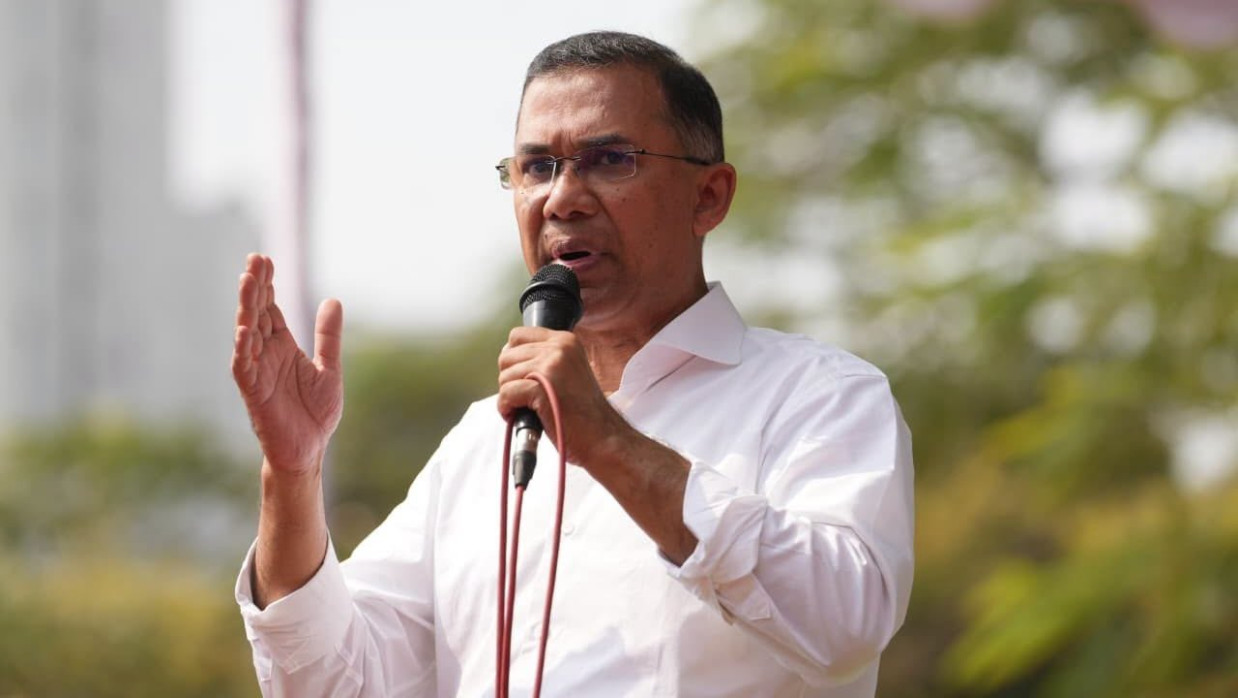
To understand the scale and nature of the challenges confronting Prime Minister Tarique Rahman, one must first consider Bangladesh's history, geopolitical circumstances, contemporary political realities, and the political and social psychology of its people. For centuries, the people of Bengal have lived through invasion, foreign domination, exploitation, political upheaval, and economic plunder. Mothers once put their children to sleep with rhymes that recalled the terror of the Bargi raids and the Maratha incursions, which became embedded in Bengal's collective memory. At different times, the Portuguese and other foreign adventurers and marauders also preyed on the region. In more recent history, Bangladeshis have experienced another form of exploitation: the misuse of state power and national resources by domestic political elites.
These events can affect a country. Bangladeshis have been under occupation and have been let down many times by their own leaders, so they tend not to trust their political leaders. This goes into why the incumbency effect is so strong in Bangladesh. People can become very disappointed in their government if they're not pleased.
Against this historical background, Tarique Rahman has assumed responsibility for governing Bangladesh with an overwhelming popular mandate.
That mandate is both an extraordinary opportunity and an enormous burden.
Public expectations are very high. The political change before this administration has also led many citizens to believe major change can happen. Therefore, they will most likely not accept half measures or talking points that they have grown used to hearing. They need to see changes happen. Such as better government and security. Economic opportunities and more transparency in politics and among those who surround this government.
Tarique Rahman also faces the unusual burden of being measured against two very different political legacies. On one side stands the record and reputation of his parents, whose achievements remain closely tied to the history of the Bangladesh Nationalist Party. On the other stands the record of the previous Awami League government under Sheikh Hasina. Inevitably, every major decision of the present government will be compared with one or both of these experiences.
Another reason we should remain cautious is this. When any government has a 2/3 majority in parliament, they have huge scope to bring about positive changes. However, many instances in South Asian countries have shown that high majorities can be harmful if no institutions check them.
So the question at hand for Tarique Rahman is can a country achieve prosperity with such a big majority in parliament and maintain healthy democracy?
Slogans Cannot Defeat Corruption.
Bangladesh must begin by recognizing an uncomfortable reality: neither politics nor public administration can be populated exclusively by honest people overnight.
Corruption is not merely an individual moral failing. Political patronage, economic insecurity, institutional weakness, social tolerance, and the absence of effective accountability sustain it. Fighting Corruption therefore requires simultaneous political, economic, legal, administrative, and social reforms.
A poorly paid employee struggling to afford medical treatment for his family or milk for his child is unlikely to be transformed by moral lectures alone. At the same time, wealth and privilege provide no immunity against Corruption. Excessive opportunity combined with unchecked power can corrupt people at every level of society.
The answer must therefore be institutional.
The rule of law must operate alongside economic reform and social awareness. Political competition must become sufficiently open that parties have an incentive to nominate competent and respectable candidates rather than individuals valued primarily for money, influence, or loyalty.
As political institutions improve, better people are more likely to enter politics. As genuine electoral competition increases, political parties will have stronger incentives to put forward credible candidates. Over time, improving the quality of politics can become one of the most effective weapons against Corruption.
This is where the BNP faces both its greatest challenge and perhaps its greatest opportunity.
Confronting Extortion and Abuse of Power
Allegations involving extortion, land grabbing, tender manipulation, political intimidation, or abuse of influence by ruling-party leaders and activists are particularly damaging because they directly affect public perceptions of the government.
Auto denial will always be your worst option.
Just because you deny a problem does not mean there is no problem. You may get away with denial for a while as a politician, but once facts come to light, it will be much harder on the people who believe in you.
Always have your facts when dealing with these types of situations.
When someone is accused, whether they are an MP, a Party Leader, or anyone associated with your government or party. Your Government should prove that being one of them will not protect you from accusations. If it is found true, there should be action.
A recent willingness to demand accountability from politically connected individuals could set an important precedent. But such actions will acquire lasting significance only if they are transparent, evidence-based, and consistently applied.
Selective punishment creates fear. Consistent accountability creates institutions.
That distinction will be crucial for Tarique Rahman.
Separating the Party From the State
One of Bangladesh's persistent political problems has been the blurring of boundaries between the governing party and the machinery of the state.
A political party may form the government, but the state does not become that party's property.
Civil servants, police officers, regulators, local administrators, universities, public corporations, and other institutions must not become extensions of the ruling party's organizational structure. When MPs, local party leaders, or politically connected individuals exercise informal authority over these institutions, administrative professionalism deteriorates.
Tarique Rahman therefore has an opportunity to set an important democratic precedent: instead of making the state dependent on the BNP, he can make state institutions stronger than any political party.
Such an approach would inevitably create difficulties. Party activists accustomed to expecting rewards after an electoral victory may resist restrictions on political influence. Local leaders may resent independent administrators. Some MPs may dislike being told that winning an election does not entitle them to control police stations, contracts, appointments, or local government.
Yet this is precisely where leadership matters.
If Bangladesh is to become institutionally stronger, the administration, law-enforcement agencies, judiciary, and local government must gradually acquire professional independence from partisan control.
Discipline and a New Generation of Leadership
The BNP must also confront its internal organizational challenges.
When a large political party comes to power, numerous groups and individuals inevitably attempt to benefit from their association with the ruling establishment. Competition for influence, contracts, appointments, and local authority can rapidly undermine party discipline.
Maintaining an effective chain of command within the BNP, Jubo Dal, Chhatra Dal, and associated organizations will therefore be a significant test.
But discipline alone is insufficient. The party must also decide what kind of political culture it wishes to create.
If sycophancy becomes the principal route to advancement, the organization will eventually weaken. If competence, integrity, organizational ability, intellectual capacity, public service, and connection with ordinary citizens become the criteria for leadership, the party can gradually renew itself.
This is particularly important for the younger generation. Bangladesh needs political leaders who understand economics, technology, international relations, climate change, energy, maritime affairs, education, and modern public administration—not merely the mechanics of street politics.
The BNP now has an opportunity to cultivate such a generation.
The Economy Will Ultimately Decide Public Confidence
No government can sustain popularity indefinitely through political rhetoric.
For ordinary citizens, governance is experienced through the price of rice, vegetables, electricity, fuel, transportation, rent, education, medical treatment, and employment.
Inflation, investment, energy security, exports, infrastructure, banking stability, employment, and public safety therefore matter more to most people than political speeches.
The government should establish measurable national performance indicators and regularly disclose its progress. The government should present inflation, job creation, domestic and foreign investment, electricity generation, fuel availability, exports, crime, infrastructure development, and other important indicators transparently to the public.
Such a system would gradually replace political propaganda with measurable accountability.
Citizens could then judge the government not merely by what ministers say, but by what the government actually accomplishes.
Communicating With Honesty
Political communication represents another major challenge.
Even when a government has legitimate reasons for a difficult decision, failing to explain them can create misunderstanding. Worse still, attempts to conceal obvious problems can rapidly destroy credibility.
The government therefore needs a regular, professional, fact-based communication system.
Political communication should not consist solely of announcing achievements. A confident government should also acknowledge difficulties.
Its message to citizens should essentially be:
We know there is a problem. This is our plan to address it. This is what we have accomplished so far. And this is where we have not yet succeeded.
Such language may appear politically risky, but in the long run it builds credibility. Citizens generally understand that governments cannot solve every problem immediately. What they resent is being told a problem doesn't exist when they encounter it every day.
Democracy Requires Institutions That Can Say "No"
Perhaps Tarique Rahman's greatest opportunity is to strengthen Bangladesh's democratic institutions.
An independent opposition, free media, an impartial judiciary, a credible Election Commission, a professional civil service, and genuinely independent anti-corruption institutions should not be regarded as obstacles to government. They are essential components of a functioning democratic state.
A government with a large parliamentary majority has less immediate need to fear criticism. It can therefore afford to demonstrate political tolerance.
If the BNP accepts dissent as a normal part of democratic competition rather than treating criticism as hostility toward the state, it can help establish a political culture fundamentally different from what Bangladesh has experienced during many periods of its history.
There may be some judgments that are unfavorable towards the Government from time to time. An independent Anti-Corruption Commission may investigate people close to politics. A free media would write articles that are uncomfortable to read. An effective opposition would raise negative issues about the Government's actions.
These things may create short-term political discomfort.
But they also signal a functioning democracy.
The Danger of an Overwhelming Majority
A large parliamentary majority is one of the most powerful instruments available to a government. It can facilitate legislation, constitutional reform, administrative restructuring, and long-term economic planning.
Yet the same majority can weaken democracy if it eliminates meaningful restraints upon executive authority.
The question, then, is not whether a two-thirds majority is inherently good or bad. The question is how it is used.
If Bangladesh continues with party hegemony over the country's opposition parties, politicization of state agencies, and centralization of power, it will simply continue with the same pattern under different parties' rule.
On the other hand, if this party rule is used to streamline government functions, establish an independent judiciary, curb corruption, improve election processes, decentralize government powers, modernize the economy, and strengthen our constitutional frameworks, it can become one of the greatest turning points in Bangladeshi history.
Power itself is neither reformist nor authoritarian. Its character depends on the purposes for which it is exercised.
Performance, Not Image
The government must also recognize the difference between restoring its image and reforming governance.
Advertising, publicity campaigns, speeches, slogans, and social-media messaging can influence public perceptions temporarily. They cannot substitute for competent government.
If extortion declines, citizens will notice.
If political interference in the administration diminishes, officials and businesses will notice.
If prices stabilize, families will notice.
If police act professionally, ordinary people will notice.
If courts operate independently, litigants will notice.
If public institutions become accountable, the entire country will notice.
The government will then have little need to manufacture an image. Its performance will create its image.
That should be the objective.
The Historic Opportunity
Tarique Rahman's central challenge is therefore much larger than maintaining his own popularity or ensuring the BNP's continued political dominance. His challenge is to transform a political mandate into a more effective system of government.
Standing up to extortion and land grabbing. Separating the party from the state. Political elites being based on their ability. Administrative neutrality. Economic Intelligence. Being open with the people about what you're doing. Judicial system and more. All of these go together when trying to make a country run correctly.
The ultimate measure of Tarique Rahman's success should consequently not be whether his government survives five years or whether the BNP wins another election.
At the end of his term, Bangladesh should ask more important questions.
Are the state's institutions stronger than they were when he assumed office?
Do citizens feel more secure in their persons, property, and political rights?
Is the economy built on a stronger, more sustainable foundation?
Has Corruption become harder because institutions, not merely political leaders, can resist it?
Can the judiciary, Election Commission, civil administration, law-enforcement agencies, and anti-corruption bodies perform their responsibilities without fearing political retaliation?
And, perhaps most importantly, will these institutions continue functioning effectively when another political party eventually assumes power?
A democratic leader's greatest achievement is not creating a system that works only while he governs. It is creating institutions strong enough to work when he no longer does.
That is the historic test before Tarique Rahman.
It is also his historic opportunity.


0 Comments
LEAVE A COMMENT
Your email address will not be published