

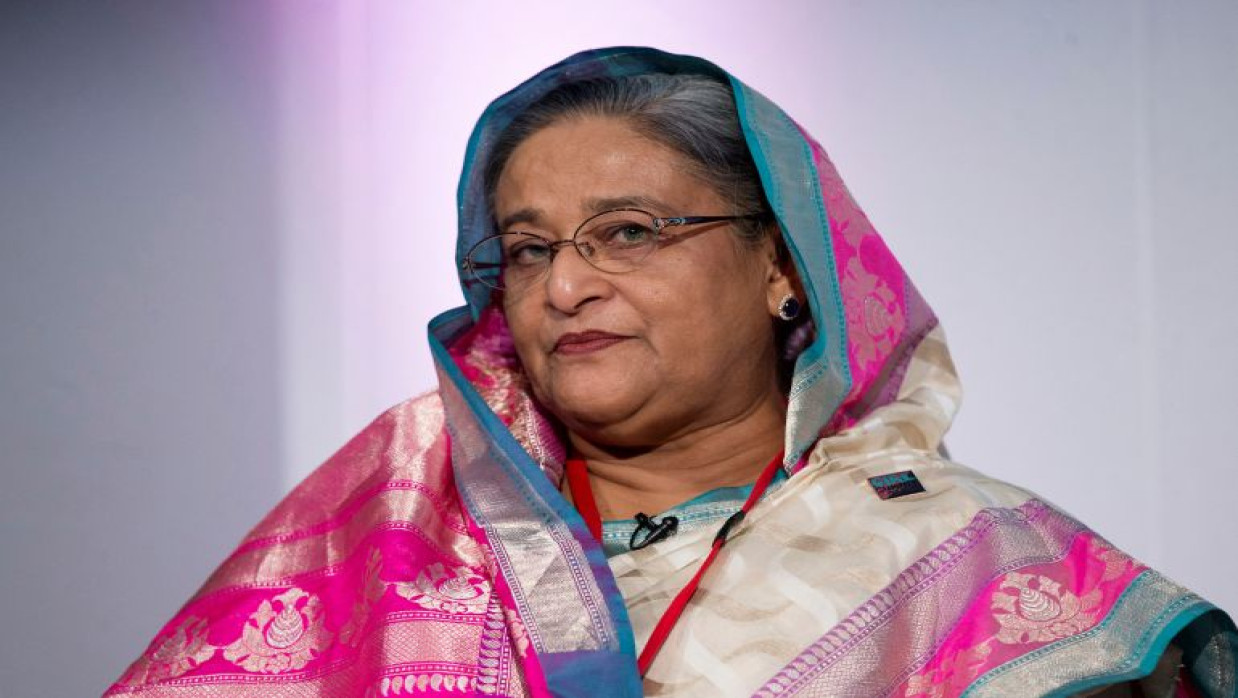
Bangladesh's call for India to extradite former Prime Minister Sheikh Hasina has evolved into more than a dispute over a single wanted leader. Now it is a question of whether the treaties of South Asian countries are meaningful tools of justice or simply diplomatic courtesies extended when it suits everyone involved.
Hasina fled to India on August 5, 2024, after a student-led uprising ended her fifteen-year rule. Bangladesh asked her to return via a note verbale. In November 2025, she was convicted of crimes against humanity and sentenced to death in absentia by the International Crimes Tribunal for her role in violently quashing the 20 uprising. She has dismissed the verdict and criticized the trial as politically motivated. Several international human- rights groups have spoken out against capital punishment and trials in absentia. However, as stated earlier, the verdict was delivered by a Bangladeshi court, not Hasina's political opponents.
India has confirmed receiving the extradition request from Bangladesh. Last month, its government reportedly told a parliamentary committee that it is reviewing the case in accordance with the relevant laws. Delhi has not been entirely mute; it has given Dhaka nothing in the way of a substantive ruling, a timeframe, or legal reasoning. The delay itself, protracted, is telling.
The Treaty and Its Obligations
India and Bangladesh signed their extradition treaty in 2013 and amended it in 2016. The treaty generally applies when the alleged conduct constitutes an offense in both countries and is punishable by imprisonment for at least one year. It establishes formal procedures for identifying the wanted person, presenting the charges, and transmitting the request through diplomatic channels.
Yes, the treaty has what's called a political- offense exception. It allows a country that is asked to extradite someone to refuse if the alleged offense is political in nature. But that exception is much narrower than it sounds. Article 6 carves out several offenses from the crimes normally eligible for protection as political offenses, including murder, manslaughter, kidnapping, terrorist offenses, and incitement to murder. India therefore cannot refuse Bangladesh's request simply by pointing out that Hasina is a former Prime Minister or that her prosecution would have enormous political ramifications. The key inquiry is into the nature of the alleged conduct, not the accused's position.
India is not completely without potential grounds for refusal under the treaty. Article 8 says that extradition can be denied if the accusation is shown not to have been made "in good faith and in the interest of justice" or if military considerations "otherwise disqualify the request". We could argue that the proceedings were politicized, that the defendant was not afforded an ample opportunity to defend herself, or that surrender would expose her to execution, contrary to the requirements of justice. But we would have to make that argument based on law. Foot-dragging forever is not a viable alternative to treaty application.
The purpose of the 2016 amendment was to speed up extradition by eliminating certain evidentiary formalities. Thus, the requesting state was no longer required to produce the same type of detailed evidentiary record under Article 11 that it had once had to supply under Article 10; it could now support a request with an arrest warrant issued by a court of competent jurisdiction. This language weakens any implication that Bangladesh is required to prove its entire case to Indian authorities as if it were trying the suspect twice in New Delhi.
Another rule of extradition law is that the treaty's "specialty" clause also forbids the extradited person from being tried or punished for previous unrelated offenses without the consent of the surrendering state. Hence, India can demand and obtain legally binding assurances regarding the charges, treatment, and legal rights to which Hasina will be subjected upon her arrival in India.
Hasina Is No Dalai Lama
Some Indian commentary has tried to justify it on humanitarian grounds and likened it to the case of the Dalai Lama, who has been residing in India since fleeing Tibet in 1959. The comparison is both historically and legally flawed. The Dalai Lama entered India as a religious/spiritual leader and politician, fleeing Chinese persecution while stateless. This was well before the extradition treaty between India and Bangladesh was signed. The Dalai Lama was not sent to India after being convicted by another country's courts under a treaty with a neighboring democracy.
Hasina, by contrast, is a former head of government convicted by a court of her own country following a crackdown that, by United Nations investigators' own findings, may have resulted in the deaths of as many as 1,400 people. It's fair to ask whether her trial met all international standards. But referring to her only as an elderly political visitor kept on humanitarian grounds obliterates the victims and the gravity of her conviction.
The Dalai Lama comparison may therefore resemble a Kautilyan maneuver: using moral language to preserve strategic leverage. Hasina was India's closest political partner in Bangladesh for many years. Her governments cooperated with New Delhi on security, transit, and regional connectivity. Keeping her in India gives New Delhi influence over Bangladesh's evolving political order. Still, it also creates the impression that India's commitment is to a particular leader rather than to the Bangladeshi state and its people.
A Lawful Way Forward
Bangladesh must ensure that its request is complete, properly documented and confined to treaty-eligible crimes. It should also consider offering assurances of a fair retrial or meaningful appeal, access to counsel and commutation of the death sentence. Such guarantees would address India's strongest legitimate objections without extinguishing Bangladesh's right to accountability.
India should of course respond with an equally transparent treaty-based decision of its own. It can extradite Hasina, seek further assurances, or clarify the specific legal reasons for denying surrender. But it should not continue to provide indefinite asylum under the vague banner of extra-legal humanitarianism and permit political campaigns targeting Bangladesh.
Extradition should not be a form of vengeance. But political hospitality should not be impunity, either. The reputations of both countries are now at stake. They should replace ambiguous politics with law, due process and respect for the victims who died and brought this case to the courts.
Sources: India–Bangladesh Extradition Treaty, 2013; Reuters on Hasina’s conviction and India’s position; Institute of South Asian Studies analysis.


0 Comments
LEAVE A COMMENT
Your email address will not be published