

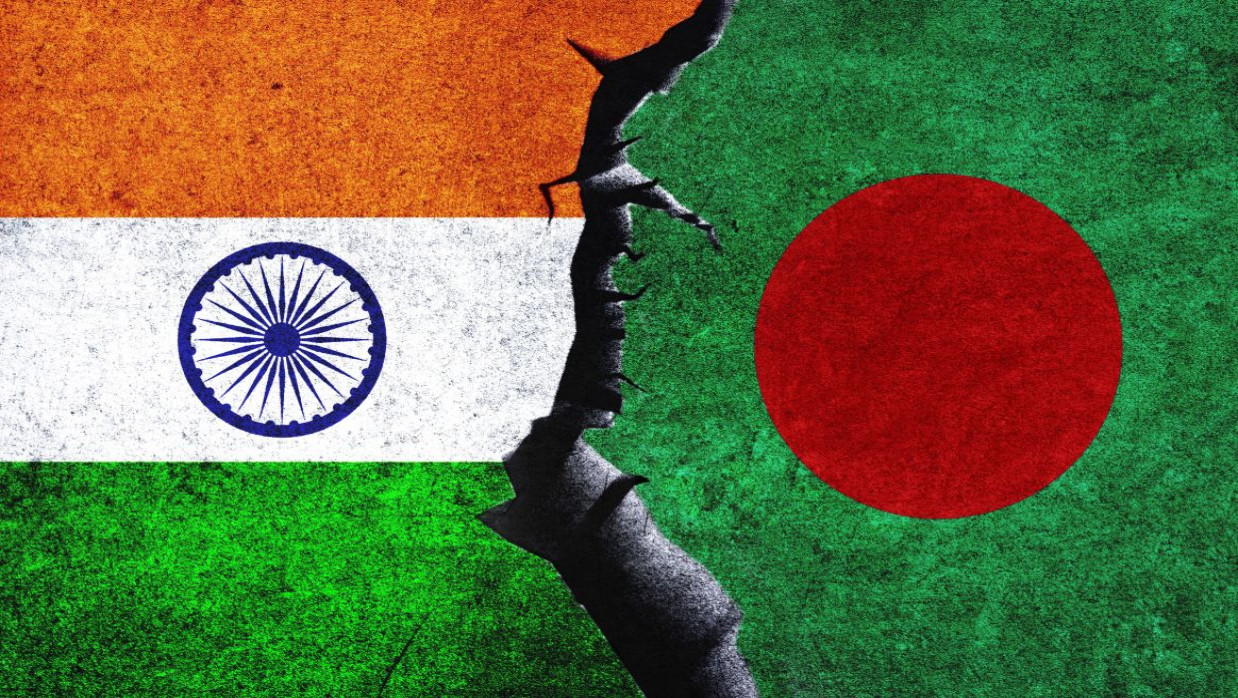
Indian Prime Minister Narendra Modi's invitation to Bangladesh Prime Minister Tarique Rahman to attend the BRICS outreach session in New Delhi presents Dhaka with both an opportunity and a diplomatic test. Rahman has reportedly been invited in his capacity as chair of BIMSTEC, although Bangladesh's longstanding interest in joining BRICS gives the visit wider significance. If he attends the September 12–13 summit, it could also produce his first substantive bilateral meeting with Modi since Bangladesh's political transition.
The invitation should be welcomed, but beware of overdramatizing it. Diplomacy is never invited out of sheer generosity. Bangladesh is India’s neighbor, market, transit point, security stakeholder, and buffer against a quietly expanding China. Let Bangladesh host the summit free of cynical paranoia or starry-eyed illusions but with a healthy dose of realpolitik.
BRICS and Bangladesh's Strategic Options
BRICS has expanded beyond its original five members to include several influential states of Asia, Africa and the Middle East. It is neither a military alliance nor a coherent anti-Western bloc. Rather, it offers developing countries an additional forum through which to discuss development finance, trade, technology and reform of international institutions.
Bangladesh has good reasons to seek membership. Its economy requires investment, diversified export markets, energy security and alternatives to traditional sources of development finance. China and Russia have reportedly supported Bangladesh's interest in joining. India's position, however, will also matter greatly.
Modi's invitation could indicate that New Delhi is prepared to engage the new Bangladeshi government pragmatically. It may equally represent an effort to manage Bangladesh's growing relations with China by drawing Dhaka more closely into an India-hosted diplomatic framework. These explanations are not mutually exclusive.
Some Bangladeshis may interpret the invitation as a characteristically Kautilyan maneuver, an embrace designed as much to contain as to welcome. But Bangladesh should not reject an opportunity simply because India also expects strategic benefits. Effective diplomacy consists of converting another country's interests into reciprocal gains. Dhaka should use the summit to seek Indian support for eventual BRICS membership, while maintaining constructive relations with China, Russia, the United States, the European Union and the Muslim world.
BIMSTEC Cannot Become an Instrument for Excluding Pakistan
Bangladesh currently chairs BIMSTEC, the seven-member organization comprising Bangladesh, Bhutan, India, Myanmar, Nepal, Sri Lanka and Thailand. It connects South Asia with Southeast Asia and offers considerable potential in maritime transport, energy, trade, disaster management, public health and the blue economy. BIMSTEC's 2025 summit adopted the Bangkok Vision 2030 and an agreement on maritime transport cooperation, providing a stronger institutional foundation for regional integration.
India heads the BIMSTEC security pillar, and Bangladesh leads the trade, investment and development cooperation pillar. This arrangement allows pragmatism to prevail and enables synergies to emerge, especially in maritime security, cybercrime, counter-trafficking, coastal shipping and disaster management response.
Nevertheless, BIMSTEC must not become merely India's preferred substitute for SAARC because it excludes Pakistan. Its geography and purpose differ from those of SAARC. BIMSTEC is organized around the Bay of Bengal; SAARC represents South Asia as a whole. One cannot permanently replace the other.
India has legitimate security concerns regarding Pakistan, especially over cross-border terrorism. Yet keeping SAARC indefinitely dormant imposes costs on every South Asian country. The last SAARC summit took place in Kathmandu in November 2014; the planned 2016 summit in Islamabad collapsed after India and several other members withdrew.
The result is that one of the world's least economically integrated regions remains without meaningful summit-level dialogue. Bangladesh and the Maldives have consequently called for the revival of SAARC. Maldivian President Mohamed Muizzu has offered to facilitate discussions among the estranged members, arguing that differences should be addressed through dialogue.
SAARC, however, also holds historical significance for Bangladesh: it was President Ziaur Rahman who formally floated the initiative that eventually led to SAARC's creation at Dhaka in 1985. Tarique Rahman's administration thus has both patriotic and familial incentives to champion its revival. While vigorously backing BIMSTEC, Dhaka should demand that it supplement rather than supplant SAARC.
The Crisis of Trust with India
The single largest obstacle to Bangladesh–India cooperation isn't the lack of agreements but the decline in trust. Many Bangladeshis think New Delhi propped up Sheikh Hasina' authoritarian government far longer than necessary because she was accommodating of Indian security and connectivity demands.
That distrust grew when Hasina went into exile in India on August 5, 2024, after fleeing the coup killings. Bangladesh formally asked India to extradite Hasina. India merely said that the request would be looked into through the regular judicial channels. Former home minister Asaduzzaman Khan Kamal and some other accused or convicted people of crimes related to the killings allegedly also enjoyed links with India"
India should demand whatever paperwork it feels it needs to see and assurances of fair trials before extraditing anyone. Still, Bangladesh needs to ensure it will actually prosecute people in credible courts and not just use the courts as a means of political vengeance. But India dawdling only makes it look like it is protecting conspirators who do its bidding.
That's why this bilateral extradition issue cannot be divorced from the larger picture of diplomacy. India can't talk about friendship with the Bangladeshi people while seeming to be callous about their concerns regarding justice in relation to the deaths of July and August '24. On the other hand, Bangladeshi authorities should not frame every single unsolved incident as evidence of an Indian plot. Both countries should have a clear extradition treaty that allows them to exchange evidence, hear legal disputes, and properly deliver notifications of their decisions.
Cooperation Must Produce Visible Reciprocity
India and Bangladesh are cooperating economically in trade, power, railways, ports, waterways, border management, and counterterrorism. India has gained access to Bangladeshi transit and use of ports in Chattogram and Mongla, which has helped provide connectivity to its northeastern states. Bangladesh has gained access to electricity from India, credit, a vast market, and better regional transport links.
Cooperation, however, seems lop-sided at times. Bangladeshis still raise questions about border killings, trade impediments, the pending Teesta water-sharing deal, and the sharing of transit-related benefits. India shares 54 rivers with Bangladesh. Water sharing is thus not just about water; it is about Bangladesh's very existence.
Renegotiation of the Ganges Water Treaty due to expire in December 2026 will be one early test. New Delhi will also have to acknowledge that domestic politics in West Bengal cannot be used as a permanent excuse for failing to reach a Teesta agreement. True partnership involves water sharing, assured access to markets, humane management of the border and market-based pricing of energy and connectivity.
An Indian parliamentary committee chaired by Shashi Tharoor has recommended a diplomatic reset with Dhaka while expressing concern about China's involvement in Mongla Port, the Teesta project and Bangladesh's possible accession to the Regional Comprehensive Economic Partnership. Such concerns reveal India's strategic calculations, but Bangladesh cannot reasonably be asked to limit Chinese investment unless India offers competitive alternatives. Sovereign cooperation with China is not inherently anti-Indian, just as Bangladesh's cooperation with India need not be anti-Chinese.
A Partnership Based on Respect, Not Dependence
Tarique Rahman should attend the BRICS outreach session if the visit yields substantive diplomatic outcomes. He should discuss Bangladesh's BRICS aspirations, Hasina's extradition, river-water agreements, border conduct, trade barriers, regional connectivity and the revival of SAARC. He should also make clear that Bangladesh welcomes BIMSTEC security cooperation but will not support turning the organization into a geopolitical device against Pakistan or China.
India too must ask itself whether it wants a transactional engagement with whichever regime occupies Dhaka that furthers its near-term security interests, or a dependable relationship with the state of Bangladesh and its people. The former may offer fleeting strategic advantage; the latter requires reciprocity, sensitivity and acceptance of Bangladesh as a sovereign equal.
Friendship cannot be cemented by summit photos, quotes from 1971 or diplomatically worded statements. It will be proved when Bangladesh's interests don't entirely converge with New Delhi's; by how India acts. Only then can BRICS, BIMSTEC and a rejuvenated SAARC truly serve as the bricks and mortar of an equitable regional architecture instead of instruments of competing geopolitics.


0 Comments
LEAVE A COMMENT
Your email address will not be published