
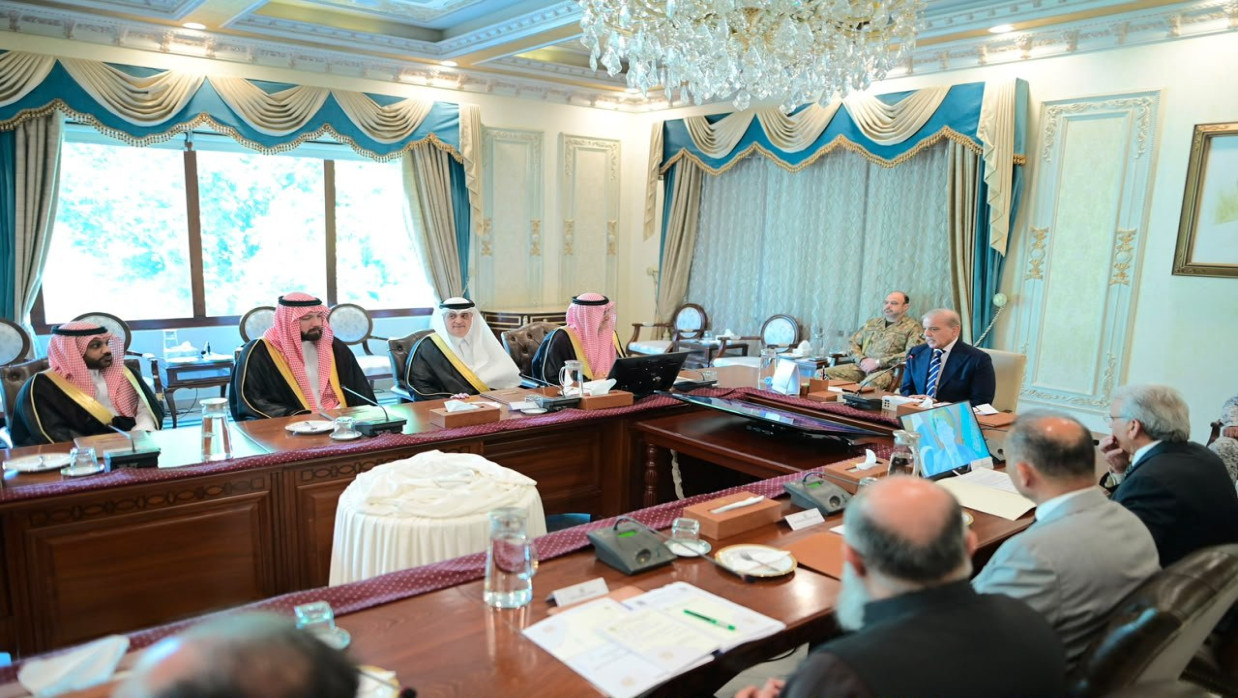
The economic ties between Pakistan and the Gulf States are about to take another leap forward. The long history of migrant workers, remittances, energy trade, and diplomatic relations between Pakistan, Saudi Arabia, the United Arab Emirates (UAE), and Qatar has served as an important base for developing economic ties within the region. But the new economic environment opens up chances for a more serious cooperation.
Across the Gulf, governments are building industrial and strategic economic foundations that go far beyond Pakistan’s traditional areas of energy and migrant labour. Artificial intelligence, manufacturing, logistics, healthcare and food security sectors are growing in importance. For Pakistan, this represents an opportunity to take a role that goes beyond migrants and a destination for financial transfer.
Nevertheless, for Pakistan to move ahead with diplomatic and migratory links as a business success, Pakistan will require a different strategy that will involve the way investors from the Gulf are going to choose their partners. They will be looking for good infrastructure, competitiveness of industries, and institutions and good value for money.
From Labour Exports to Skilled Employment
Remittances remain an essential economic foundation of Pakistan. As indicated by the numbers provided, for the fiscal year 2025-26, Pakistan received approximately $41.6 billion worth of remittances, out of which Saudi Arabia contributed around $9.8 billion and the UAE, $8.8 billion. Remittances help boost domestic spending, foreign exchange reserves and overall economic growth.
Despite all the advantages, there are disadvantages associated with a reliance on a single source of money. Whereas international employment opportunities help thousands of families make ends meet, this process does not lead to the development of competitive industries. The task that Pakistan should tackle next lies in leveraging the skills of its citizens and developing new professions and careers.
Pakistani engineers, technicians, medical professionals, and IT specialists could find themselves useful in the development of the healthcare industry, technologies in construction, logistics, finance and industrial sectors in the Gulf countries. It could also be facilitated by the cooperation of vocational institutions and businesses based in the Gulf region. Another way to increase incomes of Pakistani people would be to provide them with internationally recognized credentials and technical education.
Such a collaboration would be mutually beneficial and strategically important. Gulf economies would have greater access to a pool of trained professionals. Meanwhile, Pakistan could improve workers’ earnings and the skill set available for its domestic industries.
Digital Collaboration and the Next Phase of Exports
Another area where cooperation can take place is in the technology field. The ICT exports from Pakistan have earned revenues of around $4.6 billion in the fiscal year 2025-26. Simultaneously, Gulf countries have also been making significant investments in technologies related to digital infrastructure, artificial intelligence, cybersecurity, fintech, and cloud services.
Such converging trends offer opportunities for joint ventures. Pakistani technology firms, Gulf investors and international technology companies could specialise in digital services for the regional market, collaborate on research and development and participate in digital transformation projects.
Saudi Arabia’s ambitions in the technology space, plus the UAE’s established role as a commercial hub, could provide useful entry points for firms aiming to expand internationally. Qatar could present similar opportunities for digital infrastructure, professional services and technology-enabled industries.
Nevertheless, there are certain preconditions which make possible for such collaboration to take place, and these include reliable internet connections, tax predictability, easy money transfer from abroad, and access to technical education. The uncertain political climate and technological scaling difficulties can pose some competitive problems in comparison with well-developed industries in India and Southeast Asia.
It is essential for Pakistan to develop the conditions necessary for the digital business environment, as well as encourage companies to produce products of high value.
Food Security as a Strategic Economic Opportunity
In addition, food security could be an area where productive capacity of Pakistan may serve well with needs of the Gulf economies. Water shortages, lack of fertile land and climate challenges motivate Gulf countries to diversify sources for agricultural goods and foods.
Under certain conditions of investments, agricultural, livestock, fishery potential of Pakistan could ensure sustainable exports of foods to the Gulf market, as well as development of local processing industry and employment.
However, agriculture potential of the country cannot necessarily guarantee export competitiveness. Foreign markets have demands concerning the quality, traceability and food-safety standards. Post-harvest losses, cold chain logistics and inconsistency of production make it difficult for Pakistani suppliers to establish commercial relations.
Investments of Gulf countries in the development of food processing, refrigerated storage, irrigation and logistics could solve this problem. Joint ventures could also contribute to development of livestock products, seafood processing and food industry.
But any kind of cooperation in this sphere should be based on the domestic needs. Water shortages and climate change are important constraints for agricultural production, and export development should be combined with the increase of water efficiency and climate-resilience of agriculture.
Ports and Connectivity Need Commercial Foundations
Pakistan’s geography offers potential advantages to connect Gulf markets with South Asia, western China and Central Asia. However, these advantages will remain underutilised unless transport infrastructure becomes more efficient and reliable.
One such case would be the Karachi Gateway Terminal deal. In June 2023, AD Ports Group, based in the UAE, entered into a 50-year concession deal to build and operate the terminal, with plans for investing up to $220 million worth of infrastructure in the first ten years. The deal reflects the opportunity for Gulf business to be involved in Pakistan’s maritime infrastructure.
But the importance of such deals can only be measured in terms of their implementation, impact, and trade. Commitment of investment is good but completed infrastructure, better cargo handling, and export capabilities are a more significant measure of economic development.
Gwadar Port and the China-Pakistan Economic Corridor could provide additional opportunities for regional connectivity. But success would not solely rely on a favorable location. Security, efficiency of customs services, roads and rails, regulatory certainty, and business demand would define whether the project would be able to draw any business at all.
Infrastructure development in Pakistan should be oriented towards satisfying market demand.
Mineral Wealth Requires Investor Confidence
Minerals represent another potential area of cooperation as governments look to acquire resources for industrial and emerging energy technologies. Pakistan’s copper, gold and other mineral deposits could attract international capital, technical expertise and value addition opportunities.
The case of large-scale mineral extraction, however, demonstrates the necessity of attracting investors who know how to deal with a challenging environment. On April 2026, Barrick Mining Corporation declared it was delaying the development of Reko Diq copper-gold project and reconsidering it until mid-2027 due to security reasons and the need to review financing and requirements for the project.
Despite the fact that Reko Diq is not a Gulf-sponsored project, it serves as an example for Pakistan on how to attract foreign investors. Natural resources will not be enough for success; security, infrastructure, transparency of agreements and trust that the regulatory system is predictable will be needed as well.
Pakistan can increase its chances of attracting investments through improving the system of contract enforcement, involving local communities in consultations and making sure that large projects generate jobs and skills in the country. Local processing would add more value to the natural resources of the country.
Making Investment Facilitation Deliver Results
The launch of the Special Investment Facilitation Council in 2023 illustrates Pakistan’s attempts to encourage investments in areas like agriculture, minerals, energy, and technology. This initiative can become an effective tool for reaching out to foreign investors, including Gulf players.
It’s important to note that such coordination of efforts is just a small part of the process. Ultimately, investors need projects that are commercially viable and institutionalized. High costs of energy production, regulatory ambiguity, and infrastructure challenges might undermine even the most effectively promoted projects.
Pakistan needs to complement its investment facilitation program with economic reforms in order to make its investment proposals credible. Stable economic policy, procurement processes, dispute settlement procedures, and access to infrastructure are among those measures that could enhance credibility of the proposals. Proper documentation and realistic cost-benefit analysis of the projects will differentiate credible business plans from mere announcements.
The goal is not to invite more investments into the country, but to ensure that such investments contribute to Pakistan’s development through increasing efficiency and exports and creating productive jobs.
Different Gulf Partners, Similar Economic Objectives
Pakistan’s strategy must take into consideration the fact that the Saudi Arabia, UAE, and Qatar are diverse in their economic goals and financial resources.
The Vision 2030 of Saudi Arabia presents many interesting opportunities in industrial cooperation, agriculture, and mining services. The UAE is a good partner for collaboration in terms of port development, trade facilitation, provision of digital services, and business expansion. There are also interesting possibilities in cooperating with Qatar in food security, professional training, healthcare, and some technology sectors.
It is important to pursue all opportunities through concrete commercial agreements rather than general diplomatic statements. Every partnership proposal should be based on a business case, an existing market, financial sources, and economic objectives.
The results of cooperation are to be assessed by real investments, performance, exports, jobs created, and involvement of local businesses in the projects. This way Pakistan will be able not only to enhance its relations with Gulf investors but also to obtain economic gains from these relations.
Turning Strategic Relations into Economic Strength
Pakistan and the Gulf countries already enjoy established ties in diplomacy, migration, and economics. It is crucial for the next step to make use of these ties but also focus on profitable investments and commercial gains.
For Pakistan, that will involve the development of industries capable of meeting regional demand, industries capable of training specialized labor, better agriculture and a conducive atmosphere for international business. Gulf economies, in turn, can benefit from a wider choice of skilled human capital, agriculture, digitization, mineral wealth and regional markets provided by Pakistan.
The process of transition will not be smooth. The competition for Gulf investments is increasing and there are many options among the economies available to Gulf investors. Pakistan will need to compete on the merits of its policy making and implementation capabilities.
The future of the relations between the two regions in terms of economy cannot be judged on the basis of increasing remittances, investment plans and diplomatic activity. The real test of their success will be their contribution to the development of industries, competitive export potential, skilled jobs and sustainable business connections.
The Gulf economic transition is a chance for Pakistan, but to translate it into economic success, reforms and business discipline are needed. Strategic alliances can offer chances, but only through economic consistency will these chances become economic success.


0 Comments
LEAVE A COMMENT
Your email address will not be published