

The Unfinished Struggle for Liberation
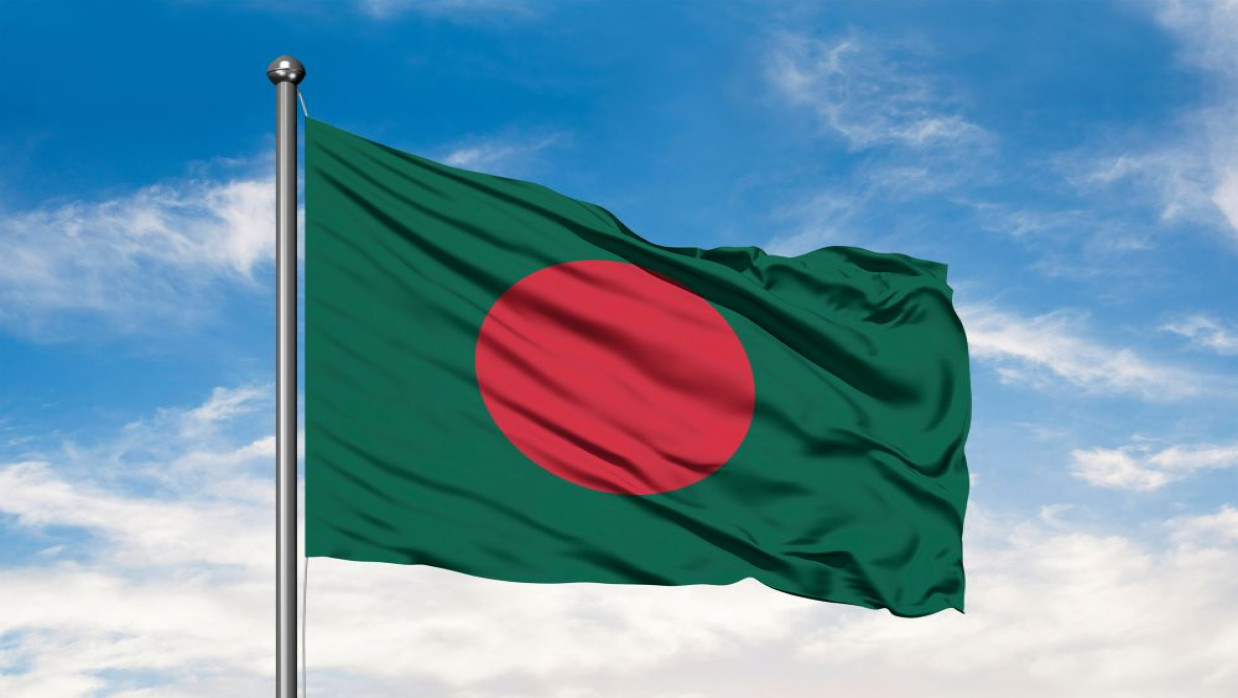
Bangladesh's struggle for national liberation did not end with political independence in 1971. The country acquired a flag, territorial sovereignty and international recognition, but it did not entirely escape the psychological, institutional and economic legacies of colonial rule. Centuries of foreign domination, followed by exploitation and political subordination under Pakistan, cultivated an enduring perception among many Bangladeshis that progress, sophistication and intellectual legitimacy must come from elsewhere.
Frantz Fanon was among the postcolonial scholars who described how colonialism seeps into the consciousness of the colonized. It convinces people that their language, culture, institutions and abilities are inferior. This learned sense of hierarchy can persist well beyond the colonizer's retreat. It breeds mimicry instead of creativity, learned helplessness rather than self-assurance, and expatriation over national rebuilding.
Bangladesh's principal developmental challenge is therefore not exclusively financial or technological. It is also psychological. Unless Bangladeshis believe their country is worthy of their talent, savings and commitment, economic progress will remain fragile. Psychological decolonization the recovery of national confidence without descending into chauvinism—is a prerequisite for durable political, social and economic renewal.
This does not mean rejecting Western education, science or democratic thought. Bangladesh should learn from every civilization. Decolonization means abandoning blind idealization and acquiring the confidence to evaluate foreign ideas according to the country's own needs. A self-assured nation learns from others without assuming that everything imported is superior.
The Four Million Who Could Transform Bangladesh
Among Bangladesh's population of approximately 176 million is a comparatively small but immensely influential group: perhaps four million highly educated, professionally capable or financially secure people. This group includes entrepreneurs, doctors, engineers, academics, civil servants, military officers, agricultural specialists, technology professionals and members of the global diaspora.
Bangladesh's future may depend disproportionately on what these four million people decide to do.
If they transfer their wealth abroad, educate their children solely for permanent migration and treat Bangladesh merely as a place from which to extract profit, they will deepen the country's institutional weakness. But if even a significant portion invests its capital, knowledge, professional discipline and international networks at home, Bangladesh could change remarkably within one generation.
They are not called to heroic acts of self-denial. The nation needs no grand gestures of self-flagellation. It needs citizens who will start up companies with integrity, volunteer to help schools and hospitals run better, donate to medical research, coach kids with business ideas, invest in technology startups, and help build professions free from government favor.
Don't frame investment in Bangladesh as philanthropy or nationalism. Profitable investment can also be socially revolutionary. Managed correctly, a diagnostic center, nursing college, food-processing factory, software enterprise, or farm can employ thousands and pay genuine returns. The best Bangladeshi elite can do for their country may be to show that it's possible to honestly grow rich while staying productive at home.
Brain drain: Loss of faith
Bangladeshis who leave the country for foreign shores often take their talent with them. But brain drain is also caused by something else: a crisis of confidence. We're not just losing our children to bigger salaries. They're also leaving because they've lost faith that working hard will pay off. That justice will prevail. That their jobs won't become politicized.
Migration itself is not harmful. Overseas education and employment can produce valuable skills, remittances and international connections. The danger arises when temporary mobility becomes a permanent transfer of talent, capital and allegiance. The country pays to educate doctors, engineers and scientists who then contribute their most productive years to other economies. Affluent families frequently move not only their children but also their savings, investments and future ambitions abroad.
That loss can be reversed. South Korea, Taiwan and other successful Asian economies benefited from professionals who studied abroad, acquired advanced knowledge and later returned or invested in their countries of origin. Bangladesh does not require every expatriate to return permanently. It needs mechanisms through which the diaspora can teach, mentor, conduct research, finance enterprises, and participate in national development without becoming trapped in bureaucracy.
Universities could create visiting positions for scholars from abroad. Hospitals could create residency programs for foreign-trained doctors. Technology parks could offer investment visas with transparent conditions for diaspora entrepreneurs. The government could offer professionally managed diaspora bonds. Greater property protections and streamlined return policies for specialists could help as well. All of these would help transform brain drain into "brain circulation." At the same time, a strategic migration policy would train individuals to fill real international labor shortages. Bangladesh could train tens of thousands of nurses, caregivers, technicians, welders, maritime workers and information-technology employees to internationally recognized standards. Well-designed temporary employment programs would allow workers to increase remittances and return with savings and skills instead of simply exporting vulnerable, unprotected, and untrained labor.
Institutions, Not Political Saviors
Bangladesh has pinned its faith too many times on strongmen. No individual, however well-intentioned, can remake a nation by himself. To cross the threshold of development, countries need a critical mass of people committed to building institutions that are stronger than any individual.
The healthiest societies have impartial judiciaries, respected universities, meritocracies in their public services, responsible media, accountable banks and business associations that will discipline their members. Bangladesh has no shortage of talented people, but too few institutions free from partisan interference. As a result, transitions of power have too often become existential battles because politicians see the state as a prize to be seized instead of a trust to be managed.
Strong democratic institutions can't be decreed into existence. Transparency must emerge from within organizations themselves: businesses, professional bodies, universities, religious institutions and NGOs. When an employer denies a bribe, a banker declines a politically motivated bad loan, an editor separates truth from spin and an academic rewards achievement over nepotism, they are helping to rebuild the nation.
Bangladesh has made impressive progress in ending extreme poverty, advancing public health, creating garment industries, and enabling women to work outside the home. However, the nation still faces extreme vulnerability. The World Bank estimates that nearly 62 million Bangladeshis could fall into poverty due to sickness, natural disaster, or some other emergency. Bangladesh needs jobs, safety nets, and strong institutions that will help consolidate what has already been built, instead of just focusing on GDP growth.
Oligarchic Wealth & Political Stagnation
Perhaps the largest threat to Bangladesh's transformation is the centralization of wealth and political power. Business clans have increasingly captured banks, media outlets, government contracts, and influence over policy. When businessmen use their wealth to gain political favor, and politicians use their influence to create wealth, capitalism starts to look a lot like organized theft.
Massive loan defaults and frailties in bank supervision have exacted a huge toll on regular depositors and taxpayers. The June 2026 approval of a US$450 million loan by the World Bank to recapitalize Bangladesh's banks and shore up Bangladesh Bank's supervisory capability is a testament to both the size and immediacy of institutional reconstruction needed.
Much of the wealth accumulated through loan manipulation, corrupt contracts and political privilege has reportedly been transferred abroad. Capital flight does more than remove money: it deprives Bangladesh of factories, research facilities, hospitals, tax revenue and employment. The same individuals who publicly celebrate patriotism may privately place their families and fortunes beyond the country's reach.
Political parties cannot credibly promise reform while protecting their own financiers and powerful stalwarts. The Awami League era became associated in the public mind with authoritarianism, patronage and excessive accommodation of Indian interests. Prime Minister Tarique Rahman's BNP-led government, which took office in February 2026, now faces its own true test of character. Rahman started his tenure talking up economics, good governance, and law and order. His pledges will be tested by his ability to rein in or expel members of his party who take advantage of their positions, not by anti-corruption rhetoric alone. Bangladesh will also need to keep ties friendly with India while staunchly defending its national sovereignty. Cooperation with Bangladesh's massive neighbor is inevitable and can be fruitful, but friendship should never be at the cost of political submission. Bangladesh should apply this standard to China, the United States, Pakistan, or any other nation for that matter. If Bangladesh were actually decolonized mentally, the country would deal with everyone equally; extract mutual benefits instead of giving petty favors as partisan groups pit countries against one another.
Looking Beyond the Old Western Horizon
The international system is becoming increasingly multipolar. Western countries remain important sources of education, technology, trade and investment, but they no longer possess an uncontested monopoly over modernity. China's economic reach has expanded dramatically, while Turkey, Saudi Arabia, the United Arab Emirates and other Muslim-majority states are investing in technology, infrastructure, logistics, renewable energy, healthcare and higher education.
Bangladesh needs to engage these countries pragmatically and not emotionally or from a supplicant stance. Collaboration with China could aid infrastructure development and manufacturing capacity, if debt, procurement issues and national-security matters are addressed honestly. Working with Turkey could focus on engineering, defense production and industrial technology. Gulf economies have energy, logistics, finance, healthcare and white-collar jobs to offer.
Diversification would give Bangladesh greater bargaining power. The objective is not to replace dependence on the West with dependence on another bloc. It is to develop the capacity to negotiate confidently with all sides.
Bangladesh possesses exceptional natural and human advantages: fertile land, a large youthful population, a commercially experienced diaspora, maritime access to the Bay of Bengal and proximity to South and Southeast Asian markets. Climate change, overcrowding and diminishing agricultural land create serious pressures, but these difficulties do not erase the country's potential. Modern agriculture, food processing, shipbuilding, pharmaceuticals, digital services, light engineering and maritime commerce could become pillars of a more diversified economy.
Migration, Faith and Cultural Continuity
Bangladesh’s youth must migrate, study and work abroad if that adds to their agency. However, living abroad does not mean that one must assimilate or strip away one’s culture. Diaspora communities have valid concerns over identity, language, faith, and belonging. Muslims experience racism and political hostility in certain Western nations. However, those nations also have strong legal systems, pluralistic societies, and millions of allies who stand with them for freedom of religion.
Fear and retreat are not the answer. Bangladeshi people living overseas should build strong community institutions, pass down Bengali history and language, practice Islamic values, and encourage young people to be active members of their host countries. When people have a secure sense of who they are, they can be part of a society without having to lose themselves.
Religion ought to be defended. But religion must not be used as an instrument of exclusion in Bangladesh. Muslims must look to Islam and Islam's tradition of advancing ethics, charity, justice, and social responsibility to defend Hindus, Buddhists, Christians, and all Bengalis as equal citizens. Faith can strengthen a nation when safeguards are put in place to limit majority power and when the dignity of all people is championed. Faith can tear a country apart when used to attack minorities.
A Nation Reclaimed from Within
Bangladesh's greatest battle is ultimately internal. It is a struggle against inferiority, hopelessness, corruption, political dependency, and the assumption that meaningful life can be built only elsewhere.
The next steps begin with a virtuous circle. Confidence breeds investment; investment creates jobs and institutions; progress breeds confidence. Bangladesh's four million most affluent and educated citizens must help start this virtuous circle. They must invest their money. They must also invest their time, expertise, honesty and leadership in institutions.
Young Bangladeshis should go abroad if necessary, learn from the world and master its best technologies. But they should not abandon faith in Bangladesh. They should retain an intellectual, emotional and economic connection to the country and ask what portion of their success can be reinvested in its future.
Bangladesh does not lack intelligence, resources or strategic importance. It lacks a sufficiently powerful collective belief that these assets can be organized for the common good. Once Bangladeshis begin to see themselves not as permanent victims of history but as authors of their national destiny, transformation becomes possible. Psychological decolonization will not solve every political or economic problem, but without it, no reform will endure. With it, Bangladesh can begin the work of rebuilding itself confidently, ethically and within a generation.


0 Comments
LEAVE A COMMENT
Your email address will not be published