

The security and political history of Bangladesh's Chittagong Hill Tracts (CHT) remains one of the most sensitive and contested chapters in the country's post-independence history. The region, geographically remote yet strategically vital, has for decades been at the center of insurgency, ethnic tension, political negotiation, military operations, and regional geopolitical maneuvering. In a detailed interview, Brigadier General (retd) Hasinur Rahman Bir Protik offered a deeply personal and highly critical account of the Hill Tracts conflict, Bangladesh's internal security policies, and what he described as the dangerous consequences of political dependence on India.
A counterinsurgency warfare veteran and former intelligence officer, Hasinur Rahman blends accounts from the warzone with observations on the war's politics. The veteran provides insight into the tribulations of governing as a nation-state faced with assertions of sovereignty challenged by ethnic warfare, foreign interference, politicization of state institutions, and charges of human rights abuses while led by former Prime Minister Sheikh Hasina. He also discusses issues in civil-military relations, intelligence affairs, and Bangladesh's role as a burgeoning regional player.
Historical Roots of the Hill Tracts Conflict
The Chittagong Hill Tracts, home to multiple indigenous groups, including the Chakma, Marma, and Tripura, have remained culturally distinct from Bangladesh's Bengali-majority plains. Hasinur Rahman states that Bangladesh's biggest failure since its independence in 1971 has been the "failure of the political leadership to connect with these people with dignity, equality, mutual trust".
The Hill Tracts were later militarized after several insurgent groups, including Shanti Bahini, formed to fight for regional autonomy and ethnic rights. The warfare between the insurgents and the army peaked during the 1970s and 1980s, when thousands of Bengali settlers, soldiers, and indigenous people lost their lives. Rahman states that the conflict was geopolitical rather than ethnic and was heavily influenced by India's interests in the Chittagong Hill Tracts.
He believes that nothing substantial was achieved by signing the 1997 CHT Peace Accord between Sheikh Hasina's government and Shantu Larma of Parbatya Chattagram Jana Samhati Samiti (PCJSS). On the contrary, he states that it legitimized political ambivalence while creating an opportunity for prolonged instability and external intervention. Many observers have criticized the Peace Accord as left unimplemented, while government leaders argue it put to rest decades of bloody insurgency. The interview tends to lean toward the former opinion.
India's Role and Allegations of Regional Hegemony
The recurring issue in the interview is that India exerted undue influence over Bangladesh's internal security affairs while Sheikh Hasina was in opposition. Hasinur claims that Delhi perceived the Hill Tracts only through the prism of India's northeastern security and sought political influence over Bangladesh's eastern border regions. He also claimed that insurgency groups active in the Hill Tracts were taking advantage of support bases across the border as well as routing their militants from India, aided by tacit international support. This has long been suspected within the Bangladeshi security establishment, though it remains too controversial for political discussion. Hasinur claims Bangladesh allowed India's strategic interests, including transit and intelligence sharing, to take priority over Bangladesh's own national interests. He also voices nationalism-infused anger against India over fencing along much of the common border and India's insistence on transit and logistical connectivity into its northeastern regions through Bangladesh, while stopping at nothing to prevent Bangladeshi connectivity to those regions. Towards the end, Hasinur raises concerns about anti-Bangladesh statements by certain West Bengal politicians who are seen to be advancing Hindu nationalist agendas. Bangladeshis perceive such statements from Indian politicians as detrimental to peace and security in Bangladesh.
Counterinsurgency and the Difficult Terrain of the Hill Tracts
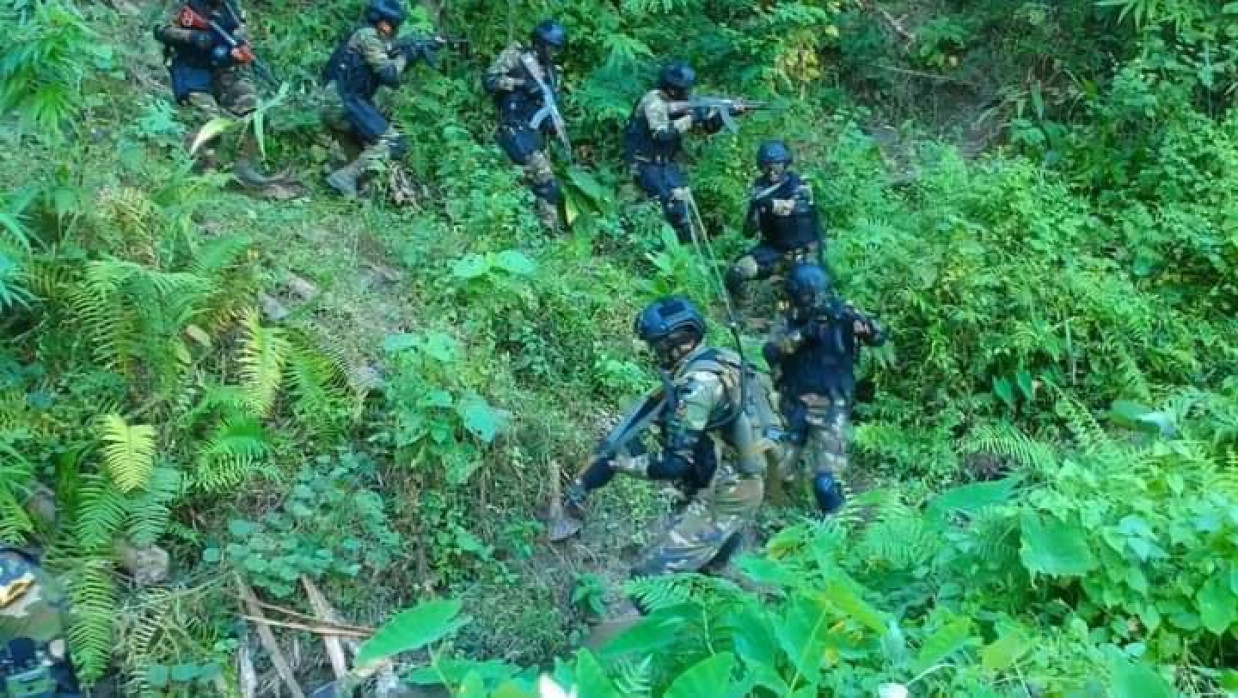
The interview provides an account of the harsh realities of combat operations as experienced by Bangladeshi troops serving in the Hill Tracts. Thick jungle terrain, hilly landscape, underdeveloped infrastructure, and prevalence of malaria created extremely challenging conditions for counterinsurgency operations. Soldiers were often deployed in remote locations and were vulnerable to ambushes and guerrilla attacks.
Hasinur Rahman remembers officers and jawans who sacrificed their lives fighting insurgent groups such as Shanti Bahini, UPDF, and KNAF. He feels that a lack of political support, inadequate logistics, and a lack of synergy between intelligence and military outfits have hampered many operations.
Hasinur believes Bangladesh's military needs major reforms to address future security threats. He highlighted that Bangladesh's military should focus on radar, anti-tank weaponry, guided missiles, air support, and coordination. Trust between officers and soldiers should be strengthened, along with the restoration of professionalism and the keeping of politics out of the command structure. When asked about the Hill Tracts conflict, he stated, "It's not a war. It was a long, drawn-out hybrid affair with insurgency, ethnicity, religion, organized crime, and foreign geopolitical meddling."
Terrorism, Intelligence Operations, and Political Manipulation
Other topics touched on in the interview relate to Bangladesh's counterterrorism efforts and the politicization of intelligence agencies. While discussing counterterrorism operations against groups such as Jamaat-ul-Mujahideen Bangladesh (JMB), Hasinur sheds light on the complexities of intelligence gathering, surveillance, infiltration, and raids. He also alleges that political masters politicized the security institutions and used them for political goals. In his interview, he states that agencies like DGFI fell prey to politicization.
"You mention in this interview a huge issue, whether some people were staging terrorism-related situations as part of counterterrorism stories and also whether phantom threats were being concocted to satisfy America's demand or fulfill local interests by cracking down on the citizenry", Hasanur further added. "These are serious allegations that you hear almost anywhere these days about governments misusing national security to entrench themselves in power."
Hasinur advocated for a standing, non-partisan intelligence agency free from political interference.
Aynaghar and Allegations of Secret Detention
I think the most visceral part of the interview is when Hasinur Rahman talks about his time in detention at "Aynaghar" or "Mirror House." Mirror house is kind of a buzzword for enforced disappearance and secret prisons in Bangladesh.
He talks about months of solitary confinement, mental torture, and being completely cut off from his family and society. Allegedly, these tactics were used so that dissidents could simply vanish without leaving Bangladesh to deal with international outcry over political assassinations. The interview really depicts it as institutionalized.
The most poignant moment, perhaps, comes when Hasinur speaks about his detention, when he was held in what is popularly known as 'Aynaghar' or 'Mirror House.' This is allegedly a place associated with abduction and secret prisons by the government of Bangladesh.
"Detention with no physical torture but starvation and mental harassment. Cut off completely from your family and the outside world. Stayed like that for months," he explains. He goes on to add that enforced disappearance through tactics like this leaves no trace. Countries can get away with silencing dissenters without having incidents like politically motivated murders on their hands.
Organizations concerned with human rights have made allegations about disappearances, extrajudicial detention, and torture in Bangladesh for many years. Governments have denied many of these claims, but accounts like Hasinur Rahman's keep these stories alive in public discourse. The General goes on to claim that these raids were carried out with the permission of foreign intelligence agencies, such as India's. These allegations are extremely contentious and politically charged, but reflect a current nationalist narrative in Bangladesh, which attributes outside influence to many internal security issues. Hasinur was detained at Aynaghar by himself, without his family being notified. The government just kidnapped him without their confirmation or any formal charges.
Civil-Military Relations and Institutional Reform
Restoring trust in state institutions is another major point that Hasinur addresses throughout the interview. Words like professionalism, patriotism, and upright leadership keep arising. He laments that morale is being broken by nepotism, corruption, and the politicization of duty. The officer wants military and police forces to be treated with respect, properly trained, and insulated from partisan favoritism.
Hasinur has also proposed assigning police officers to the regions from which they come. He said that local officers would be less corruptible because they would work under the watchful eyes of family, neighbors, and society as a whole. In addition, he wants all civilians to be prepared. He expects there should be reserve training programs across the country to build nationalism and civilian emergency preparedness. These ideas come from Hasinur's military mindset and fear of national weakness.
Political Inclusion and the Future of the Hill Tracts
A long-term solution will probably have to strike a delicate balance between upholding territorial integrity and acknowledging ethnic identity and constitutional parity.
Nationalism, Sovereignty, and Bangladesh's Strategic Future
However, for someone with such a militaristic perspective, Hasinur does not fail to mention that militarism will not bring peace to the Hill Tracts either. He suggests political dialogue with the tribal people, development on fair terms, and political representation. Holding parliamentarians accountable through monitoring bodies that include tribal representatives will lead to issues being dealt with objectively, he claims. Honoring their land rights, culture, education, and employment is considered fundamental.
It is refreshing to see such an acknowledgment that security-focused action cannot deliver all-encompassing results. The Hill Tracts conflict has never been a simple one - it involves historical injustice, identity politics, demographic shifts, developmental vacuum, and regional power plays.
Implicit in most of his answers throughout the interview is intense nationalism and a desire for sovereignty. Hasinur Rahman basically feels that Bangladesh needs a foreign policy it can hold its head high about, that allows it strategic autonomy, and that unifies it.
He repeatedly stresses his distrust of other countries and urges Bangladesh to focus on building stronger institutions within its borders that can withstand such divisions and foreign intervention. His remarks about India especially stem from fears that many Bangladeshis have of being politically, economically, and strategically overtaken by their colossal neighbor.
However, what is also exposed in such interviews is the dangerous hyper-nationalism that seeps through further.
Conclusion
A recent interview with retired Army Brigadier Hasinur Rahman, Bir Protik, paints a disturbing picture of Bangladesh's internal security challenges, past and present. Hasinur claims, among other explosive allegations, that certain armed indigenous groups are allowed to operate with impunity in the Hill Tracts because of Indian interference and support. He also alleges human rights violations and a lack of proper investigation into credible accusations against members of the security forces.
Hasinur speaks from personal experience as both a member of the armed forces and the intelligence community, as well as an alleged victim of political persecution. As such, his biases and lenses are those of nationalism, institutional pride and betrayal, and fear of foreign interference in Bangladesh's domestic affairs.
What stands out from his interview, whether one agrees with him entirely or not, is the validity of the following points: grievances of indigenous peoples of the Hill Tracts have not been addressed satisfactorily; insurgency and counterinsurgency have left a lasting mark on Bangladesh; politicization of security forces and interference in their autonomy will continue to be a problem; and Bangladesh-India relations will likely always be a touchy subject.
National security begins with justice, inclusion, professionalism, and accountable leadership. There cannot be peace in a Nation with all the guns and military you can ever amass if you do not have the legitimacy of politicians, integrity in institutions, and trust of the people in both.


0 Comments
LEAVE A COMMENT
Your email address will not be published