

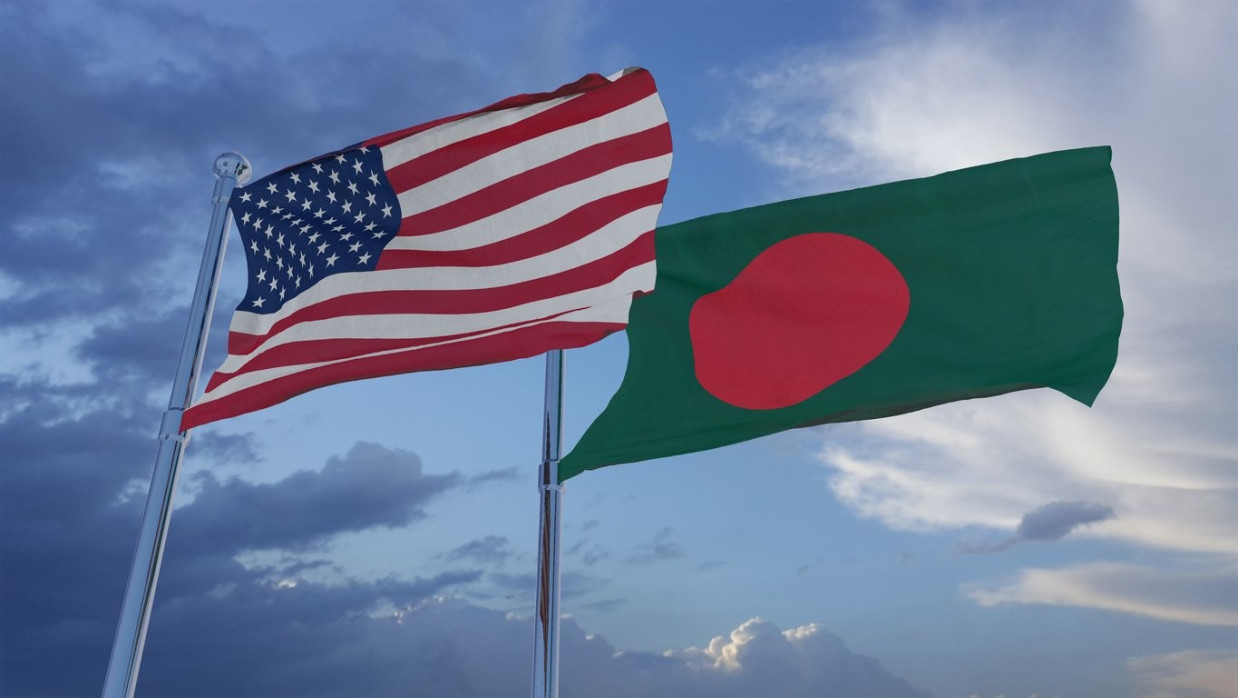
A Deal Signed in Haste?
It’s probably no exaggeration to say that Bangladesh signed the Bangladesh–United States Agreement on Reciprocal Trade (ART) at a crossroads in February this year. It is about to graduate from the Least Developed Country (LDC) status; never has the relationship with its external trading partners mattered so much.
The United States is Bangladesh’s biggest export market and leading source of foreign direct investment. It is a key development partner; there’s no way Bangladesh can afford to alienate Washington.
Did Bangladesh have to sign the trade deal on such unpalatable terms? Bangladesh signed the ART on the eve of a general election, and before a new government would take office to enact the deal. Those realities alone tell us the deal should have been discussed more widely, debated more rigorously, and delayed if necessary.
The Tariff Shock and Its Legal Undoing
Most specifically, however, looming retaliatory tariffs by the U.S. overshadowed the entire ART negotiations. These tariffs, put in place in April 2025, are known as “reciprocal tariffs” (RTs). Based on trade deficits between the U.S. and its trading partners, RTs were the clearest rejection yet of a rules-based multilateral trading system centered on WTO rules. Under those rules, WTO members cannot discriminate among trading partners (Article I: Most-Favored-Nation treatment). By taxing imports from select countries, such as Bangladesh, at higher rates than those from other countries, the RTs violated MFN principles. Additionally, the stated reasoning for such tariffs was flawed.
Trade deficits are not inherently bad, nor are they something to worry about. They can result from countries’ comparative advantages as well as from structural characteristics of global value chains. Finally, while imposing these tariffs on countries with trade surpluses with the US, the United States itself runs substantial trade surpluses in services, which were excluded from consideration in applying the tariffs.
At home, the USRT regime started to come apart at the seams. In February 2026, the US Supreme Court ruled that the tariffs had been imposed in excess of presidential authority.
A One-Sided Compact
At bottom, the ART is no free trade agreement in any meaningful sense. The deal Bangladesh signed is grossly asymmetrical: Bangladesh has conceded much and gotten little in return.
Bangladesh has committed to providing duty-free access for over 7,000 tariff lines of US exports to many of them right away. Meanwhile, Bangladeshi exports to the United States will be subject not only to existing MFN tariffs but also to an additional 19 percent duty on most items.
The upshot is a glaring imbalance: Bangladesh is transitioning to nearly zero tariffs on imports from the US while its exports will face a roughly 34 percent tariff burden in that market.
Even the text of the agreement itself underscores this point. There are many mandatory provisions saying “Bangladesh shall …” but very few that apply to the United States.
Reciprocal it is not. It’s a concession.
Fiscal Costs and Commercial Realities
Bangladesh immediately begins hemorrhaging customs duties under the ART.
The tariffs Bangladesh collects on imports from the United States plummet to almost zero. Meanwhile, tariff collections on Bangladeshi exports to the United States will skyrocket due to the additional duties agreed under the deal.
By opening Bangladesh to greater imports from the United States, the key focus is that Bangladesh would be required to buy billions of dollars of American agricultural commodities, energy products, and “Made in America” goods every year.
But these imports won’t necessarily be priced competitively. Bangladesh is able to buy many of these products from countries that can offer a lower price (and faster shipping time). Buy American means shifting procurement to the United States at the expense of higher costs for taxpayers and businesses, who would have to be subsidized as a result.
Should the trade policy be determined by economic common sense or simply by adhering to agreed-upon commitments?
Strategic Autonomy Under Pressure
Perhaps the most consequential aspect of the ART lies beyond tariffs and trade flows. The agreement introduces provisions that touch directly on Bangladesh’s strategic decision-making.
The deal also allows the US to reimpose tariffs if Bangladesh signs trade agreements with countries it designates as “non-market economies,” cooperates with certain nations on certain digital trade issues, or participates in industrial policy procurement practices.
This allows the deal to touch on matters normally considered domestic.
For a country that has long prided itself on maintaining balanced relations with multiple global partners, including the US, China, India, and the European Union, this represents a significant shift.
Regulatory Alignment: Reform by Compulsion?
The ART places considerable emphasis on regulatory reforms in areas such as labor standards, environmental compliance, intellectual property rights, and trade facilitation.
Many of these are reforms Bangladesh should want to make anyway. Stronger governance, better compliance, and higher capacity will help Bangladesh stay competitive in the long run.
But embedding them in the agreement this way is the issue. Bangladesh isn't encouraged to comply; they're strong-armed with threats of higher tariffs.
This introduces a coercive dimension to what should otherwise be a process of domestic reform and policy evolution.
Trade in a Geopolitical Age
The ART reflects broader geopolitical trends shaping global commerce. Trade agreements are increasingly evolving beyond tariffs and quotas. They’re being wielded as tools of geopolitical courtship.
For America, it’s part of a broader strategy to decouple from rival geopolitical powers by restructuring supply chains. Bangladesh stands to gain from being onboard such initiatives. But it could also get dragged into the battle.
China is Bangladesh’s top source of imports. It’s also a major driver of infrastructure development across the country. Bangladesh must be wary of any deals that limit its ability to do business with China, or other partners, for that matter.
Economic considerations are just one piece of the puzzle, then. There are strategic ones at play as well.
Not an FTA—and Not Without Consequences
From a legal standpoint, the ART does not meet the criteria of a Free Trade Agreement under WTO rules. It does not involve mutual liberalization across substantially all trade. Instead, it represents a one-sided opening of Bangladesh’s market.
This would also create a precedent. Other trading partners might come demanding similar access, arguing on the principle of non-discrimination. Bangladesh would find it difficult to say no, and consequently, its tariff and revenue base would be hollowed out.
Beyond Bangladesh–USA bilateral trade, such practices, if they become common, would themselves destabilize the multilateral trading system. Countries would start imposing tariffs contingent upon bilateral deficits, jeopardizing the entire system.
A Window for Reconsideration
The US Supreme Court’s ruling has created an unexpected opportunity for Bangladesh. With the legal basis of the reciprocal tariffs weakened, the urgency that drove the ART has diminished.
The agreement includes a provision allowing for a period before it formally enters into force. This interval should be used wisely.
Bangladesh has the opportunity to review the agreement, consult stakeholders, and engage with its US counterparts to address outstanding concerns. Such a review is not only prudent but also necessary.
Looking Ahead: Toward a More Balanced Partnership
An MFN Agreement would provide only a temporary solution. The ultimate goal should be a well-negotiated, balanced FTA.
A comprehensive, balanced Bangladesh-U.S. Free Trade Agreement has the potential to yield significant benefits for both countries. It would open markets, increase investment opportunities, and improve our commercial relationship on a more permanent basis.
But if we want to get there, we need to prepare now. Bangladesh will need to enhance its negotiating capabilities, expand its institutional knowledge, and achieve a domestic consensus.
Conclusion: Engagement Without Illusion
America will continue to be important for Bangladesh’s economy. It should engage with them and seek opportunities. However, it should engage with them realistically.
As it stands now, the ART raises many troubling questions about reciprocity, national independence, and future economic health. It’s a document that symbolizes a world no longer ruled by ideals, but by power.
The task for Bangladesh is not to disengage but to negotiate better, think strategically, and act with confidence.
The question, ultimately, is not whether this deal is acceptable.


0 Comments
LEAVE A COMMENT
Your email address will not be published