

Lessons from the Interim Government Period
Politics, institutions, and perception all play a role in Bangladesh's long-running debate over terrorism and extremism. It was commonly stated by officials of the interim government that Bangladesh did not face any major threat from terrorism. Yet subsequent developments, renewed aviation security alerts, and testimonies from policymakers and observers suggest that this narrative was incomplete and, at times, politically constructed. The central issue was not simply whether extremism existed, but how the label of “terrorism” was selectively applied ignored in some cases where it demanded investigation and misused in others against innocent individuals.
As Bangladesh once again confronts warnings about extremist risks at multiple airports and sensitive installations, reassessing that earlier period has become essential. A closer examination reveals how the politicization of security discourse weakened institutional responses and complicated the country’s long-term counterterrorism strategy.
The Narrative of “No Terrorism”
Statements from Advisors during the tenure of the interim government seemed almost designed to reassure, calm investors, and show that things were under control: one heard it claimed time and again that terrorism had been eradicated from Bangladesh. But it simply was not true.
Hard-line extremists continued attacks on shrines and harassment of Baul musicians and minorities. Recruiting continued on the basis of extremist ideology against apparently ever-lofter targets. Terrorism had not been eliminated in Bangladesh; its networks still existed, albeit underground, fragmented, or mutated.
When governments claim publicly that something doesn’t exist, the agencies that are supposed to be countering it often don’t pursue information on it very aggressively. Intelligence networks don’t share information. Police lose focus. Early warning signs are missed. Denial becomes a breeding ground.
Airport Alerts and Renewed Security Concerns
Suspicious baggage warnings announced at several airports across Bangladesh last week indicate that our intelligence agencies have understood that the extremist threat hasn't gone away yet. Airports are seen as high-value targets by terrorists everywhere - symbols of economic power and national pride.
That this warning had to be issued again shows that our leaders need to understand something else: security challenges transcend party lines and require sustained attention, not to be bogged down by partisan grandstanding. It's time our intelligence agencies are allowed to operate independently from politics.
The contrast between earlier assurances of safety and current precautionary measures highlights the need for transparency in communicating national security risks to the public.
Allegations of Mass Arrests and Wrongful Incarceration
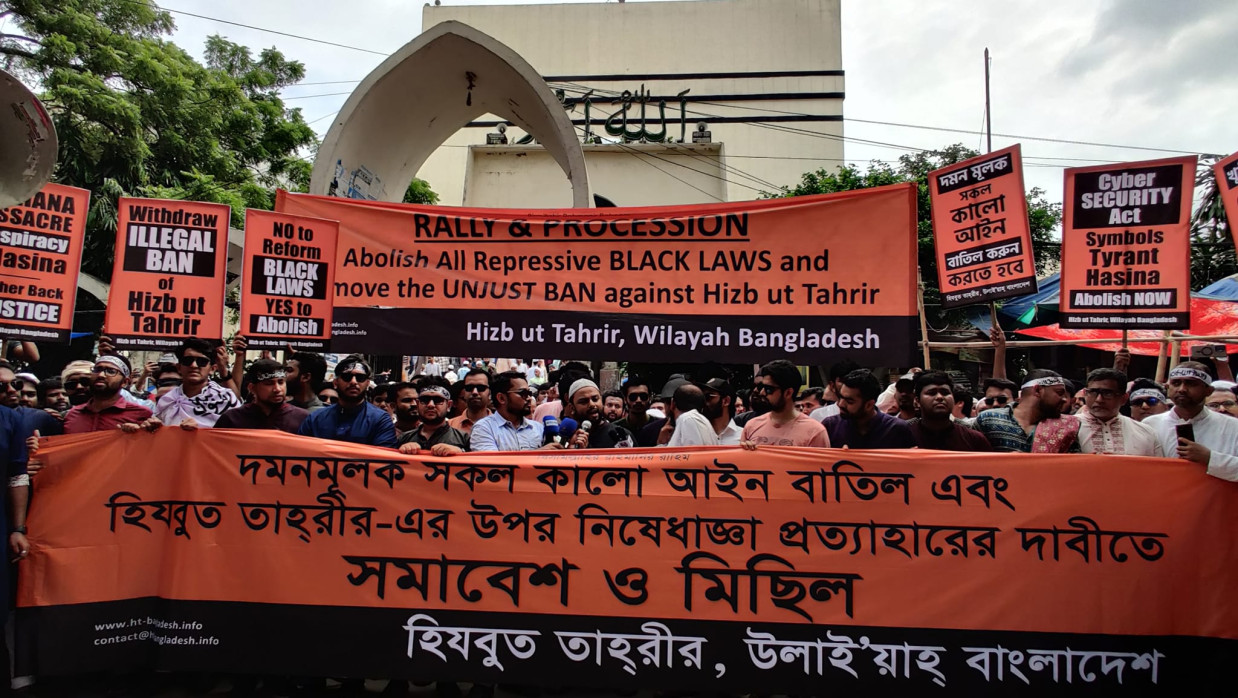
There was widespread belief that many of those arrested were targeted for political dissent and had no links to security threats. A few hardliners had reputations established under previous governments, mostly during Sheikh Hasina’s regime, for hounding people, and this created a belief that anti-terrorism laws were abused to exert political pressure.
During the interim government period, the release on bail of many of these detainees reinforced suspicions that earlier arrests lacked evidentiary foundations. While judicial safeguards ultimately corrected some injustices, the prolonged detention of innocent individuals inflicted lasting social and economic harm on families and communities.
The misuse of counterterrorism legislation in this way weakens both democratic institutions and genuine security operations. When citizens lose confidence in the fairness of enforcement mechanisms, cooperation with law enforcement declines, making it more difficult to identify actual threats.
Allegations of Leniency Toward Extremist Groups
At the same time, the interim government came under fire from analysts who claimed it released suspected militants without any follow-up investigation or monitoring. Those releases carried out within the parameters of the law were also, at best, inconsistent with sound policy.
Building confidence that our counterterrorism efforts are effective does not rest on arrests alone. Openly pursued investigations, fair prosecutions, and, if necessary, subsequent monitoring also play an important role. If we believe someone is a terrorist threat and release them into the community, we should have to explain ourselves to the people (and more importantly, ourselves). Continued double-speak harms our domestic and international message.
Bangladesh has had a good track record of fending off organized attacks. Let’s not screw it up.
Attacks on Religious and Cultural Communities
Continuation of attacks on mausoleums, Bauls, and minorities during the interim period indicated another shade of extremism, which was often ignored as isolated incidents or orchestrated sporadic outbursts by unruly mobs. Patterns, however, showed signs of deeper indoctrination.
Bangladesh's multiculturalism was epitomized through its Sufi orders, folk culture, and histories of religious harmony. Attacks on these foundations were not just attacks on buildings and artifacts but against what creates Bangladeshiness.
Accepting that orchestrated attacks on cultural communities do not fall within the shades of extremism allows us to normalize bigotry.
Media Narratives and the Politics of Classification
The media's framing of incidents also affected public perceptions of extremism. Cases with ideological dimensions were sometimes classified as “mob violence,” which masked potential connections to organized extremist cells.
Ideological motives are not responsible for all acts of violence. However, consistently downplaying the significance of coordinated attacks could one day stop policymakers from recognizing genuine threats. Journalists who hold security agencies accountable play an important democratic role.
Quality journalism will help build trust between the public and government while preventing national security from becoming a partisan talking point.
The Need for Independent Investigations
Authorities should order impartial probes into allegations that officials have arbitrarily freed suspected extremists and wrongfully detained innocent civilians believed to be extremists. These probes should not be politicized witch hunts, but opportunities for accountability and institutional learning.
Finding out if arrests were politically charged, if attacks against minorities were allowed to slide, or if extremist cells were taken too lightly will help shape better policies down the road.
Holding people accountable isn't a sign of weakness.
Toward a Credible Counterterrorism Framework
Bangladesh has entered yet another decisive phase in its battle against extremist violence. Recent events are a reminder that we cannot afford to either downplay threats or misuse counterterrorism rhetoric for political gain, as we learned during the interim government regime.
Security measures and investigations into attacks targeting cultural minorities and the religious establishment must be transparent, fact-driven, and above political influence. At the same time, democratic institutions and civic rights must ensure that citizens cannot be arbitrarily arrested and charged with militancy without evidence.
If we do not succeed in earning people's trust in our democratic institutions through our approach to security, but instead undermine them, we will have failed not only to end militant extremism but also to restore trust and maintain our legacy of pluralism and tolerance.

0 Comments
LEAVE A COMMENT
Your email address will not be published