

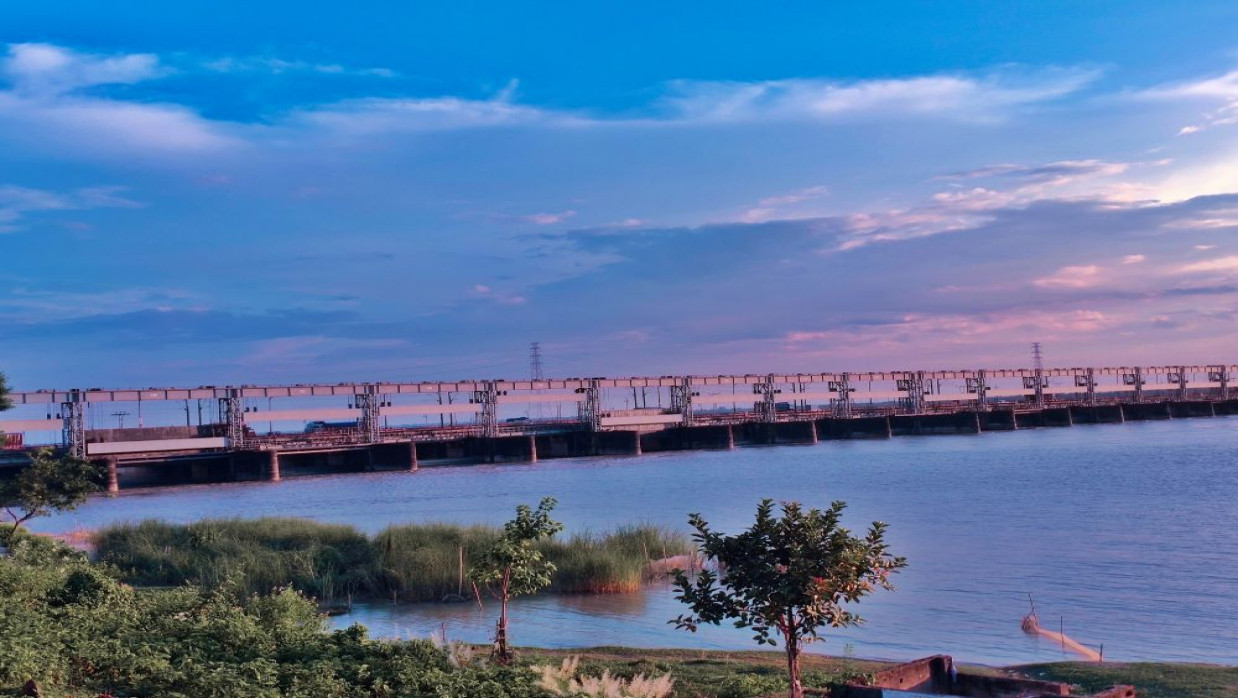
The region of South Asia is not on the verge of a water crisis; it is in crisis. What has not only changed but also changed character is scale. Water is no longer a mere environmental issue, but rather an outcome of a strategy that defines power, security, and survival within the region. It is now strategic, political, and immediate. The rivers in the region are gradually becoming a tangle of power, sovereignty, and survival, as climate change is quickly shaking up long-held hydrological assumptions. However, the systems of governance are mostly unchanged, based on old treaties, disjointed institutions, and a chronic unwillingness to view water as an ecological system rather than a national resource.
This strain is the clearest in Bangladesh, the lowest-lying country in the Ganges-Brahmaputra-Meghna (GBM) basin, and one of the most climate-vulnerable countries in the world. In this case, the intersection of upstream decisions, climate variability, and institutional inertia results in acute consequences. The 2022 floods in Sylhet and Sunamganj were not only serious but systemic.
According to the Government of Bangladesh's Ministry of Disaster Management and Relief and the United Nations Office for the Coordination of Humanitarian Affairs (UN OCHA) situation reports (June–July 2022), almost 2 million individuals were affected, and over 200,000 houses were destroyed or damaged. Large portions of the Haor basin, which plays a crucial role in national food production, were under Unbiased evaluations, which support the magnitude of the disruption. According to the World Bank Bangladesh Climate and Disaster Risk Profile (2023 update), such floods are more frequent, more intense, and more spatially clustered. The upstream rainfall surges and the shifting dynamics of the monsoon are the causes. Similarly, studies by the International Center of Integrated Mountain Development (ICIMOD) indicate that intensified precipitation in the eastern Himalayas is raising the risk of abrupt downstream flooding in the GBM basin.
These happenings are not to be seen as single tragedies. These are initial signs of a more profound structural change in the water systems in South Asia. What is seen as a natural disaster is increasingly the result of compound risk, in which climate variability, upstream interventions, and governance gaps interact.
The consequences are far-reaching. The water crisis in South Asia is no longer a matter of dealing with scarcity or sharing abundance. It concerns dealing with uncertainty in a politically disunited and ecologically interdependent area. In the absence of a major shift toward cooperative, adaptive, and regionally based policy frameworks, water will be less and less a source of life and more a source of instability, intensifying livelihood insecurity, aggravating interstate tensions, and revealing the constraints of the extant governance regimes. This is not an exception. It is a foretelling of what is to come.
A Case Study of Teesta: Political Paralysis
When a river takes the structural flaws of the South Asian water governance, it is the Teesta. To this day, the much-anticipated water-sharing accord between India and Bangladesh has been elusive after years of bargaining- stuck in the rut of political indecisiveness and institutional fragmentation.
The Teesta, which originates in the eastern Himalayas and drains into northern Bangladesh, is a lifeline for the agricultural sector of the Bengali regions of Rangpur, Nilphamari, and Lalmonirhat. However, during the dry season, the river drops drastically. The Bangladesh Water Development Board (BWDB) data shows that in the dry season, the flows at the Dalia point have often been less than 500 cubic feet per second (cusecs) - a level that is considerably lower than the estimated minimum required 4,000-5,000 cusecs to support irrigation and ecological balance.
The effects are direct and dire. Farmers are forced to transition to groundwater irrigation at the expense of surface water and higher production costs, while promoting the loss of aquifers. The intensity of cropping decreases, and livelihoods are more vulnerable. Research published in Water Policy and regional studies by the Institute of Water Modeling (IWM) in Bangladesh has reported the disproportionately negative impact of reduced Teesta flows on smallholder farmers, intensifying rural inequality.
But the continuance of the impasse cannot be ascribed to hydrology alone. The Teesta controversy is indicative of a more fundamental governance issue- the boundaries of bilateralism in a politically stratified federal environment. Though there has been consensus, in principle, between India and Bangladesh on interim sharing formulas (saidly 50:50 during lean seasons), the implementation of these formulas has been blocked by internal politics in India, particularly by the state government of West Bengal.
This reveals a severe structural deficiency: transboundary water diplomacy in South Asia is a nation-level activity but is often inhibited by subnational politics. The lack of institutional mechanisms to arbitrate these scales has created a form of policy paralysis.
The wider meaning is drastic. When even a relatively small river such as the Teesta cannot be managed successfully through bilateral negotiation, the future of larger, more complex river systems under climate stress seems increasingly unpredictable. The Teesta is no exception — it is an admonition.
The Haor: Hydropolitics and Survival daily
Although the policy debate revolves around interstate negotiations, the actual effects of water governance failures are seen at their fringes, i.e., in areas such as the Haor wetlands of northeastern Bangladesh.
The Haor is a special socio-ecological system: a seasonal floodplain that turns into a large inland sea during the monsoon and subsides, exposing productive agricultural lands in the dry season. This cycle supports the livelihoods of millions of people, especially via the production of Boro rice, which helps to supply substantial food to the Bangladesh nation.
This balancing act, however, is getting strained. Over the last few years, the Haor has been affected by premature flash floods, usually triggered by heavy rainfall in the Indian state of Meghalaya combined with local precipitation. These floods come earlier than anticipated- at times in late March or early April- devastating crops a few weeks before harvest.
The magnitude of the effect is astounding. Boro rice (around 0.8 million tons) was lost to the 2017 flash floods, and the 2022 floods impacted more than 1.2 million farmers and cost the country more than BDT 40 billion, according to the Bangladesh Ministry of Agriculture and post-disaster estimates of the World Bank and FAO. They are not fringe benefits; they are hitting the very heart of the national food security.
There is more than aggregate numbers. The Haor crisis is felt in terms of:
Debt cycles: At the beginning of the season, farmers take on enormous debts they have no means to repay once the crops are lost.
Distress migration: There is an increase in seasonal out-migration, especially among younger male laborers.
Gendered burdens: Women have to bear the shock in the form of unpaid labor, food management, and caretaking.
Informal adaptation: The households' precarious coping mechanisms include borrowing, selling assets, and diversifying labor.
Studies focused on World Development and Climate and Development have increasingly examined how these dynamics indicate the vulnerability of compounds in the context of environmental shocks interacting with structural inequalities.
Importantly, the Haor crisis cannot be interpreted as a natural phenomenon. Transboundary hydrology, weaknesses of local governance, and infrastructural constraints influence it. Embankment systems are poorly maintained, early warning systems are not yet effective, and coordination between the upstream and downstream authorities is very low. The Haor, in this sense, is a miniature of the water challenge facing South Asia as a whole: a place where ecological interconnectedness is juxtaposed with institutional discontinuity.
Policy Argument
Combined, the Teesta stalemate and the Haor crisis reveal a similar pattern. The water issues in South Asia are not primarily technical, but rather institutional and political. Not a lack of rivers, data, or engineering capacity in the region. What it lacks is a governance structure capable of addressing collective risks in an uncertain climate. It is here that the argument now needs to change — from diagnosis to prescription.
Hydropolitics to Hydrodiplomacy
Water crisis in South Asia has been commonly presented as a given factor- due to geography, population pressure, or climate change. This is a false frame. The crisis is not unavoidable, but is socially created and maintained within an institution.
Decades of approaching water through the prism of hydropolitics, a logic of control, allocation, and sovereignty, the region has done so. Rivers are partitioned, measured, and traded like fixed assets. This method might have been feasible during a period of relative hydrological stability. It is no longer viable.
Climate change has brought about a new reality, with uncertainty emerging as a characteristic of water systems. In that environment, inflexible treaties, opaque data regimes, and competitive postures are not only insufficient but also disruptive.
What is needed is a change of course towards hydrodiplomacy- a system that acknowledges mutual vulnerability and puts cooperation in place of control. It is not a normative aspiration but a strategic need.
There are precedents. Other basin-scale cooperation models, such as the Mekong River Commission, show that even politically challenging areas can build data-sharing, joint planning, and conflict-mitigation mechanisms. South Asia is yet to take a similar institutional step.
The barriers are well known: mistrust, power asymmetry, and domestic political constraints. Yet it is these circumstances that make it most important that there should be a structured cooperation.
Policy Priorities: What we have to do now
To ensure that South Asia does not end up in a future of water-based instability, the adjustments will not be gradual. The area needs targeted, actionable policy changes.
Establish a Water Data Compact of South Asia
One of the biggest impediments to cooperation is data opaqueness. There is no real-time data on river flow, rainfall intensity, or reservoir activities, nor is such information selectively shared. Neutral platforms, possibly with the aid of organizations such as the World Bank or UNESCAP, should require real-time data sharing under a regional water data compact. The findings of the research on global water governance (e.g., Water International, 202023) indicate that data transparency is a prerequisite for trust-building and risk management.
Raise the Level of Governance to Basin Governance
Rivers are not political in nature. But South Asia is still almost solely dependent on bilateral agreements. A multilateral institutional mechanism is needed in the GBM basin, which includes China, India, Nepal, Bhutan, and Bangladesh. In the absence of this, upstream and downstream externalities will not be controlled.
The case of transboundary water is highlighted in scholarly literature on transboundary water governance (Zeitoun and Mirumachi, 2008; later developments in Global Environmental Politics) as basin-wide approaches are more adaptive and equitable within complex hydrological systems.
Integrate Climate Adaptation in Water Treaties
The existing contracts are stuck on historic flow averages- a less and less reliable reference point in a climate-change hydrological environment. The water treaties of the future should no longer be based on fixed allocation models. Still, they must include dynamic flow scenarios, climate prediction (as described in the IPCC AR6, 2021), and explicit contingency responses to extreme events such as floods and droughts. In the absence of such adaptive provisions, the current and future agreements will become obsolete easily, and they will not be effective in the context of increasing climate variability and uncertainty.
Giving Priority to Vulnerability Hotspots like the Haor
South Asian policy frameworks remain mostly driven at the national or regional level and fail to address the realities of localized vulnerability. The Haor basin in Bangladesh is an example of a climate-sensitive livelihood system that needs a specific, context-specific intervention. Successful policy responses should thus focus on investment in fortification and preservation of embankment infrastructure, development and upgrading of early warning systems, and facilitation of climate-resistant agricultural activities appropriate to flood-prone locations. The evidence from the World Bank (2023) and the FAO indicates that localized adaptation responses can significantly reduce economic losses from disasters, especially in areas prone to frequent flooding.
Institutionalize Track-II Hydrodiplomacy
South Asian negotiations tend to be slow, politically restricted, and scaled down. In this regard, informal forums that bring together academics, policy analysts, and civil society players can be essential in promoting dialogue. Regional policy network evidence indicates that Track-II diplomacy is especially effective in depoliticizing technical matters, fostering policy innovation, and building trust over time. Such efforts should not be regarded as peripheral but rather institutionalized and incorporated into official policy-making procedures as complementary avenues, thereby making official negotiations more effective.
Conclusion: Cooperation Is No More
South Asia is at a crossroads of hydrology and politics. The region may move forward in the direction it is taking; that is, disunities, reactive, and more securitized, or it can acknowledge a deeper truth: water, in an era of climate insecurity, is a common danger that requires a common rule.
The red flags are already being raised. The Teesta is left open. The Haor is becoming increasingly unstable. Floods are intensifying. Stream flows are decreasing. These are not single problems; they are interdependent problems with a stretched governance model.
The price of doing nothing will not be assessed solely in economic loss. It will manifest in further inequality, increased tension between states, and the erosion of human security in the region.
It is not merely that a better policy is needed, but that political imagination is needed, a way of seeing beyond the limited views of sovereignty to a system of collaborative resilience. The rivers have always unified the people of South Asia. The question now arises whether its politics can follow suit.


0 Comments
LEAVE A COMMENT
Your email address will not be published