

Overview:
Bangladesh’s lifeline: A careful appraisal of all facets of port operations by a group of national advisors determined that, vis-à-vis regional competitors, Bangladesh’s gateway would remain severely handicapped if operations continued to be dictated by vested interests.
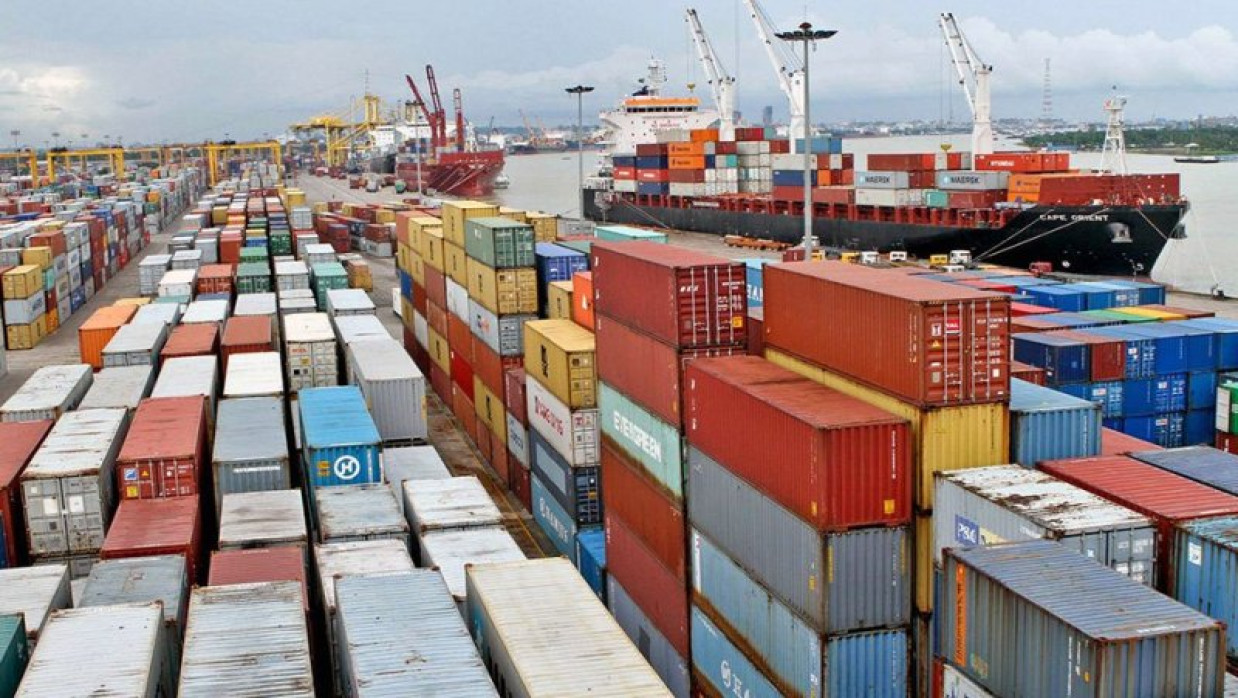
Factually, Chattogram port handles close to 90 percent of Bangladesh’s foreign trade; thus, it is our most strategic economic asset. Efficient utilization or abuse thereof affects every exporter/importer, factory operator, shipper and receiver of cargo, truck driver, customs broker, and retailer/grocer/consumer across Bangladesh.
Recently, clashes near the port have raised questions about the nexus between unions, companies, political influence, and, unfortunately, newspapers! At face value, this appears to be a conflict between workers and management over contractual terms. Dig deeper, and you will find rampant allegations of extortionist rents being extracted from shipments worth millions of dollars each day.
You will also find opaque procurement processes, and most importantly, resistance to moving Chattogram Port into the professional era.
The Union Blockade:
It only takes a few individuals to mobilize dockworkers in Chattogram. For years, these unions have successfully boycotted shipments, held port-wide slowdowns, and exercised their right to strike to leverage their demands. In theory, these unions were formed by leftist/communist idealists with workers' best interests and protection of national assets in mind.
In practice, many people believe that certain union leaders have grown elitist and detached from the average worker they claim to represent. Critics point fingers at unions boycotting shipments during contract negotiations for transport syndicates and payment orders- purely to squeeze more money and power from operators and government.
Long story short- Labor becomes disruptive, operators pay union leaders to resume operations/port stays closed- labor gets wealthy, ensuring the next disturbance is just around the corner.
Few will deny that unions have a responsibility to protect worker rights. In a country where labor laws are weak and rarely upheld, unions serve as an important check on employers.
Nonetheless, when unions leverage voluntary work stoppages to squeeze millions of dollars from contractors, the public loses faith.
Case in Point: When was the last time you heard of Adamjee Jute Mills operating at full capacity? Left unchecked, labor movements contributed to the demise of what was once Asia’s largest jute mill.
Sound familiar? Today at Chattogram port, unions can force hundreds of workers onto the streets within hours. Operators are at their mercy.
Opaque Company Contracts:
Today, several large companies handle shipments at Chattogram Port. Containers arrive by ship or truck and are distributed through one of the six private container terminals.
Revenues earned from terminal rentals and handling charges are a powerful incentive to control activities at Chattogram Port. One such company, drawing nationwide criticism, is Saif Powertech (often referred to as Saif Powertec Ltd), which was appointed to operate key terminals at Chittagong Port (now Chattogram Port), including the New Mooring Container Terminal (NCT) and Chittagong Container Terminal (CCT).
In 2015 and later years, it was alleged that breaches of the Public Procurement Act and Rules occurred. There were also allegations that the tender terms were altered in the company's favor. CPA awarded contracts to Saif Powertec without open competitive bidding, instead using direct procurement. Concerns were raised that statutory regulatory clauses were structured to make Saif Powertec the sole competent operator, restricting competition.
Reports suggested the company benefited from political connections during the previous Awami League government, which helped them secure, retain, and extend their management contracts.
Despite the controversies, Saif Powertec has been a dominant operator, handling around 58% of containers at Chattogram Port and managing operations at Mongla and Pangoan ports. As of late 2024 and mid-2025, there were ongoing debates about extending their contract while the government sought to appoint international operators.
Fast forward to today, and you will find numerous accusations against government and company officials- all coming from unsourced persons. However, in the court of public opinion, lack of documentation equates to wrongdoing.
Either way, transparency in procurement is key when doling out contracts worth millions. Contracts are normally awarded for a maximum of five years with scopes for renewal upon re-tendering. Without enforcing re-tendering intervals, one company/individual operator can essentially control labor unions, shipping agents, trucking syndicates, and yes- politicians.
Many proponents of keeping current operators in power cite three key reasons: technical expertise, timely operations, and the avoidance of congestion.
There is wisdom in all of the above; however, no one likes to be kept in the dark. Unless someone can provide empirical evidence for these claims, healthy skepticism will remain.
If allowed to continue unabated, operators, subcontractors, transport syndicates, and middlemen will soon depend on income from port activities, thereby maintaining the status quo. Attempting to rebid segments of port operations = less money in their pockets= protesting like hell!
Media Mills:
Whether you read Prothom Alo or Jugantor, or tune in to channels 9 or 24, the media has immense power to shape public opinion. Issues at Chattogram port can easily be spun from patriotic defenses of our sovereign assets to corporate-greed narratives.
Opponents of privatizing select terminals/leasing segments of port operations have systematically generated public pressure via newspapers, television, and Facebook groups/influencers. Reports/articles surfacing regarding job losses/corruption are enough to instill fear- even if the issue at hand is purely commercial.
On the other hand, rallies in support of “Protecting Bangladesh from India” conveniently ignore how much money is at stake for these companies should foreign operators be allowed to manage select terminals.
News consumers are left to decide what narrative they believe. The problem is, you have biased commentators on both sides pushing agendas.
Either way you slice it, “something” is fishy at Chattogram port.
Shipping Adviser General Shakhawat Doesn’t Hold Back
Shipping adviser General (retd) Shakhawat Hussain made headlines a few weeks ago when he said powerful people used to extract crores of taka every day from the Chattogram Port, once dubbed the country’s gateway. “They (powerful people) made Chattogram port their ATM,” he said. This explosive statement shed light on rampant illegal/extortionate payments demanded at the port on nearly every transaction. From berthing a vessel to releasing containers, an “industry” of informal payments has plagued port users/shipping agents/civil society alike for decades.
Shakhawat went on to claim rent seekers siphoned off nearly $600 dollars per container handled at port- a conservative estimate if you ask many exporters/importers. Millions of containers pass through Chattogram Port annually. Do the math- that’s hundreds of millions of dollars drained from the Bangladesh economy every year.
Anti-Corruption drives have been underway to nab culpable officials within the port directorate and major contractors, but justice has been slow to reach the public's view.
The Lease:
Last month, tensions rose when operators announced they would lease Chattogram’s New Mooring Container Terminal (NCT) to an international terminal operator for the next 10 years. Union leaders called an indefinite work stoppage- bringing over 90% of the country’s trade to a grinding halt!
Containers piled up at inland depots/yards- trucks waited days to offload- and goods valued at over 10 billion taka remain stranded in port.
No leasing will be signed with DP World during the current interim government's tenure
Professional operators run the most successful container terminals worldwide. Automated systems, advanced technologies, and performance-based contracts ensure your cargo moves faster at lower costs when handled by these firms.
Everything from crane productivity to vessel turnaround times is measurably higher at professionally run terminals. Bangladesh stands to benefit significantly by bringing these companies on board.
Under immense pressure from union leaders/radicals, last week, the Executive Chairman of the Bangladesh Investment Development Authority (BIDA), Chowdhury Ashik Bin Harun, announced that no leasing agreement for the New Mooring Container Terminal (NCT) at Chattogram Port will be signed with the Dubai-based global operator DP World during the current interim government's tenure.
Fear mongering and false propaganda that foreign operators will take jobs/runover Bangladeshis like machines are unfair accusations that have been leveraged time and time again to prevent progress.
Bangladesh Navy Ships Barricade Port:
Ironically, the New Mooring Container Terminal is operated by the Bangladesh Navy. As tensions continue to escalate, naval ships were dispatched to block the port entrance, preventing dry cargo from leaving.
Economic Losses:
In times like these, businesses suffer. When the port stops moving, containers don’t arrive on time. Exporters face order cancellations/garments shipments are delayed- forcing many to resort to expensive air cargo options.
Importers face demurrage fees, factory shutdowns, and production losses. Ships aren’t coming in fast enough- trucks can’t move containers out. Fear merchandise will spoil or arrive damaged. The economic ripple effects are devastating.
Bangladesh Needs this Port to Thrive:
Bangladesh must involve international experts who can professionally operate the Chattogram port without politicizing it and without leaving room for corruption. The Bangladesh government needs to show political will to end this controversy before it escalates beyond its control.
To increase exports/additional manufacturing, we must have ports willing to service the increasing amount of cargo. When ports across the region offer competitive, transparent gateway fees, we cannot fall victim to selfish individuals who care more about the next buck than Bangladesh’s reputation abroad.
So long as these controversies persist, international shippers will think twice before sailing to Chattogram and may very well begin diverting ships to nearby regional competitors.
Bangladesh cannot let that happen.


0 Comments
LEAVE A COMMENT
Your email address will not be published