

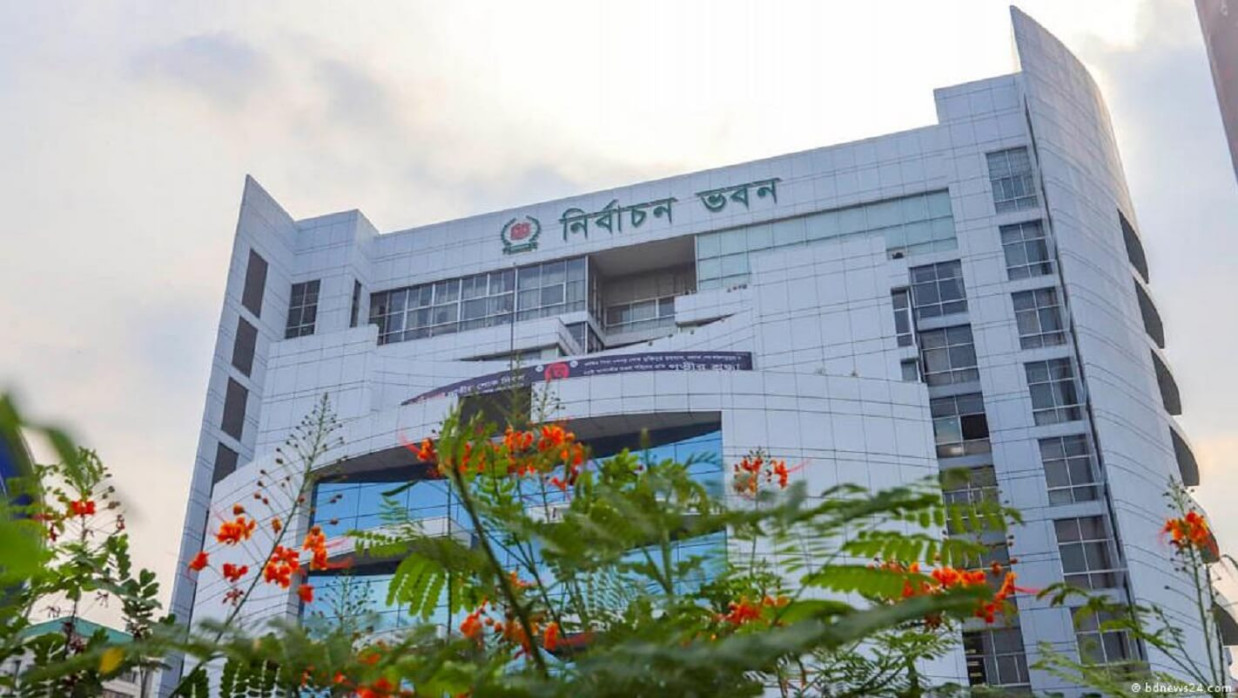
As Bangladesh hurtles toward election day, the air has once again turned thick with suspicion, accusation, and noise. Instead of sober debate over policy, reform, governance, and vision, there is shouting. Abuse was hurled not as an argument but as a distraction. Volume substituted for logic. Distrust trumping dialogue.
Bangladesh politics has been here before. What is different this time is the growing chorus of voices openly challenging the sanctity of the Election Commission (EC) and the state machinery around it. Criticism is no longer the sole domain of one opposition bloc, nursing old wounds and seeking revenge. BNP. Jamaat-e-Islami. The National Citizen Party (NCP). Minor outfits. Voices across the spectrum are raising varying fears about one question: Will the Election Commission be able to ensure a neutral election?
Debate turns to Decibels
Politics in Bangladesh has always been contentious, often bitterly so. But this electoral season feels like gunfire waiting to happen. The major parties used to at least meet across a table. Now they won’t speak to each other at all. Loudspeakers blare. Words calcify. Allegations fly.
This matters because elections aren’t supposed to be administrative exercises. They’re also about trust. When politics descends into performance over deliberation, institutions meant to adjudicate fairly will inevitably face pressure.
Institutions like the Election Commission. The EC is under siege from all sides these days. Some of the allegations are hypocritical. Every party says this when they know they’re going to lose. But some complaints against the EC are rooted in real structural fears about elections in Bangladesh since 2008.
“A Stage-Managed Election”
In his YouTube show, Political Commentator Gautam Das made an analogy that’s been doing the rounds in Dhaka political circles:
“I compared the government’s efforts to bring all stakeholders to power through the ballot box to a man trying to keep multiple mistresses happy at once. And this, my friend, is the inevitable result of a stage-managed election.”
There is a reason Gautam Das’s analogy struck such a chord. A “stage-managed” election that tries to bring everyone to power will eventually disenchant everyone. Conflict becomes inevitable, not because democracy equals chaos, but because engineering inevitably creates losers.
The fear many opposition parties have now is that this election is being “managed” or “stage crafted” not to serve voters, but to keep powerful interest groups with competing agendas contentedly voting Bangladeshis into power. The stage won’t collapse if a “managed” election is held. Far from it. But the election’s legitimacy will be gutted.
Who Watches the Watchmen?
Technically speaking, the Election Commission oversees Bangladesh’s national and local elections. It does not oversee university elections. Student politics. Street movements.
In practice, these lines have long blurred. Which raises the question: who watches the watchmen?
The Election Commission, appointed by the government in 2014, technically insulates it from charges of partisan continuity from the previous regime. But that doesn’t make the EC any less vulnerable to allegations of partisanship today.
Neutral doesn’t just mean where you come from. Neutral means how you act, too.
The opposition parties are demanding that EC neutrality extend to both the civil administration and law-enforcement arm of the state. After all, you cannot have a credible election with governance partners happy to slap demonstrators one day, and administer votes the next.
Opposition Doubts about the EC
Criticism of the Election Commission’s neutrality is bipartisan, which should tell you something about how deep distrust runs right now.
BNP holds dual citizenship meetings with the Election Commission
One item causing particular strife these days: dual citizenship. Specifically, rumors have spread that people holding dual citizenship may be allowed to vote or even contest elections. This has implications far beyond who gets to cast a ballot.
If true, this would represent both a constitutional crisis and a political earthquake in Bangladesh. The BNP secretary general reportedly met privately with election commission officials a few days ago over the dual citizenship issue. When the BNP Secretary General returned from his meeting, he gave a press statement, but it revealed little. It wasn’t just what he said. It was the very fact that a private meeting had occurred at all that triggered questions: why does one side get to whisper in the referee’s ear?
Secrecy isn’t conspiratorial if what you discuss is procedural. But in an environment rife with distrust, quiet diplomacy looks suspicious.
Questions Over July Referendum
Then there’s the elephant in the room no one is talking about: July and the referendum planned for July 26.
BNP may be quietly scrubbing their hands of the referendum to distance themselves from July. But erasing the memory of July, when you are also calling for elections to be fair and neutral, rings hollow. When your most potent political assault over the past nine months has revolved around legitimacy claims derived from July, suddenly forgetting July undermines your entire argument.
Awami League conveniently dropped off the electoral map after running the field for over a decade. Nobody’s sure who the Awami League is today. Which leaves people to wonder who the BNP are. Politics is in flux. Binaries have blurred. And the Election Commission is supposed to be the rock of stability amidst the chaos.
Competing Narratives on “Free Elections”
Every side has its favorite nostalgic electoral memory that defines its idea of a free election.
To Nahid Islam, a free election will not be like the past three elections. Instead, he says the election should look more like 1991. Conveniently ignoring all that came after the age of Awami League nostalgia.
Jamaat-e-Islami, meanwhile, cannot stand the thought of repeating 2008. Which means their idea of a free election looks dramatically different from how Nahid Islam imagines it. The point is, Bangladesh doesn’t have a consensus on what a “free and fair” election looks like. There never has been. Without that consensus, every side will have conflicting ideas of what they won’t accept. Which makes accusations easier to fling.
Avoiding Election-Time Manipulation
Can the Election Commission stop this spiral of mutual distrust? More importantly, should it try?
Statements won’t build trust. Legalism alone won’t cut it either. If the EC wants any credibility going forward, it will have to prove its neutrality extends beyond itself.
It will have to prove its independence from all vested interests loudly and publicly. That means decision-making processes need to be transparent. All parties need equal access. And both the civil administration and police will need a watchful eye to ensure neutrality is enforced top to bottom.
Furthermore, the EC will have to publicly disassociate from any and all political brokers operating in the shadows or spotlight.
Bangladesh will never please everyone when it comes to elections. And no one will be happy if the election is “managed” to keep everyone superficially appeased. Trying to keep all sides happy at once doesn’t ensure stability. It’s setting up the stage for total collapse.
A Lot Is at Stake
A lot is at stake these next few months. The upcoming election is about more than politics. It’s about the future of electoral politics in Bangladesh. Failure to clear this electoral trust deficit may not plunge Bangladesh into instant instability. But it will breed public apathy. Normalize corrosive cynicism. And silence the voice of democratic hope.


0 Comments
LEAVE A COMMENT
Your email address will not be published