

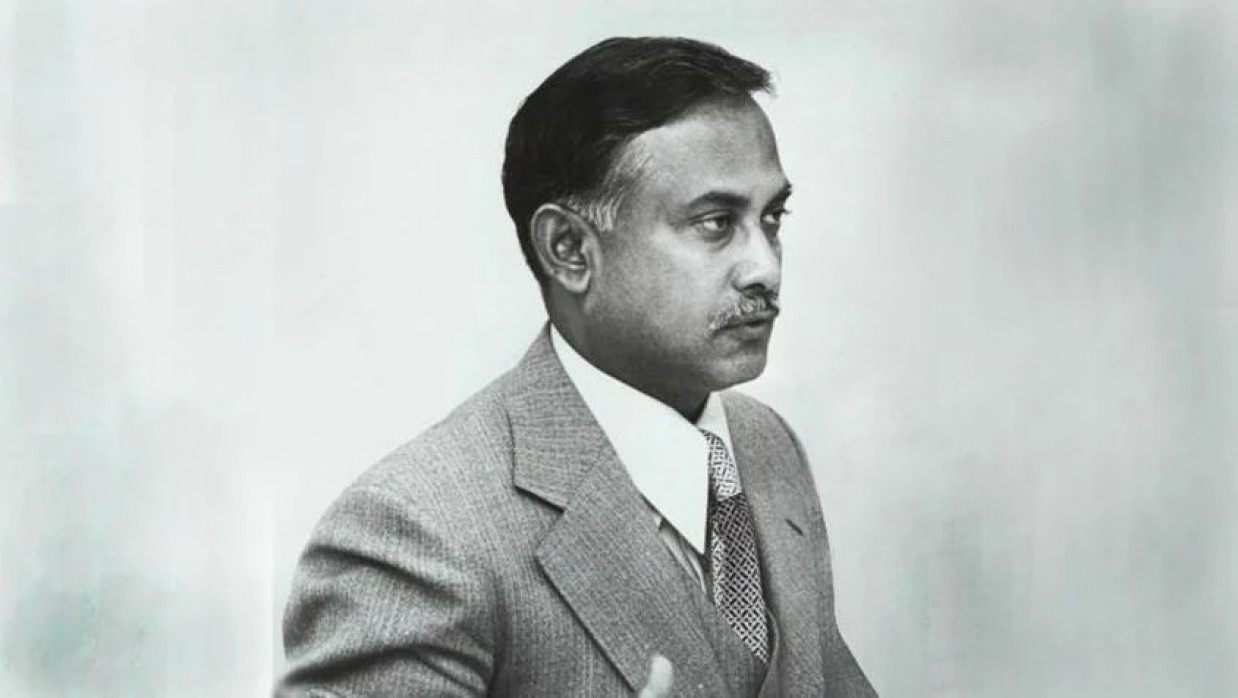
History will not judge the leaders by the paths that led them to power, but by the lines they chose not to cross. In the turbulent post-independence history of Bangladesh, Ziaur Rahman will finally be remembered not just as the military man who ventured into politics but as the one who formulated the doctrine of sovereignty as the guiding principle for the young nation that was on the verge of becoming dependent, ideologically subservient, and overshadowed by its neighbors.
Bangladesh was born out of resistance against domination, and independence was never intended to be a ceremonial act. However, by the mid-1970s, independence had become perilously thin, politically centralized, economically vulnerable, diplomatically limited, and psychologically unsure of itself in South Asia. Zia’s historical significance lies in his acknowledgment of an unpleasant fact: freedom can rot after it has been gained, especially when a small country coexists with a large and aspiring regional power. His answer was not a rhetorical flourish but a commitment to turn independence into substance.
This is why Zia’s legacy persists in being significant to a wide section of Bangladeshis, who are to this day apprehensive of being dominated by any region, and by Indian hegemony in particular. Zia is remembered as a leader who was adamant, at times in secret and at times in opposition to others, that Bangladesh was never to be controlled, directed, or incorporated into another nation’s strategic fold.
Sovereignty as principle, not posture
Zia’s concept of sovereignty was far from dramatic or rash. He did not maintain a policy of constant confrontation or make empty threats of defiance. On the contrary, he maintained a policy of structural independence: the difficult work of ensuring that no single foreign actor had too much influence over Bangladesh’s politics, economy, identity, or foreign policy.
The driving force behind this strategy was the following conviction: that a state which depends for its legitimacy, security, or survival on another power is not an independent state in the real meaning of the word. It was precisely this state of affairs that General Zia attempted to reverse.
Sovereignty, in General Zia’s definition, was not an emotion that needed to be expressed on occasions like anniversaries but a daily discipline in the conduct of business.
Bangladeshi Nationalism: Reclaiming Identity from Geopolitical Convenience
Among the most important and contested legacies of Zia was the development of Bangladesh nationalism. This was not an exercise in ideology, nor an expression of disdain for culture. It was, on the contrary, an answer to a real threat: the threat that Bangladesh’s identity might be determined by a larger neighbor, not just culturally and linguistically, but politically.
Through its focus on territorial citizenship, shared history, and state sovereignty, Zia’s vision of Bangladesh asserted that it was not a cultural appendage of eastern India nor a derivative of some wider civilizational tradition. This reimagination of Bangladesh was liberating for Bangladesh’s psyche—it was the “right to exist without needing recognition from the other side.”
For the critics, the doctrine was contentious. For the supporters, it was essential. Either way, it had a purpose. Identity became the first line of defense against the forces of hegemony. It grounded sovereignty in the nation’s collective consciousness and its borders.
Foreign Policy Reset: Breaking the Trap of Single-Axis Dependence
One of the most public ways Zia may have practiced an anti-hegemonic strategy was through his foreign policy reset. He took Bangladesh out of the tight, inherited patterns that had left the country vulnerable in the first decades of independence. He refused to allow one relationship to overshadow all the others.
It was under Zia’s rule that Bangladesh’s engagement with the Muslim world, non-aligned nations, and developing countries increased, as did participation in multilateral institutions outside of South Asia. This was no ideological adventure. This was risk management: a strategy of having options at all times.
Zia realized that if a neighbor is made indispensable to a country in economic, political, or military terms, sovereignty is undermined even if no agreement is broken. This is why his foreign policy was geared toward creating as many alternatives as possible so that a strong rather than a weak voice would be heard in international forums. It is no coincidence that during this time, Bangladesh’s standing in international circles improved.
Rivers, Not Rhetoric: Confronting Structural Dominance Through Water Diplomacy
Regional disparity is perhaps best illustrated in water resources. As a riparian state, Bangladesh’s existence is inextricably bound to water currents controlled by upstream states. Zia understood early in her presidency that water is more than just an environmental concern; it is a matter of sovereignty.
As a result of his term as president, Bangladesh began river negotiations with India regarding the Ganges and Farakka Barrage with a sense that a nation’s lifelines could not and should not be relegated to a technical aside or a gesture of good faith. Although a certain degree of imperfection was inherent in these negotiations, this stance was significant in and of itself. Zia placed water policy firmly within a domain of national security and would not institutionalize a vulnerability as a cost of regional cooperation.
For the majority of Bangladeshis who are now facing similar water conflicts, this position remains a hallmark of the leader as a symbol of principle and realism in foreign policy, as a leader who was tough but not dramatic, who stood up to others but did not cut himself off from the world, and who realized that sovereignty had to be asserted in the basics of everyday resources as well as in the rhetoric.
SAARC: Multilateralism as a Strategic Response to Regional Imbalance
Among Ziaur Rahman’s most visionary anti-hegemonic initiatives was not one of confrontation, but of conceptual innovation—the founding idea that would later take shape as the South Asian Association for Regional Cooperation (SAARC). Zia keenly understood a geopolitical reality: in a region marked by sharp asymmetries, bilateral negotiations often tilt in favor of the most powerful state, leaving smaller nations structurally disadvantaged and politically constrained.
His answer was to transcend bilateralism altogether. By embedding regional engagement within a multilateral framework, Zia aimed to dilute asymmetry through the discipline of collective norms, shared agendas, and institutional mechanisms. SAARC was envisioned as a forum where cooperation would be shaped through consensus, not coercion—a space where smaller states could speak without fear of unilateral dominance.
India’s initial hesitation to embrace SAARC only affirmed the logic behind its creation. For many Bangladeshis wary of regional overreach, SAARC stands as one of Zia’s most strategic legacies—an enduring testament to the idea that institution-building, in the face of imbalance, can itself be a quiet but powerful act of resistance.
Since 2024, Nobel Laureate Dr. Muhammad Yunus sought to rekindle this vision, advocating for a cooperative South Asia bound by shared development goals and mutual respect. Yet the enduring dominance of one regional power has rendered this vision difficult to realize. Against this backdrop, a growing number of Bangladeshis deeply conscious of India’s disproportionate influence look to Tarique Rahman, the BNP and other political parties to revive and advance Zia’s multilateral legacy. For them, restoring SAARC is not merely a diplomatic ambition; it is a strategic imperative for preserving sovereignty through solidarity.
Borders, Corridors, and Dignity: Resisting the Normalization of Ambiguity
Territorial problems involving corridors, enclaves, and maritime areas can also serve as tacit instruments of pressure in asymmetric relations. The approach Zia adopted in these matters was a single, consistent principle: “Ambiguity must not become permanence.” He rejected the notion that unresolved vulnerabilities were the price that had to be paid for regional harmony.
Whether in the border corridors or in maritime/island disputes, his diplomatic approach always stressed the need for negotiation on the basis of equality, reciprocity, and mutual respect. He wanted definitions not for provocation but for stability he who believed that a country that lacks definitions of its boundaries is one that can easily be leveraged.
Economic Self-Reliance as a Counter-Hegemony Strategy
Zia knew what too many policymakers have not or have chosen to forget: “Dependence starts at home.” A nation that does not have the ability to provide for its own people’s sustenance, employment, or the livelihood of its rural population will have its own vulnerabilities, irrespective of its claims of being independent.
This is why, when Zia talked about village-based development, agricultural productivity, large-scale canal excavation, and production-based politics, it was never purely a development strategy. It was strategic. Zia wanted to make Bangladesh less vulnerable to foreign pressure and less dependent on foreign aid by strengthening the domestic economy.
For those concerned about foreign influence, these policies were manifestations of their sovereignty becoming real rather than idealized.
Why His Memory Triggers Resistance Even Today
This sovereignty project was stalled in its tracks by the assassination of Zia in 1981. The next decade was characterized by policy U-turns, the resurgence of various dependencies, and mounting public concern about the loss of national independence, especially in relation to India. In this way, the memory of Zia did not slip into nostalgia but became a benchmark.
For many Bangladeshis, he symbolizes an era when the state had a strong voice, when national sovereignty was expressed without shame, when independence was more than just a ritualistic gesture. Such is the power of this memory as a form of political critique.
The Current Echo: “Bangladesh First” as an Incomplete Ideology
To grasp the present-day invocation of the slogan “Bangladesh First,” one must situate it within the broader historical arc of Ziaur Rahman’s sovereignty doctrine. For its proponents, the phrase transcends electoral rhetoric; it serves as a poignant reminder of a national vision left incomplete a continuation of Zia’s effort to assert Bangladesh’s autonomy in the face of regional dominance.
In the absence of Begum Khaleda Zia, Tarique Rahman current Chairman of the Bangladesh Nationalist Party (BNP) is widely regarded, rightly or wrongly, as the custodian of this ideological legacy. Yet the appeal of “Bangladesh First” is not rooted in personality, but in continuity. It reflects a persistent desire among many Bangladeshis to see their nation prioritize its own strategic interests, to define its priorities without deference or hesitation, and to do so under leadership unafraid to challenge external pressures especially from more powerful neighbors.
Conclusion: How History Will Remember Shaheed Ziaur Rahman
Shaheed Ziaur Rahman will not go into history as an ideal leader but as an indispensable one. He stepped forward at a time when Bangladesh stood at a dangerous crossroads: politically unstable, economically vulnerable, diplomatically isolated, and at real risk of slipping quietly into dependency. It was in that moment of uncertainty that the country found in Zia a leader of conviction, vision, and the courage to act.
Zia was a soldier-turned-statesman, marked by the scars of war and driven by the immense responsibility of rebuilding a broken nation. As one of the first officers to declare Bangladesh’s independence in 1971, he shaped his presidency by the same spirit of defiance and unwavering belief in his people's right to determine their own destiny. And in just five short years, he delivered. He reinstated multi-party democracy, reshaped the economy toward self-reliance, empowered rural communities through the “Gram Sarkar” (village government) initiative, launched massive irrigation projects to transform agriculture, and carved out an independent foreign policy that gave Bangladesh a stronger voice on the global stage.
Zia was not a populist in the theatrical sense, but his leadership resonated deeply. He instilled confidence in a generation that had witnessed war and chaos, offering not just promises, but purpose. His speeches were not loud or dramatic, they were steady, disciplined, and resolute. His actions spoke for him, centering on three clear principles: discipline, decentralization, and development. For Zia, nationalism was never about exclusion, it was about standing tall, about refusing to let a small nation be treated as a passive observer in a region dominated by giants.
To those who resist regional hegemony particularly the overbearing influence of India in South Asia Zia remains a powerful symbol of what principled and strategic leadership can accomplish. He showed the world that the dignity of a smaller state lies not in bowing to power, but in the clarity of its purpose and the strength of its resolve. His legacy teaches us this enduring truth: independence is not a moment in history it is an ongoing act of determination. It is not preserved by sentiment or ceremony, but through vigilance, courage, and national will.
This is why, decades after his assassination in 1981, Ziaur Rahman’s relevance continues to grow. His legacy is not confined to monuments or political slogans it lives on as a standard, a yardstick by which leadership is measured. In the hearts of millions of Bangladeshis who long for a sovereign, self-respecting, and self-reliant nation, Zia remains not just a memory—but a movement.


0 Comments
LEAVE A COMMENT
Your email address will not be published