

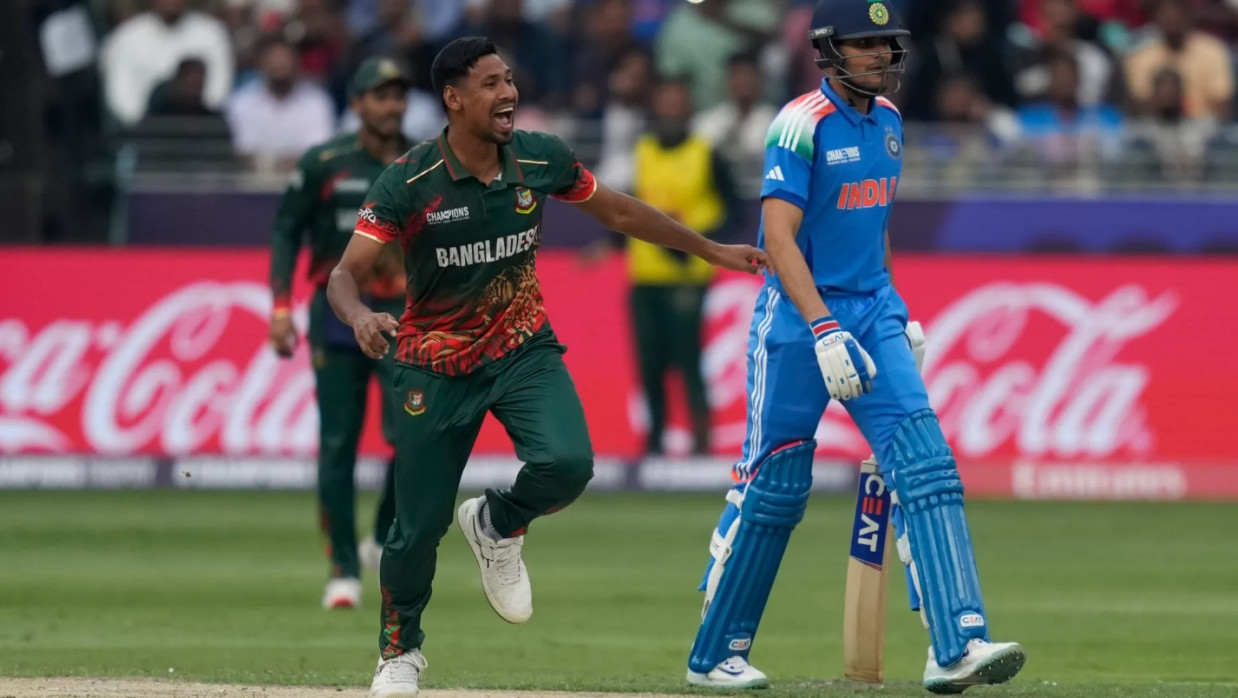
In South Asia, cricket is never just a game. It is memory, identity, nationalism, commerce, and diplomacy all rolled into one. When a Bangladeshi fast bowler is not allowed to play in the Indian Premier League (IPL) due to political reminders, religious bigotry, and bureaucratic obstruction, it is not just a sporting issue. It is a sign of the times, a reflection of the regional trust deficit.
The saga over Mustafizur Rahman’s entry into Kolkata Knight Riders (KKR) has been one such moment. What should have been a straightforward sporting transaction has turned into a public spectacle. Embarrassing Bangladesh, straining bilateral ties, and exposing the ugly truth about India’s anti-Muslim politics infecting public life.
Worse, it has endangered the reputation of one of India’s most globally admired cultural icons: Shah Rukh Khan, the Muslim co-owner of KKR, the reigning face of India’s pluralist past, who is now being made a pawn in India’s increasingly exclusionary present.
Mustafizur Rahman: Cricket Asset, Not Political Pawn
Mustafizur Rahman is not just a Bangladeshi cricketer. He is one of the world’s most sought-after left-arm fast bowlers, a cutters-master admired by leagues and teams everywhere. He has played in Australia, England, and India. He is a sportsman and not a politician.
Yet in this case, his signing with KKR was quietly delayed, questioned, and politicized. Whispered about in Indian media, his presence was made to look “undesirable” in ways that would be unfathomable for an Australian or South African player.
The reason? Not cricket, but identity.
Mustafiz is Bangladeshi and Muslim, two categories becoming targets in India’s right-wing political ecosystem. In today’s India, the mere fact of a Bangladeshi Muslim playing for a high-profile IPL team is enough to trigger online mobs, political pressure, and bureaucratic foot-dragging.
Cricket, which used to be a cultural bridge, is now being dragged into Hindutva-driven grievance politics trenches.
Shah Rukh Khan Caught in the Crossfire
No figure better represents India’s multicultural spirit than Shah Rukh Khan. A Bollywood megastar for three decades, Shah Rukh is India’s most recognizable Muslim icon, beloved by Hindus, Muslims, and millions worldwide.
KKR is not just his franchise, but part of his personal brand as a global cultural ambassador for cosmopolitanism, modern India, and cross-border exchange.
By letting Mustafizur Rahman’s induction become a political flashpoint, Indian authorities and extremist voices have placed Shah Rukh Khan in a lose-lose position: either cave in to bigotry or become the next target.
That is not an accident. Indian Muslim celebrities, entrepreneurs, and professionals have been quietly told “know your place” over the last decade.
That Mustafizur Rahman’s visa and participation became a question mark is not about cricket. It is about sending a reminder to a Muslim franchise owner that in India, political power now decides who belongs, not public popularity.
Sports Bureaucracy as Political Policing
Under normal circumstances, foreign cricketers joining the IPL get routine clearance from national boards and immigration authorities. Bangladesh has never stopped or delayed Indian players. Indian teams recruit Bangladeshi players every season without controversy.
What changed? India’s political environment.
The moment bureaucrats start hesitating on Mustafizur’s paperwork while greenlighting Western players smoothly, it sends a message to all: certain nationalities and religions now carry suspicion.
Soft discrimination becomes institutionalized not through explicit bans, but through ambiguity and selective enforcement.
For Bangladesh, a nation whose people have stood by India in every regional conflict and crisis in the last seven decades, this was humiliating.
Declining to Play in India: Why Bangladesh Was Right
Against that backdrop, Bangladesh’s decision to decline India's invitation to the ICC event was not emotional; it was strategic.
No sovereign nation should put its athletes in a position where their safety, dignity, and fair treatment are not fully guaranteed. Bangladesh was not punishing cricket. It was defending national self-respect.
If Mustafizur Rahman, an internationally respected sportsman, can be treated as a political inconvenience in India, what message does that send to Bangladeshi fans, officials, and diplomats?
The message is simple: You are welcome only when politically convenient. By simply walking back, Dhaka sent a message that partnership must be based on mutual respect, not intimidation.
The Damage to India–Bangladesh Relations
India and Bangladesh share one of the most complicated partnerships in South Asia. Deep cooperation on trade, security, and energy. Millions of families are linked across the border.
But India’s domestic political shifts have started spilling over into its foreign policy in recent years.
Anti-Muslim hate speeches, NRC-CAA anxieties, border shootings, and now cricket humiliations all have eroded goodwill in Dhaka. The Mustafizur Rahman saga is not isolated; it is the latest straw.
Bangladeshi citizens see the message loud and clear: India’s ruling ideology does not seem to distinguish between foreign Muslims and internal “enemies.” That is a dangerous path for India’s neighborhood.
Cricket as a Canary in the Coal Mine
Cricket has historically been South Asia’s safety valve. When politics failed, cricket kept the channels of communication open. India–Pakistan enmity, Sri Lanka’s civil war, and even Cold War rivalries were all defused through cricketing ties.
If cricket itself is now being turned into a casualty of ideological extremism, it means that something fundamental has broken in the subcontinent’s social contract.
Mustafizur Rahman is not the first, but a visible target in a long line of victims. For Bangladesh, it only confirms that no space is neutral in India anymore, not sports, not entertainment, not commerce. That should be deeply worrisome not just for Bangladesh, but for every neighbor of India.
What India Risks Losing
India still enjoys a rare reservoir of soft power in South Asia films, cricket, technology, and culture. But soft power dies when arrogance replaces respect. Driving away Bangladeshi goodwill does not weaken Dhaka. It isolates New Delhi.
Bangladesh is economically rising, diplomatically active, and geopolitically important. India does not need Bangladesh as much as Bangladesh needs India. Yet India, distracted by its own internal cultural wars, is blind to this new reality.
Conclusion: This Was Never About Diplomacy, but Dignity
The Mustafizur Rahman–KKR controversy will pass. It will soon be forgotten in the sports pages. But the scar it left on India–Bangladesh ties will not be easily healed.
This was never about a bowler or a franchise. It was about whether a Muslim athlete from Bangladesh is allowed to play in India without being made a political symbol. Bangladesh was right to walk away.
In South Asia, it is not just diplomacy that matters. Dignity does too. When one side stops respecting the other’s dignity, even cricket cannot save the relationship.
And when cricket breaks, the whole region should take notice.

0 Comments
LEAVE A COMMENT
Your email address will not be published