

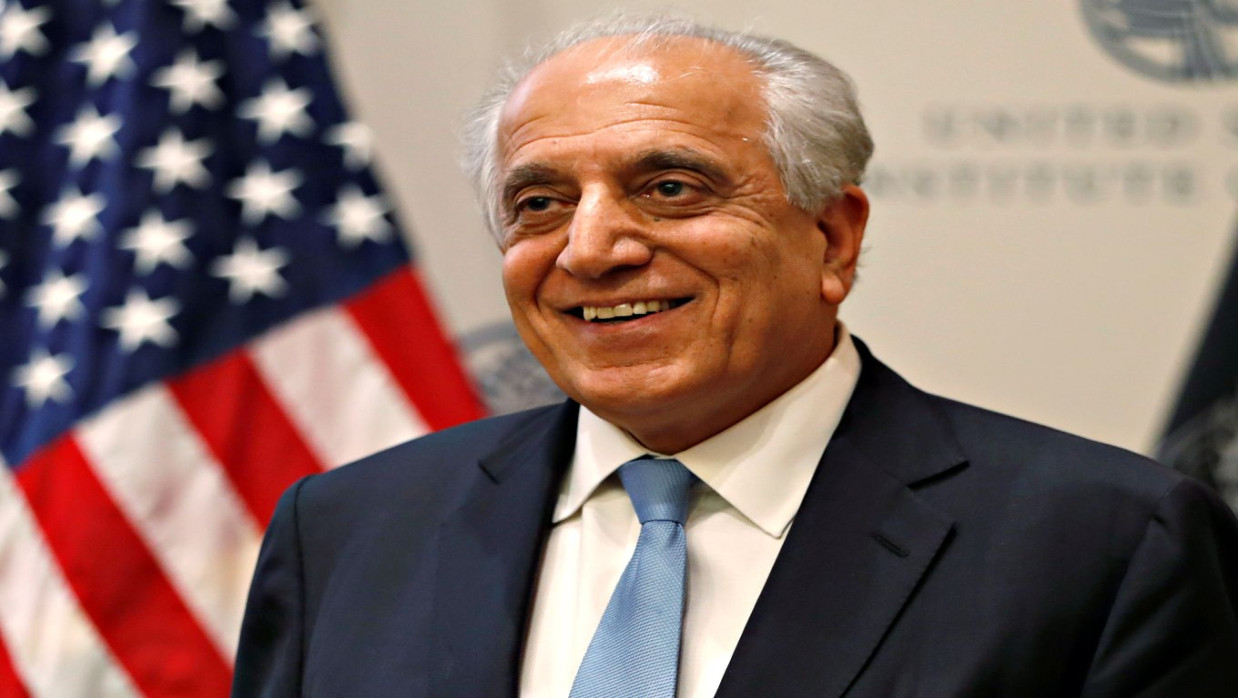
Zalmay Khalilzad’s January 2, 2026 interview with TOLO News offers less strategic insight than a revealing glimpse into how personal narratives can drift away from institutional realities. Commenting on Pakistan–Afghanistan relations and regional counterterrorism dynamics, the former US Special Representative struck a notably sympathetic tone toward the Afghan Taliban while adopting a critical posture toward Pakistan. In doing so, Khalilzad did not merely question Islamabad’s policies; he exposed the growing gap between his personal assessments and the hard evidence shaping current international consensus.
Khalilzad’s endorsement of the Afghan government’s approach as “rational” and “constructive,” particularly on the Tehreek-e-Taliban Pakistan (TTP) issue, stands in sharp contrast to facts on the ground. His suggestion that Taliban positions during recent talks were reasonable—and his advice that Pakistan should avoid politicizing trade—appear detached from Pakistan’s lived security experience. Even more striking was his proposal for third-party supervision to ensure both sides prevent ISIS-related terrorism, an idea that overlooks Pakistan’s sovereign counterterrorism framework and its proven operational record.
A key factor shaping Khalilzad’s commentary is his diminished relevance in contemporary US policymaking. Following changes in Washington, his influence has largely receded, overtaken by institutional positions articulated by the US State Department, the Pentagon, and intelligence agencies. These institutions, not former envoys, define America’s engagement on counterterrorism today. Khalilzad’s views, therefore, reflect a personal perspective rather than official US policy—a distinction that is often blurred but increasingly important.
His critical tone toward Pakistan also coincides with Islamabad’s renewed strategic engagement with Washington. Pakistan’s cooperation with the United States—particularly in counterterrorism against ISIS and ISKP—has intensified and is widely acknowledged within US security circles. Ironically, it is this very cooperation that undermines Khalilzad’s narrative. Pakistan’s actions against ISKP are neither rhetorical nor symbolic; they are operational, sustained, and measurable. Intelligence-led operations, cross-border interdictions, and high-value arrests have disrupted terrorist networks and prevented major attacks, a reality quietly recognized by international partners.
Khalilzad’s assertions further collide with independently verified international evidence. The UN Analytical Support and Sanctions Monitoring Team has repeatedly documented the presence of ISKP and other terrorist groups inside Afghanistan, highlighting their access to safe havens, training facilities, and foreign fighters. These findings are based on multi-source intelligence and mandated monitoring mechanisms, not political convenience. By downplaying or dismissing these UN assessments while amplifying Taliban assurances, Khalilzad undermines his own analytical credibility.
Equally problematic is the notion of third-party supervision over Pakistan’s counterterrorism efforts. Pakistan is a sovereign state with decades of experience in confronting terrorism at immense human and economic cost. Its fight against ISKP is not a matter of promises but of results. External oversight or mediation, particularly from third-world or non-stakeholder actors, is neither necessary nor acceptable. Pakistan’s counterterrorism posture is defined by action, not supervision.
During its engagements with the Afghan Taliban, Pakistan has maintained a rational, structured, and security-centric position—an approach acknowledged by host states facilitating those dialogues. Islamabad consistently emphasized non-interference, verifiable counterterrorism guarantees, and regional stability. These positions were not maximalist demands but minimum security requirements rooted in regional realities. Today, Pakistan’s standing in Washington rests on substance rather than spectacle. Decades of sacrifice, operational cooperation, and sustained engagement have reinforced its credibility as a counterterrorism partner. This is why Pakistan’s relevance in US strategic calculations has endured, even as individual interlocutors fade from prominence.
Viewed in this context, Khalilzad’s remarks appear less like balanced analysis and more like an attempt to reclaim personal relevance through politicized skepticism. By selectively questioning Pakistan while extending uncritical goodwill toward the Taliban, he risks misrepresenting the security landscape and distracting from evidence-based policy discourse. In an era where counterterrorism demands clarity, credibility, and institutional coherence, selective skepticism serves little purpose. Pakistan’s record speaks for itself, and no amount of rhetorical revisionism can substitute for facts on the ground.


0 Comments
LEAVE A COMMENT
Your email address will not be published