

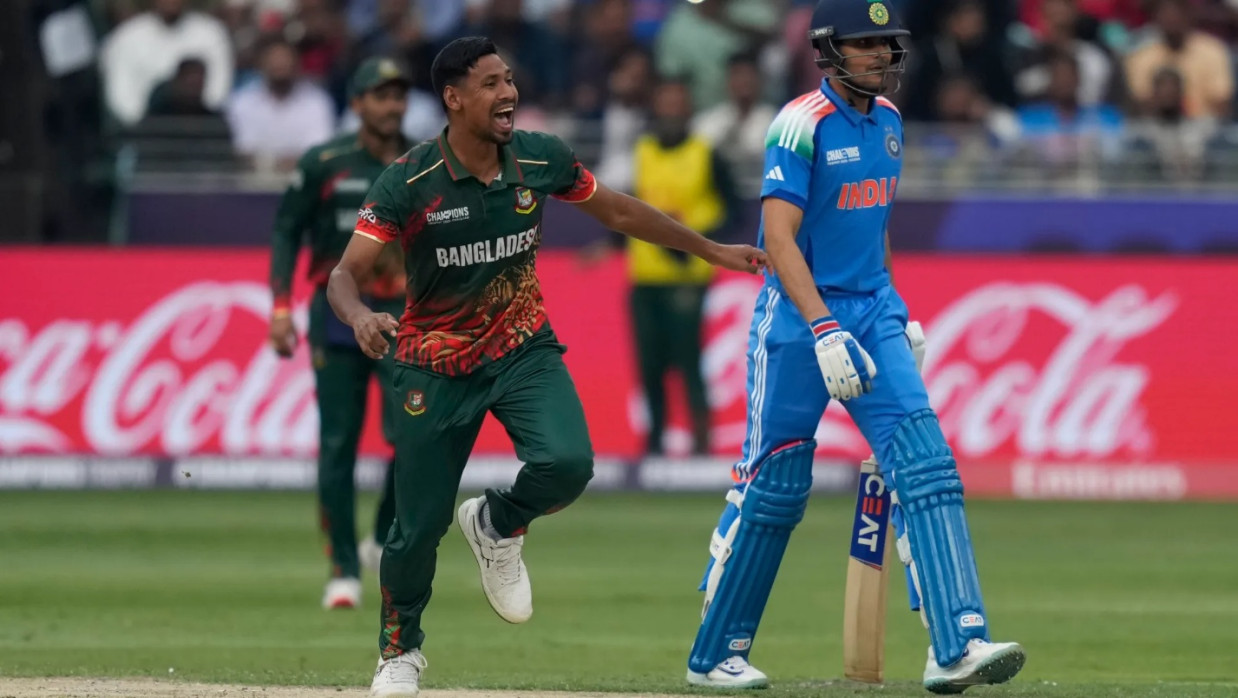
The T20 World Cup as Political Theater, and Not Simply Sport
The T20 Men's ICC World Cup has transcended being a mere celebration of sporting success. In the Global South, particularly in South Asia, it has become one of the most ardent expressions in this age. It is in this context that the realms of sport and the construction of the post-colony become impossible to disentangle. It is in this context that the T20 tournament has shown itself to be the most effective platform for infusing nationalist feelings and aspirations for a legitimate state through less than exciting sporting success. Any sporting match can instigate nationalist feelings in a matter of hours.
This is especially true in the context of South Asia, where cricket is offered as the terrain for the politically unresolvable. The rivalry between India and Pakistan is where this prototype is located, but over the previous decade, cricket between India and Bangladesh has played an ever-increasing role in this context. Matches are no longer merely acts of sportsmanship but acts of aggressive self-assertion or subjugation—and this is true for the World Cup too, which has become a terrain of exponentially increased significations.
It was within this charged political and cultural moment that the Interim Government of Bangladesh took a historic and courageous stand, choosing to boycott India’s cricket team and, in doing so, elevating the issue from the realm of sport to the domain of statehood and sovereign principle. What might have appeared, on the surface, as a sporting decision was in fact a deliberate assertion of national dignity signaling that Bangladesh would no longer allow symbolic arenas like cricket to be used to normalize imbalance or quiet acquiescence. This act transformed a cricketing gesture into an unmistakable statement of political maturity, self-respect, and sovereign resolve. This was an appeal to quiet strength and resolve, marking the end of compromise between spectacle and convenience. Indeed, it was a watershed moment of self-respect for the people of Bangladesh, which was undoubtedly an administrative decision that neither called for nor implied self-respect for its citizenry in a newly emerging nation, but was a call for self-respect of a state per se.
Hindutva’s Entry into Sport: From Cultural Pride to Political Instrument
The rise of the ideology of Hindutva, which has entered mainstream politics through the Bharatiya Janata Party, especially during the Modi regime, has reshaped the dynamics of the relationship among culture, history, and sports in Indian society. After cricket was perceived as a sign of a shared colonial past, it has now been commonly represented as a sign of the resurrection of civilization.
Politicians often overshadow an important game with their presence; winners attribute it to nationalism, while losers often resort to conspiracy theories and an unpleasant atmosphere. Playing ideology uses sporting activities to expand state power. The issue is not about nationalism but sporting activities being used as a moral ordering of the world, where India is placed on top of the heap. And its immediate neighborhood is always its permanent juniors.
India-Bangladesh: When the Boundary Becomes a Border
Bilateral Indian and Bangladeshi cricket matches carry an emotional charge because of their implications in the imbalances in their relationship, including trade relations, water resource sharing, border disputes, and press discourses. On the cricket field, the foregoing imbalances are encapsulated in appeals, last-over results, and audience reactions.
Indian television channels depict cricket matches as examples of Bangladesh's pride or lack of appreciation, while Bangladesh's successes are dismissed as accidents. It is these impressions that reinforce Bengali culture's ethnocentrism. Through cricket, equality can be symbolically realized in the sole arena where differences in geopolitical status are irrelevant.
Hegemony at Play: Soft Power with Hard Edges
India’s preponderance in international cricket administration is institutional and cultural. The Board of Control for Cricket in India wields unparalleled budgetary power, which affects not only tournament scheduling but also broadcasting rights and even future international tournament formats. This situation is justified on commercial principles, but its political dimensions are clear. If the power base is in consonance with the ideological belief in nationalism, soft power will harden.” Small cricketing countries in the South Asian subcontinent experience not only disparities in cricket talent but also marginalization within the power structure. Even the most innocuous cricketing issue is assessed through the Indian prism.
The Bangladesh Interim Government: A Quiet Assertion, a Loud Approval
This is an instance in which the particular stand adopted in the case of the Interim Government in Bangladesh, with the moral directions imparted under the leadership of Muhammad Yunus, has repercussions that go beyond mere policy statements. The overall stand of the Government has been one of restraint, of uprightness, in not being content with an unbalanced bargain, and this has struck a chord in the hearts of the people. The stand of the Interim Government was an instance of what was also desired in the case of the people in the country, which was the recovery of one’s self-respect without flaunting it.
Why the Public Responded so Strongly
There are a number of reasons why the public reacted with. The basis for support for the Interim Government is historical precedent. The mindset of the Bangladeshi masses has developed from situations in which it seemed that its priorities came second to the economy, borders, or even the expression of the nation through the media. Such instances escalated through cricket.
The Interim Government's claim to autonomy was perceived by the people as a return of their voice in the nation. The youth, who were mostly active on social media and loved cricket, supported this stand. It became crystal clear that Bangladesh did not fear the world standing up to them.
Indian Movements and the Backfire Effect
Ironically, aggressiveness from the Hindutva camp has proven counterproductive. Aggressive media discussions, politicized fan following, and ", shut up” can be seen to further agitate anti-Indian feelings not only in the politics of the elite class but also seep into pop culture. The intentions of the Indians begin to be doubted through the cricket memes, commentary, and the chants on the grounds, not out of hatred for the Indian people, but in reaction to the arrogance and the overreach. Thus, sport becomes the mirror that shows the limits of hegemonic engagement.
Regional Significance: The Crossroads of South Asia.
Political cricket within the hegemonic system may affect the prospects of regionalization in South Asia. Cricket may become a litmus test of inequality rather than a shared cultural heritage. Instead of forming a group, the smaller countries may opt for diversity. The implications of the above scenario extend beyond sports. When a cultural site is declared an ideological expression zone, diplomatic trust is bound to be affected. Regional cooperation, which was already fragile, is set to be challenged by the influence of power politics in sports and other forms of entertainment.
From Shared Sport to Ideological Arena: The Cost of Politicizing Cricket
Indeed, the increasing presence of Hindutva ideology within cricket pollutes ill for its future, both within the region and internationally. Since cricket would come to represent, not a collective sporting heritage, but a platform for ideologically expressing one’s supremacy, its intrinsic tenets of fairness, respect, and universality might come to be jeopardized. Since the infiltration of ‘majoritarian nationalism’ might come to permeate everything, beginning with its identity, its fandom, its media coverage, as well as its scheduling, cricket could easily come to realize that it is no longer a platform that represents the whole world, which it once did, as it might easily come to represent merely a ‘discriminatory festival.’ If, indeed, cricket’s very existence as a platform for international sporting activity were henceforth to be imagined as one that vindicated the supremacy of a particular ideology with no recourse for its opponents, it could easily come to realize that it has, ever since, been reduced, no longer a common platform that celebrates ‘unity in diversity,’ as it once did, but merely a ‘site’ for ‘battles over identity.’
Conclusion: Rediscovering the Spirit of the Game.
Cricket’s strength in South Asia has been its ability to present a communal, joyful spectacle that transcends national boundaries. However, this tradition faces a threat with the politicization of cricket in a Hindutva manner. The recent experience of Bangladesh offers a lesson here: passive confidence and independence can demand legitimacy despite the pressure of a hegemonic power. The lesson in this for the region of South Asia is deep: stability will neither be built through symbolic domination nor through ideology, but through mutual respect. Perhaps cricket could still be the bridge between the chasm but only if it could regain the spirit of fairness and equality that once made it more than just an “ugly” contest through domination.


0 Comments
LEAVE A COMMENT
Your email address will not be published