

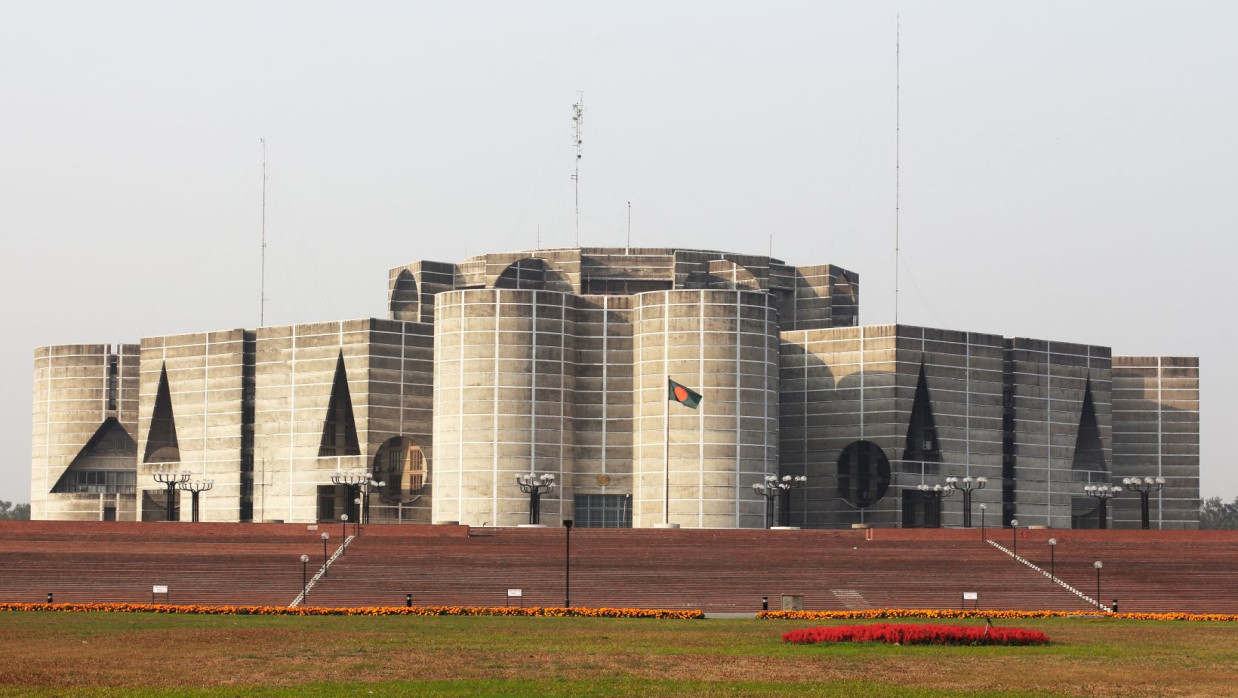
To the degree that critics complain that Bangladesh’s interim government is not “reforming Members of Parliament,” they are failing to understand both the political reality of the day and the purpose of this transitional moment the country is living through.
There is no MPs to reform. The 12th Jatiya Sangsad was dissolved on 6 August 2024, a day after Sheikh Hasina stepped down and escaped. What we have today is not a functioning parliament but a constitutional vacuum deliberately created to make room for systemic repair.
The interim government's mandate is not to run legislators, but to rebuild the rules by which legislators will be elected, restrained, and held accountable in the future. In that sense, the government is not shunning reform; it is carrying it out at the only level where it can be meaningful: the state's institutional foundations. This is a crucial distinction that much of the political commentary misses.
Why You Cannot “Reform” a Parliament That Does Not Exist
It is logically incoherent to demand reform of MPs when there are none. The entire parliamentary structure was dissolved precisely because the political system had become structurally corrupt, monopolized, and disconnected from the people. Any reform of parliamentary behavior must begin before MPs are elected, not after they arrive in office.
This is why the interim government established two critical bodies: A Constitutional Reform Commission and an Electoral System Reform Commission. These bodies are tasked with redesigning the rules of power: how elections are conducted, how representatives are chosen, how authority is distributed, and how accountability is enforced. These reforms will determine what kind of MPs Bangladesh will have in the future.
Trying to reform MPs without reforming the system that produces them would simply recycle the same political class under a different name.
The Real Problem: MPs Became Development Contractors
The deeper crisis in Bangladesh’s parliamentary culture has never been merely personal corruption. It is a structural distortion. For decades, Members of Parliament ceased to behave as lawmakers. Instead, they became local development contractors, brokers of state funds, gatekeepers of contracts, and political patrons. Their primary activity was not debating legislation but securing roads, schools, bridges, and permits for their constituencies, often as a pathway to extracting rent.
It did untold damage to democracy. MPs began to campaign not on policy but on who got what. Election campaigns turned into auctions of development projects. Constituencies became client networks. Parliament is a second theater.
As Dr. Shahdeen Malik recently observed in a discussion on what kind of parliament Bangladesh needs after the next election, when candidates speak, it often sounds as though they are contesting a local government election, not a national one. That confusion is not accidental. It is the product of decades of institutional decay.
Why MPs Must Not Run Businesses
Dr. Malik’s second intervention cuts even deeper: MPs should not be actively engaged in business. This is not a moralistic statement. It is a structural one.
When lawmakers are also business operators, they legislate for their own profit. They design tax codes, regulatory frameworks, procurement rules, port policies, and banking regulations while holding direct commercial interests in those same sectors. The conflict is permanent, not incidental. A parliament dominated by businesspeople does not make good law, it makes profitable law.
Regulatory capture, policy manipulation, insider advantage, and an economy rigged to benefit proximity to power over productivity: the results are predictable. When MPs are entrepreneurs, Parliament itself becomes a cartel.
A serious reform agenda must therefore require MPs to divest themselves of active business upon election. They can retain family wealth, but not run a business. Lawmaking must be a profession.
Why Local Government Is the Missing Piece
But even if MPs are confined to legislation and barred from business, another vacuum remains: development. Who will build the roads? Who will manage schools? Who will supervise local hospitals, zoning, sanitation, and utilities? The answer must be local government, not Parliament. Strong local government is not a technical detail. It is the single most powerful defense against autocracy.
When local governments are weak, citizens must go to national politicians for basic services. This centralizes power, fuels patronage, and turns MPs into feudal brokers. It also allows central executives to dominate the entire system. When local governments are strong, citizens deal with elected representatives who live among them, understand their problems, and can be held accountable daily rather than once every five years.
Decentralization Is the Antidote to Authoritarianism
Autocracy thrives on centralization. When money, permits, law enforcement, and development all flow from the center, power becomes uncontested. Dissent becomes risky. Democracy becomes performative. Decentralization changes this equation.
When power is distributed across municipalities, districts, and regions, no single authority can dominate the system. Citizens have multiple points of access. Political competition becomes real. Corruption becomes harder to hide. This is why every durable democracy in the world, from Germany to India to the United States, rests on strong local government.
Bangladesh, by contrast, hollowed out its local institutions while inflating MPs' power. The result was a centralized patronage state that eventually collapsed under its own weight.
What Real Local Government Reform Requires
Local government reform cannot be rhetorical. It must be constitutional and financial.
Three pillars are essential:
First, constitutional guarantees. Local governments must not exist at the mercy of the central executive. Their powers, tenure, and responsibilities must be protected in law so that no government can dissolve them for political convenience.
Second, fiscal autonomy. Local bodies must have independent revenue sources, such as property taxes, service fees, and local levies, so they are not reduced to beggars before Dhaka. Financial dependence is political dependence.
Third, administrative authority. Local governments must control planning, land use, infrastructure, and service delivery. Without executive capacity, elections become symbolic.
Why the Interim Government’s Focus Is Correct
The interim government’s priority is not parliamentary theatrics. It is the creation of a political architecture that prevents future abuse. By strengthening institutions such as the Anti-Corruption Commission, reforming the judiciary, restructuring the electoral system, and revising the constitution, the government is changing the environment in which future MPs will operate.
A clean electoral system produces better candidates. An independent judiciary restrains abuse.
A strong ACC deters corruption. A decentralized state prevents authoritarian drift. These are not abstractions. They are the infrastructure of democracy.
February 2026 Is Not Just Another Election
The election to be held in February 2026 is not a return to business as usual. It is the first test of whether Bangladesh has learned from the collapse of its last political order. Will MPs be lawmakers or contractors? Will Parliament be a legislature or a marketplace? Will power belong to citizens or brokers? The answers will be shaped not by speeches but by the reforms now being implemented.
Democracy Is a System, Not an Event
Dr. Shahdeen Malik’s central warning deserves to be taken seriously: democracy is not just elections. It is a system in which power is dispersed, institutions are strong, and citizens are engaged at every level. Local governments are not peripheral. They are the frontline of democracy. They are where citizens encounter the state not as subjects, but as participants.
If Bangladesh wants to prevent another autocratic cycle, it must build democracy from the ground up, not merely from the top down. The interim government, by focusing on institutional reform rather than imaginary MPs, is doing exactly what a transitional authority is supposed to do.
The question is not whether Parliament has been reformed. The real question is whether Bangladesh is finally reforming the political system that produced a broken Parliament in the first place.


0 Comments
LEAVE A COMMENT
Your email address will not be published