

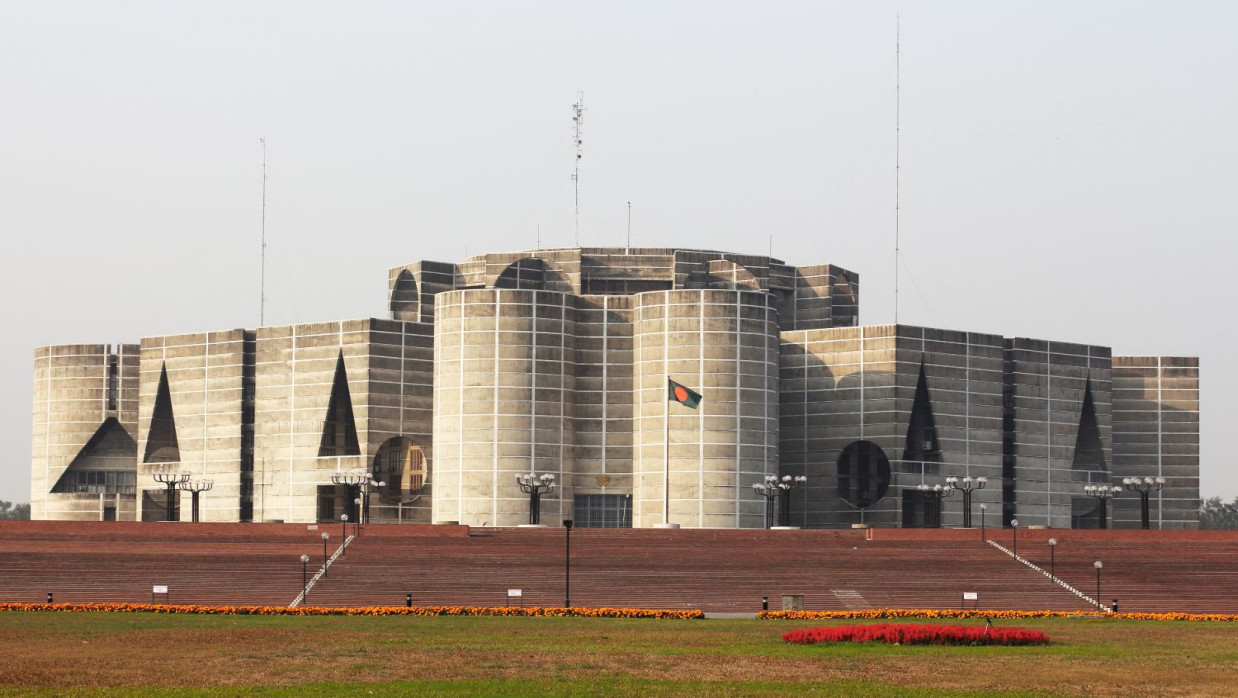
Bangladesh will witness a historic national election and constitutional referendum on 12 February. For a country that has endured more than a decade of disputed polls, political crackdowns, and democratic backsliding, this momentous time is also marked by feelings of optimism and anxiety. The streets are alive with energy and public fervor, people are engaging in political conversations at tea stalls and drawing rooms, and many Bangladeshis have begun to believe that, for the first time in years, their vote will count.
Over 120 million domestic voters are officially estimated to participate in the voting process, with approximately 300,000 Bangladeshis abroad as well. If these numbers are accurate, this will be one of the largest-ever electoral exercises in South Asia. Elections are important not just because of scale, but because this will be the first national poll since the 2024 mass uprising (widely called a student movement) that brought about the ouster of Prime Minister Sheikh Hasina and the establishment of an interim government under the leadership of Professor Muhammad Yunus. In addition, a constitutional referendum on reforms included in the “July National Charter” (sold as a manifesto to restore democratic governance) will also be held.
A hard-earned respite from a fractious past
For many Bangladeshis, this represents an opportunity to turn the page on what they describe as fifteen years of seriously flawed elections and an Awami League government. Previous elections, especially in 2014, 2018, and 2024, were widely discredited due to reports of ballot stuffing, political intimidation, opposition boycotts, and “state capture” with the collaboration of civil servants, police, and intelligence agencies. Many fear a recurrence of this trauma, and the Indian government’s role in the Bangladeshi elections was suspect.
For this reason, the interim government’s decision to hold elections in a timely manner has been one of the most important determinants of its credibility. Early in its administration, the Army’s Chief of General Staff, General Wakar, publicly committed to holding elections within 18 months. This timeline will be met. Many of its supporters point to this as a sign of Yunus’s personal integrity and his disinclination towards power. Unlike many of South Asia’s past transitional leaders, Yunus has consistently stated that his role is temporary and custodial.
This has not gone unnoticed at the international level, despite continued skepticism. Indian officials and segments of the Indian media were scathing in their initial assessments of the Yunus government, characterizing it as a power bloc lacking vision, direction, or legitimacy. In some quarters, they were openly called a “bottomless pit” and were accused of being unwilling to hold elections. The announcement of the February election, therefore, has challenged that narrative and left many detractors red-faced.
Inclusivity, Bans, and the Question of Fairness
Conversely, many serious concerns remain. The most controversial has been the decision to ban the Awami League from this election. Critics of the ban have claimed that this is undemocratic and that the only way to be truly inclusive is to allow all stakeholders to participate. Supporters of the ban have also claimed this is a matter of holding the Awami League accountable and that the party’s repression, electoral fraud, and abuse of state institutions for political purposes during the Hasina years are something that must be called out. Supporters of the election date have also pointed out that without such bans, Bangladesh’s history of deeply flawed elections, where vote rigging was committed and civil liberties were violated, is likely to be repeated.
This conundrum is at the heart of Bangladesh’s democratic paradox: how to balance justice and participation, and hold former ruling elites accountable without reproducing cycles of exclusion. The Election Commission has provided an elaborate calendar for the election, including nominations, campaigning, and polling procedures, and so far, logistical preparations seem to be orderly. Whether this procedural rigor will translate into political legitimacy and credibility is still unclear.
Security, Violence, and the Shadow of the Deep State
Security has been the weak spot of Bangladeshi elections in the past and this round is no exception. Experts expect attempts at violence, intimidation, and disruption to take place. Many fear that elements affiliated with the previous ruling elite, including party leadership now based in India, will seek to derail the process. Violence is unlikely to reach the levels seen in past elections, but even small-scale disruptions can diminish public confidence.
At the heart of these concerns lies the ongoing specter of the so-called “deep state.” In Bangladeshi political parlance, the term refers not to a single conspiracy or unified cabal but rather to robust, entrenched networks within the bureaucracy, the intelligence community, the security forces, the media, and civil society. It is often used to denote actors who operate beyond the ambit of democratic oversight or public accountability. Many argue that these networks only expanded during the Awami League’s four-decade rule and remain active after the regime change.
Critics specifically accuse foreign intelligence agencies, especially India’s RAW, of cultivating relationships with these networks, thereby creating a fifth column that can influence narratives, policy outcomes, and, ultimately, security. Cultural organizations, parts of the media, and influential civil society groups are all regularly cited as bastions of such influence. One of the more consistent allegations is the ongoing portrayal of Bangladesh as a potential “Islamic fundamentalist state” by vested interests; a narrative many Bangladeshis find both inaccurate and politically motivated.
India, Political Parties, and Strategic Anxiety
India’s response to Bangladesh’s political churn has been the subject of much discussion. New Delhi has long been in the Awami League’s embrace, often exalting it as the only guarantor of secularism and stability. Despite recent events, critics still note that Indian policymakers and media commentaries regularly refer to the Awami League as Bangladesh’s only “democratic” political party, a view widely contested given its authoritarian turn over the years.
This has contributed to the perception that India is content with managed instability and has little interest in genuine pluralism unless it is accompanied by guaranteed strategic comfort. Tarek Rahman, the BNP leader, is thus viewed through this prism. Many analysts view him as a threat to India’s regional primacy, not for his record, but for his nationalism and strident rhetoric towards India. There are widespread concerns regarding his personal security, with discussions and speculation of what his presence or absence may mean for Bangladesh’s political future.
Within the BNP itself, other internal rifts will further muddy the waters. Built around the Zia family, the party has long struggled to reconcile leadership, ideology, and organizational coherence. Senior leaders such as Mirza Fakhrul Islam Alamgir and Salahuddin Ahmed embody different poles of authority. Some suggest the BNP’s internal rivalries will be set aside temporarily in the wake of electoral victory. In contrast, others fear that post-election violence may provide an opportunity for intra-party factionalism to resurface with a vengeance.
Institutional Weakness and the Limits of Transition
The greater concern, however, is the perilous state of Bangladesh’s security institutions. The politicization of the police, intelligence agencies, and (to a lesser extent) the armed forces over the past few decades has severely diminished institutional capacity and strength. Mafia culture, patron-client political networks, and other forms of organized crime have also allowed various mafias to exercise disproportionate influence and clout. Despite the interim government's good intentions, these networks have been complex to dismantle or reform.
Some suspect that Professor Yunus has had difficulty mustering the full cooperation of the security services. Whether due to institutional inertia, divided loyalties, or fear of retribution, these enforcement agencies have often appeared unwilling or reluctant. This, in turn, has led to the suspicion that elements of the deep state are still operational and will select what reforms to obstruct while quietly feeding information to external powers.
Senior advisers, especially those responsible for the Ministry of Foreign Affairs and Law, have faced an exceptionally high degree of scrutiny. Analysts opposed to the government have pointed to their silence on several key issues, including India’s role, and accused them of compromise, at best, or paralysis, at worst. While these accusations have yet to be proven, their currency alone speaks to a crisis of confidence.
Student Revolt or Insurgency?
Yet another dimension of the uncertainty revolves around the legacy of the 2024 uprising itself. Supporters have long touted it as a spontaneous, student-led revolt against authoritarianism. Dissenting voices, mainly domestic and Indian, have sought to paint it as an insurgency or an attempt to destabilize the country. This battle of framing and terminology is essential as it influences international opinion and justifies intervention.
Bangladesh is thus at risk of having its democratic renaissance recast as chaos to be curbed. If violence erupts after the election, or if institutions fail to establish civilian primacy over security agencies, that narrative will likely become more pronounced. The challenge, therefore, is not just to hold a credible election but to translate the moral legitimacy of the uprising into permanent institutional change.
The Way Forward: Between Great Power Interests
In the coming years, Bangladesh must also contend with an increasingly competitive geopolitical landscape defined by India, China, and the United States. Each of these powers approaches Bangladesh with a distinct strategic calculus. For India, security and influence in its eastern flank are preeminent. China views Bangladesh as a key node in its Belt and Road network and an important partner for infrastructure and heavy industry development. For the United States, labor rights, democratic norms, and regional stability are of central importance, though its critics say these values are selectively enforced.
For Bangladesh, the key is to resist becoming a proxy battlefield for any of the above. Credible elections could provide the legitimacy needed to recalibrate these relationships on more equitable terms. Transparency, anti-corruption initiatives, and revival of the economy, particularly the manufacturing and export sectors, will be key to reasserting Bangladeshi sovereignty.
In the end, the success or failure of the February 2024 election will be judged not only by turnout and administrative logistics but also by whether it marks a clean break with the past. Bangladeshis do not demand perfection, but honesty and a blank slate upon which to rebuild their institutions, dignity, and self-agency. If they succeed, Bangladesh could offer a rare example of democratic renewal in South Asia. If they fail, the forces of cynicism, manipulation, and external subjugation will yet again claim victory.
The choice, as history will record, is theirs and that of those who, however briefly, are given the responsibility of safeguarding their voice.


0 Comments
LEAVE A COMMENT
Your email address will not be published