

There was a point when the Indian press earned the respect of the South Asian region—a point when its courage marked the very heart of the region’s morality. The Indian editors showed the world their silent bravery during the Emergency period in the country’s darker moments; later on, the Indian journalists’ audacity encouraged the rest of the region with their unrelenting coverage of the corruption that surrounds them.
But this proud record is slipping—and slipping rapidly. Indeed, the state of press freedom in India today is one of the worst in the world. A land that was known for its bold truth-seekers now finds itself at an ignoble rank of 151 out of 180 countries in the index of press freedom. This erosion of freedom of the press is loud, alarming, and dangerous. A land that calls itself the largest democracy in the world could never imagine this level of degradation just a few years back.
This particular piece aims to examine not only how the Indian media fell so miserably but also why the situation there is so critical to the context of the other country, which is that of Bangladesh. This is because the problem of journalistic integrity in the Indian case extends beyond the boundaries of the country referred to above.
To appreciate the significance of the situation at this juncture and the implications of this crisis for democracy on both sides of the border, it becomes essential to go beyond the headlines and examine the factors that have led the Indian media to this critical juncture.
A Global Outlier: India’s Position in the World Press Freedom Rankings
The status of the Indian media in the world’s media environment has made an alarming shift. Indeed, the levels of freedom of the press have been on an upward movement in areas like Scandinavia, Western Europe, East Asia, and even the African continent. The fact that countries with neither the scale of China nor the manpower of the Indian media establishment are still ahead of the Indian media industry by immense margins makes the situation sufficiently alarming. A comparison of the indices places countries like Namibia, Ghana, Estonia, and even Nepal ahead of the Indian media scenario. All these countries have a smaller scale of the media industry.
At rank 151 among 180 countries, the placement of India puts it on the same list as countries affected by civil war, military dictatorship, and government censorship to the point of banning the press. Now India finds itself ranking below countries like Afghanistan, an area laid waste by civil wars and ruled by the Taliban; below Myanmar, with its military government regularly imprisoning journalists; below South Sudan and Rwanda, nations with a record of violent repression; and even below the Gulf States of the UAE and Qatar, with their state-controlled presses despite their immense wealth. A democracy of this scale and ambition landing below other regimes led by military juntas, monarchies, or post-war administrators weakens not a democracy’s smaller note but an openly serious crisis of a democracy’s governance.
International organizations that monitor this issue, like Reporters Without Borders (RSF), have consistently cited a pattern of interconnected reasons that lie at the heart of the alarming deterioration of the state of freedom of the press in India. This begins with the increasingly pervasive state of intimidation and pressure imposed on journalists who seek to investigate issues of minority rights, graft, electoral manipulation, security matters, or the corporate state. Raiding news organizations and pressmen’s homes has effectively become routine state tactics of intimidation.
Second, the Indian news environment finds itself under the shadow of corporate dominance with only a few corporations exercising unprecedented control over the news that appears on television, online, and print platforms. Most of these corporations have close ties with the ruling government, rendering the line between news and the government’s publicity very thin. News freedom has diminished with owners and politics assuming the central role.
A third factor at play could be the rise of the communalized news narrative, with television debates and online discussions increasingly filtered through the prism of dualistic and divisive lenses on national issues. What passes for investigative reporting on television could increasingly pander to the need for entertainment over fact-based inquiry, with nationalist dramatization having an overactive agenda.
Additionally, the misuse of sedition laws, anti-terror laws, tax raids, and defamation suits has made the environment dangerous for journalists. These instruments of the law are intended and designed for the security of the state but are actually used as tools of intimidation on journalists who do not conform.
Finally, the cumulative effect of these forces has generated a culture of self-censorship. Editors’ rooms preemptively steer clear of subjects that could engender reaction in the government or major corporate advertising clients. News gets watered down, morphed, or suppressed altogether not because the reporting lacks merit but because of fear. And when the press imposes its own censorship, democracy becomes unnecessary because censorship occurs naturally.
Taken together, these trends have transformed the manner in which the world regards the Indian media landscape. A land that had inspired the world with its cacophonous but pluralistic democracy with an audacious and argumentative press enterprise now finds itself increasingly viewed with concern around the world as a place of beleaguered independent journalism, diminished institutional safeguards, and a restricted public sphere imposed by the conditions of ideological conformity. What should have been an expansive forum of lively debate and discussion finds itself instead a toxic environment of ill will toward dissent, degradation of critical reporting, and deep-seated rot. Behind the world’s gaze upon the Indian media crisis stands the announcement of an ailing democracy.
Construction of a Captured Media: A Case of Politics, Corporates, and Communalism
India frequently trumpets that it possesses one of the world’s largest and most diverse media markets with over 400 news television channels, more than 17,000 registered newspapers, and an increasingly broad and widespread online community that engulfs nearly a billion mobile communication users. On the face of it, this promises pluralism and competition and the creation of a lively marketplace of ideas. But the truth paints a very different picture. Beneath the façade of diversity operates a tightly integrated and controlled world of the mass media that is dominated by just a few corporate conglomerates that frequently have very close financial ties with the ruling Bharatiya Janata Party government of India. This close association of elements of state power and corporate control of mass media operations results in a world of increasingly diminished levels of journalistic independence, with very dangerous levels of repression of freedom of the press.
- Emergence of the ‘Godi Media’
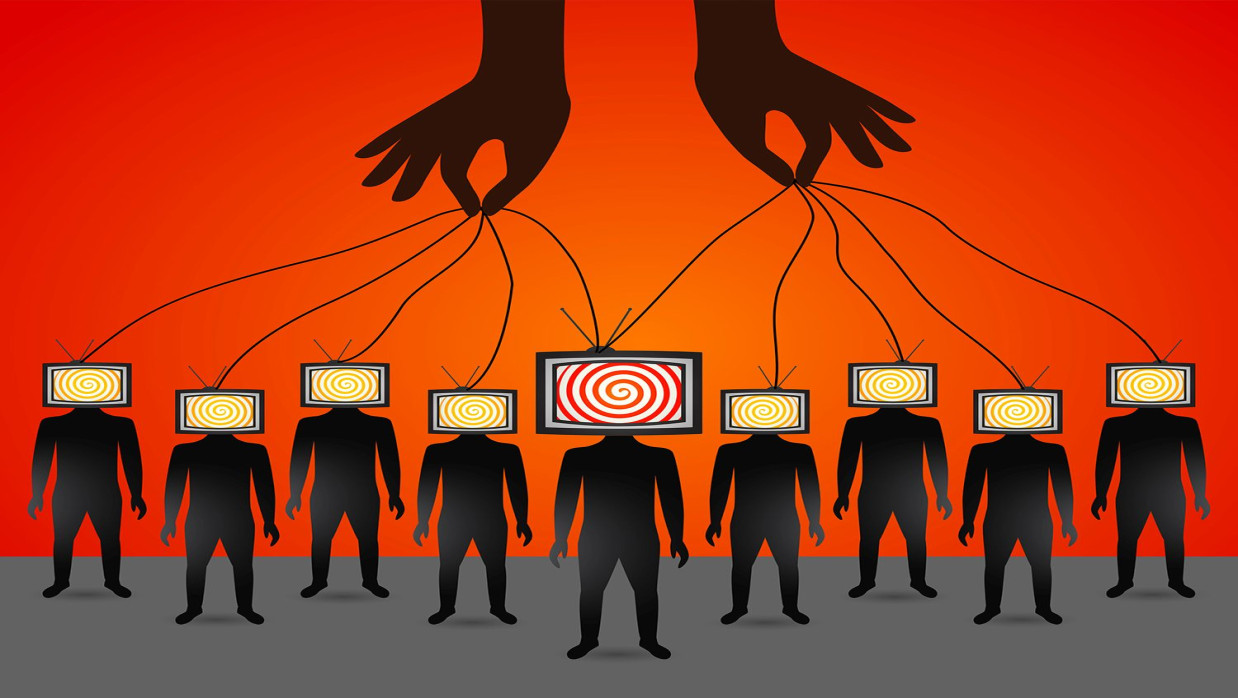
This phenomenon of the "godi media" captures the essence of this new reality of the media landscape of India. This term comes from the Hindi word 'godi,' meaning 'lap,' describing the performance of the television media and newspapers that serve as the government’s lapdog and not its watchdog. They do not report; they only perform. They do not hold the power; they protect it. The major topic of their programming may not be designed as a news show but as a form of entertainment with an agenda. Yelling matches and tricked-out outrage replace fact-checking reporting. Instead of challenging the system, these portals carry every narrative that suits the ruling party’s agendanot only with respect to CAA/NRC but may include demonizing critics as 'anti-nationals' too. This sector of reporting has been overpowered by the need for government-related entertainment programs where reporting transforms into cheerleader-style presentations with the news hub being an arm of the government’s communications division.
- Hyper-Nationalism Disguised
The second pillar of the captured media environment is the exploitation of hyper-nationalism. Televised debate programs increasingly appear more like attack spectacles than genuine discussions. Debate formats are now overtly interested not in the analysis of failures of policy, economic woes, or government dysfunction but purveying highly nationalist gestures meant to distract others. Depictions of military strategies are projected on sets; shouting moderators talk over guests; and the term 'traitor,' 'terror sympathizer,' or 'anti-India elements' freely appear as attack monikers on guests. Prompting treasonthe veiling of critics, activists, minorities, and even protesting studentsare labeled as threats.
This narrative engineering has a certain politicking purposethe nationalist owns the space of accountability. Militarization is celebrated; minority communities are demonized; Muslims are more specifically caricatured through 'love jihad,' 'infiltration,' the gamut of demographic invasion plots. What should ideally be a serious evidentiary exercise slips into the ritualistic gesture of patriotism every single evening across multiple screens. The more the Indian state’s socio-economic troubles became their own labyrinth of complexity, the more these nationalist displays reached a decibel of cacophony.
- Threats, Harassment/C unanimously Approved by the
Alongside the ideological appropriation of the major media there seems to run a more sinister and coercive agendathe intimidation of independent journalistic investigation. Journalists dared to examine corruption, authoritarianism, the phenomenon of crony capitalism, or human rights violations may expect an onslaught of harassment.
Raiding the offices of critical newspapers by tax agencies with the intent of freezing their accounts and seizing their documents occurs with little notice. Writers are arrested under sedition charges or the draconian UAPA Law of India. Online trolling of writers, particularly female journalists with the intent of stigmatizing them or putting pressure on them, occurs. Cases of criminal defamation with the intent of exhausting the journalist emotionally and financially are filed.
Top journalists like Rana Ayyub, Siddique Kappan, or even the assassinated Gauri Lankesh have been made targets of state surveillance, trolling, arrest, or even more serious forms of intimidation. This leaves no doubt that anyone who dares contest state power will have a price on their head. This makes fear a form of state administration and journalism an act of bravery.
- The Crisis of Editorial Independence
A crisis of the fourth estate in India manifests the degradation of editorial freedom. This occurs when the editors of major publishing houses are not the deciders of what must come out and what must go under the rug. This happens because the owners of these major publishing houses have other interests with the government; therefore, they pressure the editors on the matters that should appear in the newspapers based on government expectations. The topics that never appear on the newspapers include criticism of Prime Minister Modi, demonetization failures, farmers’ protests, human rights abuses within Kashmir, reporting on the attack of Muslims, examination of the misuse of the election system, or major corporations with ties to the ruling party.
News personnel refrain from commenting on sensitive matters like the CAA/NRC backlash, suppression of freedom of the press, the Pegasus scandal of spying on citizens, or the growing wave of majoritarianism of the Hindu kind. This too is not an embargo on reporting; it’s understood that these issues pose danger. This training of sorts over the years results in an environment of the silent newsroom. Here, editors choose not to print news due to the possibility of jeopardizing their employment.
The Role of the Indian Media in Shaping and Misshaping the Perception of Bangladesh
Despite the fact that the two countries share a common border of 4,096 kilometers, common cultural foundations and linguistic ties, the Indian media system never treats the topic of Bangladesh with sensitivity and respect. On the contrary, the topic appears in the Indian media more episodically, with a focus on sensation and the political agendas that take precedence over the reality of the topic being discussed that of Bangladesh, this time.
This deception carries serious implications. This feeds the Indian public’s misconceptions regarding their region’s most critical neighbor and fuels the resentment of the Bangladeshi community, further advancing the widened angst between the two nations’ citizens at a point when the region’s cooperation faces even more pressing requirements.
- Bangladesh Appears in Indian Media Mostly When Something Goes Wrong
To the average Indian television viewer watching Bangladeshi television, the first experience with the country as a reality could be during moments of crisis that spill over into the realm of the typical television news item, whether it’s communal riots, industrial accidents, fire tragedies, floods, or anti-government rallies.
The remarkable socioeconomic accomplishments of the country’s progress from being a low-income nation to a lower-middle-income nation and its achievement of preeminence over India on various other human development metrics deserve much more attention than they usually get.
The problem? Indian viewers are left with a caricature of a Bangladeshi state that’s consistently unstable, chaotic, and eventful. This imbalance engenders an aura of arrogance among Indians and hinders the growth of Bangladeshi feelings of pride over their accomplishments being swept under the rug. - Selective Outrage: Minorities in Bangladesh as a Political Tool
The other common phenomenon that can be noticed in the Indian media is the selective reporting on the issue of the repression of Hindus in Bangladesh. Although the issue of minority rights in the context of Bangladesh certainly warrants honest discussion, the manner in which it occurs in the Indian media can be highly fact distorted. This can happen because the reporting may be driven by the politics of the Indian state.
Implicit during the 2024–25 crisis and the overthrow of the authoritarian government of Sheikh Hasina was the lack of reporting on the pro-democracy motives of the Bangladeshi youths demonstrating for justice, accountability, and reform. On the other hand, the reporting gravitated toward instances of violence on Bangladeshi temples or Hindu areas despite being exaggerated or taken out of context.
This communal construction of reality serves particular political narratives for India’s context: the reinforcement of the majoritarian agenda of the BJP, the projection of the vulnerability of Hindus within the Islamic majorities of neighboring countries, and the exploitation of the debate on the grant of citizenship within the country. But this particular reality construction ends up tarnishing the image of Bangladesh and furthering distrust of the common Bangladeshi. - Misrepresentation of Bangladesh’s Internal Politics
The Indian media’s perception of the Bangladeshi political environment appears shallow and more guided by the geopolitically convenient narrative of the relationship between the two countries. The Indian strategy of preference for certain Bangladeshi stakeholders and leaders, especially the Awami League during the Hasina administration, affected the manner by which the events of this narrative were interpreted.
As the mass movement calling for accountability, an end to authoritarianism, and freely conducted elections swept across Bangladesh in 2024, the Indian establishment’s media did not characterize it as a democracy awakening. As a result, the phenomenon came across through the lenses of the Indian media as “instability,” “extremist stir,” or even “resurgence of Islamist forces,” even though it remained overwhelmingly youthful and secular.
This bias certainly wasn’t accidental. This suited the Indian government’s geopolitics of discomfort over the downfall of a government of the ‘friendly’ type to the Indian state. Through this distortion of the events surrounding the Bangladeshi upsurge, the Indian media became an instrument of communication with the purpose of sending out information as opposed to searching for the truth. - The Story of Superiority and Dependency
A more subtle yet pervasive theme of the Indian coverage culture revolves around the approach that the security and progress of Bangladesh are dependent on the grace of India.
Already in economics-related news, the Indian media prefers the Indian side’s “generosity” over the active role of Bangladesh:
• The Indian credit line system is being hailed as a success whereas the Bangladeshi experience of effectively managing its debts is being
• The export of electricity by Indians is lauded, but the diversification of energy resources of Bangladesh passes unnoticed
• The connectivity projects are presented as the accomplishments of India
These narratives create a hierarchical view, with the patron being India and the subordinate state being Bangladesh. This profoundly hurts the national pride of the Bangladeshi nation and creates an anti-India feeling among them. - The Aftermath: Growing Mistrust and Emotional Estrangement
Now there’s a feeling across the length and breadth of Bangladesh that the Indian media does not treat the Bangladeshi with respect or attempt to understand them. This problem has increased over the years due to the imbalance generated in the Indian media’s reporting of the Bangladeshi community.
The implications of this are very serious because:
• Bangladeshi citizens are gradually seeing India as a dominant neighbor but not as a partner
• Indian public opinion, misguided by a biased press, views events in Bangladesh with fear or patronization
• Such erroneous perceptions directly affect cooperation between the two countries regarding issues of water, migration, borders, gas/energy, and trade
A relationship based on common history is gradually being destroyed because its foundations of emotion are falling apart. And the Indian media loud and sensationally pointful pressare a big part of this degradation. - Why It Matters: Media Narratives Become Foreign Policy
Public perceptions make policies in South Asia. A perception of instability, extremism, or dependency generated by the Indian media’s reporting on Bangladesh makes its way into the thinking and decision-making of the elites of the government of India. By the same token, if the Bangladeshi government and citizens are portrayed as ridiculous by the Indian media, this makes them resentful of the neighboring country. This creates diplomatic reality through media narratives as follows:
Misreporting Translates to Mistrust
Such instances of misinformation being published through the media affect not only the television but the very mindset of the masses. Slowly but surely, these instances of misinformation result in the development of a mindset that may have very little inclination toward the truth. A misguided newspaper headline or an orchestrated debate on the television might just result in the development of an impression amongst millions of people regarding an entire nation. Misreporting might just plant the seeds of misinformation that may very well sprout into distrust. This has certainly become the reality that Bangladeshi citizens live with due to the biased reporting of the Indian media regarding their homeland. They feel that their homeland might just be misunderstood and deliberately maligned by its neighbor, the nation of India. This perception might just result due to the fact that the Bangladeshi homeland might just not have the best of treatment at the hands of the Indians; this might just result due to the fact that Indians may perceive the Bangladeshi homeland with an air of suspicion.
Mistrust Becomes Tension
Mistrust, after being ingrained among common citizens, never sits quietly. On the contrary, it generates group tensions that shape the populace’s perception of every single issue between the two countries that comes with water sharing disputes, border clashes, trade talks, or state policy. Also, even the tiniest snags over issues take on enormous dimensions based on the projection of the respective party’s ignorant distrust. Within the context of the relationship between Bangladesh and India, issues that could have seemed like glitches of bureaucracy and statecraft are projected differently these days. They are taken as expressions of an unconcerned gesture of India’s direct behavior toward the state of Bangladesh. On the other hand, an unexpected policy approach on the part of the government of Bangladesh seems like an ingratitude gesture directly projected on the government of the state of India.
Tension Becomes Policy
But when the mood turns sour, policymakers cannot afford to remain uninterested. A democracy or even an authoritarian state that takes notice of the opinions of its citizens expects its leaders to share the feelings of the masses. An environment of tension sets the tone of diplomatic maneuvers, trading policies, and security policies. This truncates the choices of policymakers and encourages the so-called hard-liners’ opinions that there’s point neither in cooperation nor agreement. This phenomenon of the media’s distortion of reality changes the tone of the foreign policies of countries gradually. The effects of this phenomenon are witnessed in the relationship between Bangladeshi and Indian governments. Public resentment of Indians’ behavior toward Bangladeshi citizens stirs up the debate of Indians’ distrust of Bangladeshi decisions due to the flair of the media.
What makes the situation even more tragic is the fact that these are two nations that share the same blood, the same history, and the same destiny being driven apart not by the truth but by the narratives that are manufactured in television production studios.
What India Must Do: A Path to Restoring Credibility
If India seeks to restore trust both among its own citizens and across its neighborhood it must confront its media crisis with honesty and resolve. The first step is ensuring robust protections for journalists so they can do their jobs without fear of harassment, intimidation, or politically motivated legal reprisals. A thriving democracy cannot exist if those who challenge power are silenced or punished. A safe environment for investigative journalists is not a luxury it’s essential to rebuilding a national discourse rooted in truth.
Just as urgent is the need to dismantle the corporate monopolies that currently dominate India’s media space. When a few powerful conglomerates control the bulk of the country’s TV channels, newspapers, and digital platforms, the ecosystem of diverse voices collapses. Independent journalism by its nature critical and unafraid cannot flourish when it’s financially tethered to entities aligned with those in power. Diversifying media ownership is not simply a business issue it’s a fundamental democratic imperative.
India must also take meaningful steps to reform the legal frameworks that have become tools of suppression. Sedition laws, criminal defamation, and broad anti-terror statutes like the UAPA have been repeatedly used to target journalists. These legal weapons hang like a sword over the press, stifling even accurate and important reporting. Repealing or amending such laws would demonstrate India’s renewed commitment to both democratic values and journalistic freedom.
Restoring editorial independence is another cornerstone of meaningful reform. Newsrooms must be shielded from political interference and corporate pressure, so reporters and editors can pursue truth even when it exposes those in power. When editorial decisions are guided by integrity rather than fear, public trust naturally follows.
Lastly, India must cultivate a culture of responsible, ethical cross-border journalism especially when it comes to covering Bangladesh. Sensationalism may drive ratings, but it corrodes relationships and undermines India’s moral authority. Bangladesh deserves reporting that is fair, accurate, and informed not shaped by prejudice or political agenda. Responsible journalism, rooted in nuance and mutual respect, is essential for mending the emotional and diplomatic rifts widened by reckless coverage.
By taking these steps, India can begin a challenging but necessary journey to reclaim its journalistic integrity one reform, one truth, and one responsible headline at a time.
What Bangladesh Must Do
While Bangladesh cannot reform Indian media directly, nor stop sensationalist reporting across the border, it does have the power to strengthen its own media landscape and in doing so, build resilience against misinformation and distortion. The foundation of this effort lies in fostering strong, independent Bangladeshi news institutions that are capable of rigorous investigation, responsible reporting, and earning public trust. When the country’s domestic media is credible and confident, external disinformation struggles to take root.
Equally important is Bangladesh’s ability to respond to false or misleading narratives. Rather than reacting emotionally, the country should invest in rapid-response communications teams equipped to debunk inaccuracies with evidence, clarity, and professionalism. This not only protects national reputation but also bolsters Bangladesh’s credibility in the global information space.
Bangladesh should also develop structured channels of media diplomacy forums, both formal and informal, where journalists, editors, and media scholars from both nations can exchange ideas, confront misconceptions, and foster mutual respect. Additionally, cross-border exchanges through fellowships, joint reporting projects, or newsroom collaborations can humanize each society and dismantle the stereotypes that flourish in isolation.
To ensure long-term progress, Bangladesh should invest in regional journalism hubs that produce high-quality, data-driven, and internationally credible reporting on South Asian affairs. When Bangladesh becomes a source of authoritative regional storytelling, its voice naturally carries more weight on the global stage.
Finally, Bangladesh must adopt a bold, coherent national communication strategy one that asserts its own story proudly, confidently, and strategically across diplomatic, media, and public arenas. When Bangladesh controls its narrative, distortions from elsewhere lose their power. And the region moves one step closer to a fairer, more balanced media environment.
Conclusion: The Media Shapes Nations and Neighborhoods
India is one of the world’s oldest civilizations a vibrant mosaic of intellect, creativity, resilience, and diversity. Its people have contributed philosophical insights that transformed humanity, led democratic movements that inspired continents, and fostered cultural traditions that transcend borders. But today, one of the vital pillars that once upheld this greatness the free and fearless press is faltering.
India’s media crisis is not just a domestic matter. A captured press weakens democracy from within and erodes the country’s credibility beyond its borders. It distorts facts, misinforms its people, and perhaps most painfully offends its neighbors. A press that talks loudly but listens little cannot build bridges of trust; it only builds walls of suspicion.
For Bangladesh, the impact of Indian media bias is not hypothetical it is lived experience. A distorted press record reshapes perception, deepens mistrust, and turns emotional fault lines into diplomatic fractures. Two peoples, bound by shared sacrifice, language, and history, are increasingly divided not by geography, but by narratives manufactured in distant studios narratives that do not reflect the complexities of truth.
Still, hope remains. India has the capacity and the moral responsibility to reclaim its press from the grip of sensationalism, partisan capture, and ideological noise. If it chooses to do so, it will not only honor a proud tradition of truth-seeking journalism but also take the first step toward healing the strained relationship with Bangladesh.
This is not a small matter. Media does more than reflect reality it shapes it. It either builds bridges between nations or burns them. As Walter Lippmann once said:
“Where all think alike, no one thinks very much.”
It is time for India’s media to think again boldly, independently, and honestly. For the health of its democracy. And for the future of a region that deserves harmony more than hostility.


0 Comments
LEAVE A COMMENT
Your email address will not be published