
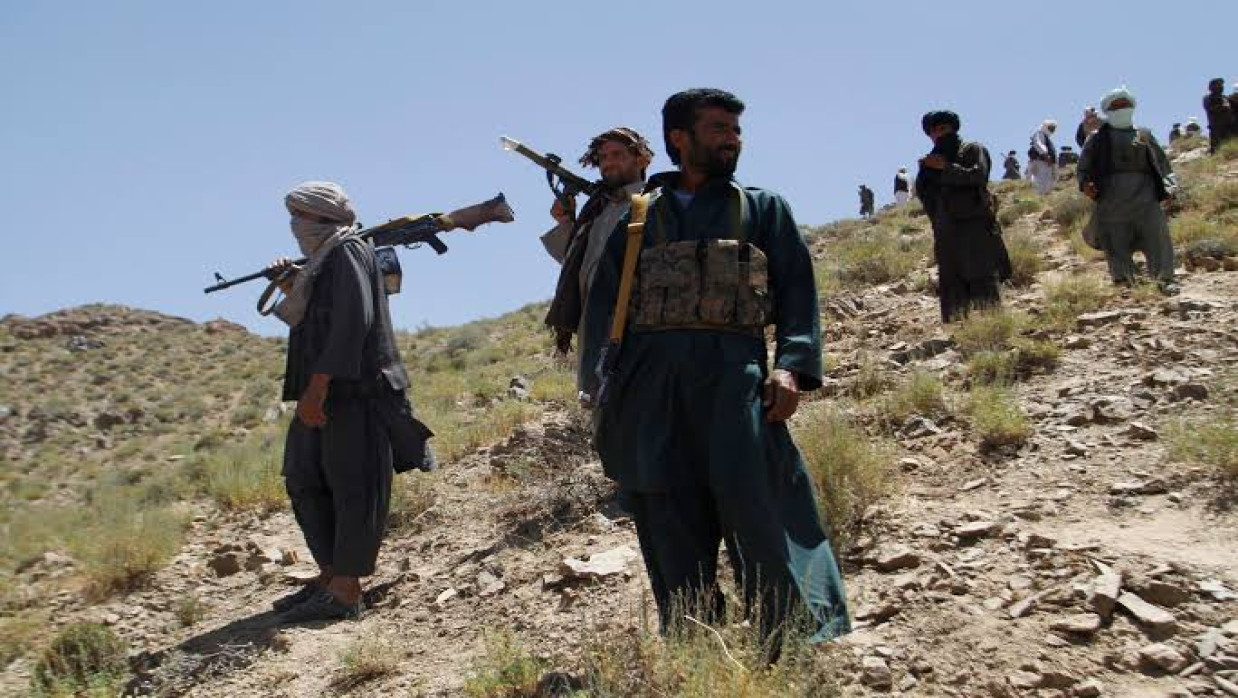
The situation in Afghanistan remains a serious security concern for the neighboring states. The very fact that Russia is once again highlighting the terrorist threat from Afghanistan means that the situation there is by no means ideal for the countries of the region. Russia’s foreign minister, Sergey Lavrov, spoke about the threat from terrorist groups in Afghanistan at the CSTO-CIS-SCO Conference on Security in Central Asia and Afghanistan on October 16, 2026. He drew attention to the fact that terrorist and extremist groups have a significant presence in the Afghan regions neighboring Tajikistan, Turkmenistan, and Uzbekistan. According to the Russian foreign minister, there are training camps and armed terrorist organizations’ footholds along the border. In addition, groups of militants try to get into the Central Asian countries by crossing the borders illegally, passing themselves off as refugees or tourists.
This message demonstrates that despite the Taliban’s return to power, many groups are far from wanting to give up the ambitions to achieve their political and military goals. For Central Asia, the most important issue is whether these organizations are ready to use the territory of Afghanistan as a base for recruiting, training, and developing further activities on the territory of the neighboring states.
ISKP Remains a Serious Threat to the Region
Sergey Lavrov highlighted the Islamic State’s Khurasan Province’s (ISKP) terrorist organization as the most dangerous actor in Afghanistan. He noted that ISKP opposes the Taliban’s authority and is developing its own strategy to advance its extremist ideas beyond Afghanistan. Lavrov drew special attention to the fact that ISKP’s actions are fraught with danger not only for the people of Afghanistan but also for the neighboring countries.
ISKP’s declared objective is to undermine the Taliban’s ability to govern Afghanistan. The militants’ interest in Afghanistan as a whole is due to the fact that they see this country as a source of expansion for terrorist activities throughout Central Asia and even Russia. ISKP’s declared goal is to weaken the Taliban’s dominance in Afghanistan and undermine the entire political system in order to stage attacks in the Central Asian Republics. This rhetoric is fraught with danger for the countries of the region, which share a common border with Afghanistan, as well as Russia.
The presence of ISKP in Afghanistan poses a direct threat to the national security of the neighboring states. Even though ISKP is not as strong as the Taliban, this group’s representatives are actively preparing to wage an armed struggle against both the Afghan authorities and the Central Asian states. At the moment, the Taliban are unable to eliminate ISKP as an armed opposition group, and thus this terrorist organization remains a serious threat to the national security of several states.
The Network Has Wide International Backing
According to Sergey Lavrov’s speech, another threat to the countries of the region is the network of international supporters of terrorist organizations. He noted that among the foreign militants fighting in Afghanistan are those who have previously participated in jihad in North Africa and the Middle East. One of the most acute problems in combating terrorism in Afghanistan is the involvement of local residents in terrorist activities in other countries. The groups of foreign fighters who have fought in Syria and Iraq are now preparing to fight in Afghanistan. At the same time, radical militants also resort to methods of propaganda to attract new fighters to ISKP.
The issue of radical Islamic militants’ expansion into the neighboring states is not only a military issue. It is essential to consider the potential threat of networks of radical Islamists and foreign fighters who have adopted extreme views and may carry out terrorist attacks. For now, it seems that the greatest threat to Central Asia is the potential for international terrorists to expand their presence in Afghanistan as a springboard for attacks on the territory of the neighboring states.
It is important to understand that not all foreign fighters are willing to take direct action. However, even those who have so far shown no signs of extremism can be susceptible to radicalization. A key priority in combating international terrorism should be the improvement of intelligence and evidence-based individual risk assessments of foreign fighters. It is necessary to develop and implement more effective measures to protect local societies from radical Islamists, taking into account their ethnic and cultural characteristics.
In addition, it is worth considering how to best counter the propaganda of terrorist organizations. Extremist rhetoric on social media often provokes attacks on both the authorities and public figures in the countries of the region. It is necessary to develop a strategy for countering radicalization, based on an understanding of the reasons for its popularity among certain population groups and an analysis of radical propaganda. Particular importance should be the preservation and strengthening of traditional spiritual values, especially in areas of Afghanistan with a high number of refugees.
Terrorist Activity: Weapons, Drugs, and Propaganda
Lavrov also drew attention to radical preaching, underground schools, and extremist Internet resources. He emphasized that the terrorist groups’ system in Afghanistan is developing in an organized manner and is able to function both in secret and openly. Extremist Internet resources and social media accounts are used not only for propaganda but also for recruiting young people and spreading extremist literature. Fighting radicalization requires coordinated action to minimize the spread of extremist Internet resources and their timely detection and dismantling at all stages of their development.
One of the ways to combat this threat is to consolidate the collective regional potential of the SCO countries. Sergey Lavrov also drew attention to the fact that arms and drugs coming from Afghanistan pose a serious threat to the security of the countries of the region. The Russian foreign minister pointed out that the illegal importation of weapons and narcotics undermines the ability of border guards to ensure security and complicates law enforcement work in tracking down criminal groups. One way to reduce the danger of Taliban-sponsored drug trafficking and arms smuggling is to break the economic ties between these networks and terrorist organizations. It seems that such problems can be solved only by joint efforts of the countries in the SCO, as well as other international organizations.
Collective Measures Are Needed to Ensure Security
The problem of Afghanistan has always been a regional one. The neighboring countries share a common threat, but this does not mean that they have the collective security mechanisms to deal with it. Despite the rhetoric about the need for a coordinated approach, Russia, China, and other states are reluctant to take specific steps to confront common enemies. It is essential to develop effective mechanisms for information exchange so that the countries can quickly respond to new situations. In addition, joint efforts should be made to ensure border security, investigate terrorist attacks, and combat arms and drug trafficking.
It is vital to establish effective dialogue with the Taliban authorities to obtain reliable information about the intentions of Afghan security structures. The countries of the region need to show the people of Afghanistan that they are interested in maintaining stability and do not want the territory of the country to be used for attacks on their countries. To ensure stability in Afghanistan, it is necessary not only to expel foreign militants from the country but also to establish full control over their activities.
Of course, it would be great if the Afghan Taliban could eliminate ISKP, which opposes them, as a competing militia. However, based on the experience of the last twenty years, it can be said with great confidence that ISKP is not the only fundamental threat to the stability of Afghanistan. It is also necessary to develop other measures to ensure national security, such as preventing the spread of extremist views among the population.
It is also vital to ensure stable living conditions for ordinary citizens, as well as social and economic security. People who live in difficult conditions are more likely to turn to groups that resort to violence. It is necessary to ensure that both the citizens of Afghanistan and the refugees who live in the settlements on the border with Tajikistan, Uzbekistan, and Turkmenistan have access to social help and assistance. It is important to protect these vulnerable groups of the population and ensure their rights so that they do not become victims of violence in their own country.
Thus, Russia’s concerns about the Taliban’s inability to establish control over Afghanistan are understandable. The situation in this country has always been difficult, but the return of the Taliban to power has made it even more complicated. Sergey Lavrov’s speech emphasizes that Russia is concerned about the growing threat of terrorist organizations operating in Afghanistan. The foreign minister’s words are true because ISKP and other fundamental groups pose a direct threat not only to the Taliban but also to the countries of the region.
As mentioned earlier, fighting such organizations is a complex task requiring a coordinated approach. The main goal should be to ensure that Afghanistan is no longer a safe haven for terrorists and extremists. The problem of foreign fighters must also be addressed, as the expansion of their activity poses a grave threat to the national security of the country. The situation in Afghanistan is a serious challenge for the entire region, which requires collective measures to stabilize the situation.


0 Comments
LEAVE A COMMENT
Your email address will not be published